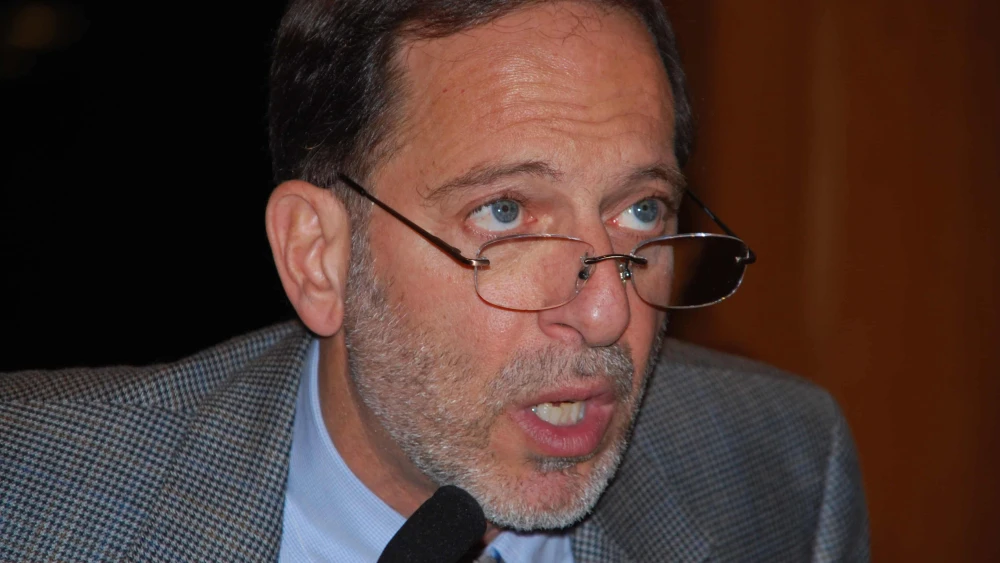
A Harvard University professor who was removed from a leadership role after organizing anti-Israel programming is among four finalists for a tenured Arab studies chair at Columbia University.
According to internal communications exclusively reviewed by The Washington Free Beacon on Feb. 9, Columbia informed faculty and graduate students in its history department on Jan. 22 that Rosie Bsheer, the Frederick S. Danziger associate professor of history at Harvard and former associate director of the university’s Center for Middle Eastern Studies, is being considered for the Edward Said chair in Arab studies.
Bsheer is scheduled to deliver a presentation on Feb. 16 as part of the selection process, the messages show.
According to the Free Beacon, Bsheer has a record of anti-Israel activism and helped organize academic programming at Harvard that featured sharply critical views of Israel while excluding pro-Israel perspectives.
In May 2021, she and Cemal Kafadar, who was serving at the time as the director of the Center for Middle Eastern Studies, circulated resources focused on “occupation” and “settler-colonialism,” including a book arguing that Hamas is not a terrorist organization. The center later hosted the book’s author, who described the Hamas-led terrorist attacks in southern Israel on Oct. 7, 2023, as “anti-colonial violence.”
Harvard administrators reportedly raised concerns over panels Bsheer organized on Israel’s military actions, including one event former Harvard president Lawrence Summers said likely met the International Holocaust Remembrance Alliance’s working definition of antisemitism, which Harvard adopted last year as a part of a settlement with Jewish students.
The Center for Middle Eastern Studies at Harvard was cited by the Trump administration in a 2025 letter for contributing to “antisemitic harassment” and ideological bias, and by Harvard’s own antisemitism task force for hosting speakers who appeared to justify Hamas’s actions.
If selected, Bsheer would succeed Rashid Khalidi, a longtime critic of Israel who retired
from the Columbia post in 2024. Bsheer has publicly praised Khalidi, calling him a mentor.
“I’d love to hear the Columbia history department explain how they could possibly conduct a viewpoint-neutral hiring process for the Edward Said Chair,” said Elisha Baker, a senior at Columbia. “As a history major specializing in the modern Middle East, I tried signing up for the job talks. The form was closed. Shocker.”
Shai Davidai, an Israeli and a former assistant professor of business at Columbia, said the university “is trying to pull a fast one on the president of the United States, Secretary of Education Linda McMahon and U.S. Equal Employment Opportunity Commission chair Andrea Lucas.”
“How to have your antisemitic cake and eat it, too,” he said.
Rabbi David Wolpe, a visiting scholar at Harvard Divinity School, dubbed Bsheer’s consideration for the role “part of the higher-ed antisemitism exchange program.”
The Free Beacon also reported that two other finalists for the role—Princeton University historian Max Weiss and professor Sherene Seikaly at the University of California, Santa Barbara—have publicly defended Hamas or expressed sympathy for Palestinian terrorists.
A Columbia Jewish and Israeli student group posted that all of the candidates have “spread antisemitism, blood libels or supported BDS. One of them was dismissed from her leadership role at Harvard for antisemitism.”
“This farce of an interview process will only make Columbia worse for Jews,” the group added.