The Israel Defense Forces is on high alert amid the tensions between Iran and the United States and ready to return to a “powerful and broad operation” to further weaken the regime, IDF Chief of Staff Lt. Gen. Eyal Zamir said on Wednesday.
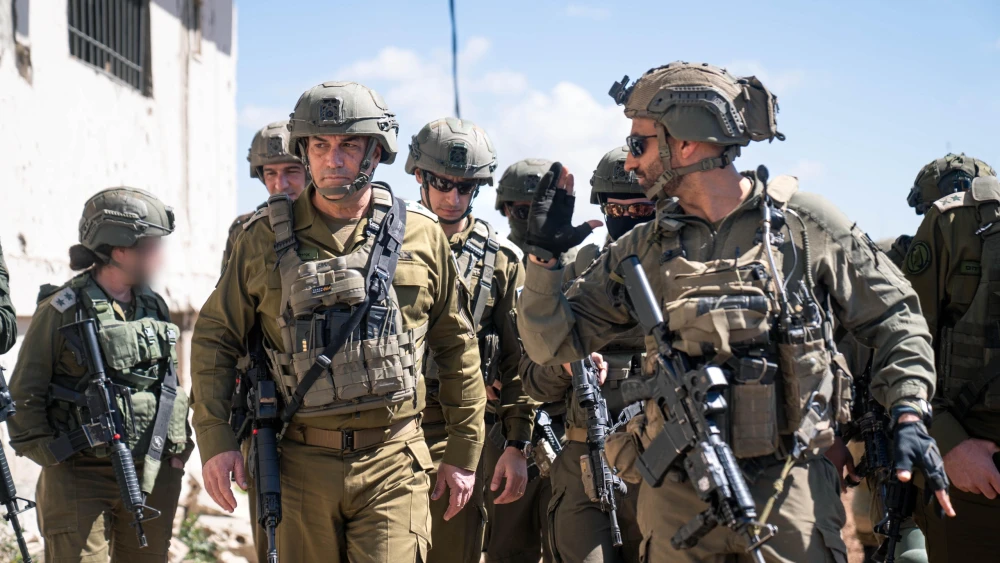
“Cooperation and coordination with the U.S. military are ongoing, and we are monitoring the situation,” Zamir said during a visit to troops fighting Iranian-backed Hezbollah terrorists in Southern Lebanon.
“In Iran, we have an additional series of targets ready to be struck,” he revealed, saying additional strikes would “enable us to deepen our achievements and further weaken the Iranian regime.”
“We have a historic opportunity to change the regional reality in the multi-front operation,” continued the military chief.
Since Lebanese Hezbollah joined the war on Tehran’s behalf some two months ago, the IDF has eliminated 2,000 of its terrorist operatives, Zamir stated.
“We will seize every opportunity to deepen the dismantling of Hezbollah and continue weakening it,” he said. “We will not step back until security is ensured and a long-term solution is secured for the communities of northern Israel.”
The IDF struck Beirut on Wednesday night for the first time in nearly a month, targeting the commander of the terrorist group’s Radwan Force.
The attack in Beirut’s southern suburbs—a Hezbollah stronghold—marked the first IDF strike in the capital in almost a month, with the last having been on April 8.
Hezbollah began firing rockets and drones at Israel on March 2, following the targeted killing of Iranian Supreme Leader Ali Khamenei in the opening strikes of Israel’s “Operation Roaring Lion” on Feb. 28.
In response to the terrorist organization’s violation of the U.S.-brokered Nov. 27, 2024, truce agreement, Jerusalem launched an aerial campaign against Hezbollah and ordered the IDF to advance and take control of additional areas in Southern Lebanon to halt cross-border attacks.
Jerusalem and Beirut on April 16 agreed to a 10-day ceasefire following mediation by U.S. President Donald Trump. The two countries on April 23 agreed to extend the truce for three more weeks following direct talks in Washington, D.C.
However, Israeli Prime Minister Benjamin Netanyahu last week accused Hezbollah of “essentially disintegrating” the temporary ceasefire through its ongoing attacks.
“Therefore, as far as we are concerned, what obligates us is the security of Israel, the security of our soldiers, and the security of our communities. We are acting vigorously according to the rules we agreed upon with the United States, and incidentally, with Lebanon as well,” the premier said.