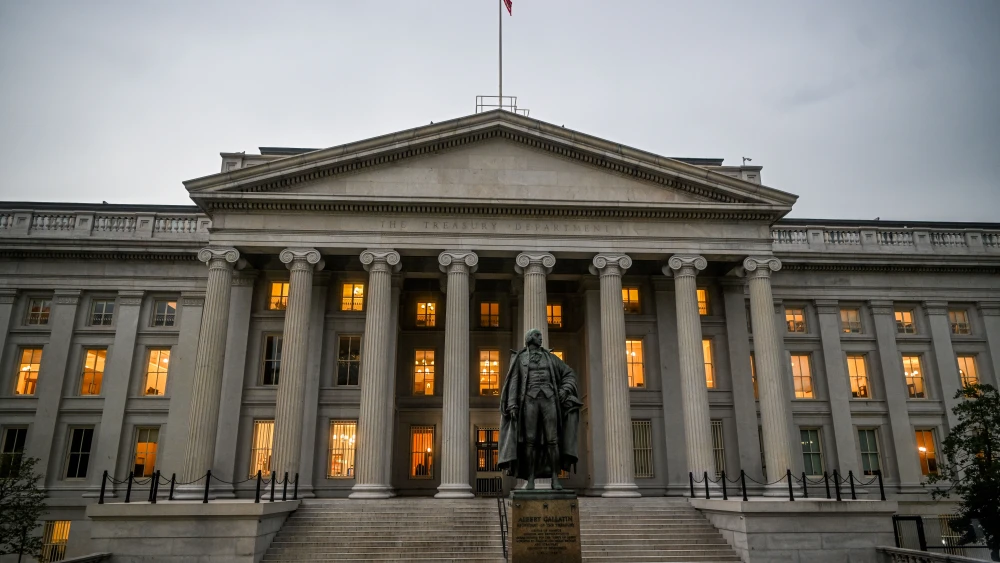
The U.S. Treasury Department announced on Thursday that it imposed new sanctions on an Iranian network of “oppression” and sanctions evasion in the Islamic Republic.
The sanctioned companies include ones that help the Iranian regime with facial recognition surveillance, blocking access to the internet and finding alternatives to the international banking system.
As a result of U.S. President Donald Trump’s “maximum pressure campaign and increasing isolation from the global financial system, the Iranian regime is running out of places to hide,” said Secretary of the Treasury Scott Bessent. “Treasury will continue to disrupt Iran’s schemes aimed at evading our sanctions, block its access to revenue and starve its weapons programs of capital in order to protect the American people.”
Since existing sanctions deprive Iran of normal access to international markets for oil or the SWIFT banking network, the country has developed elaborate networks of corporate entities to try to evade those measures and create domestic alternatives.
One such company sanctioned on Thursday, FANAP, is involved in “the production and maintenance of ATMs and the design of banking and payment hardware for Iran’s banking sector.”
Another, the RUNC Exchange System Company, helped develop Iran’s “Cross-Border Interbank Messaging System,” an alternative to the SWIFT system that Iran has used to transact oil deals with China.
FANAP also has helped Iran repress protests in the country, according to the Treasury Department, and its facial recognition software called Behnama is used by Iran’s morality police to enforce women’s compliance with the mandatory hijab laws.
The death of Mahsa Amini in Iranian police custody in 2022, after she allegedly violated the hijab law, sparked the “Woman, Life, Freedom” movement that saw nationwide protests against the regime.