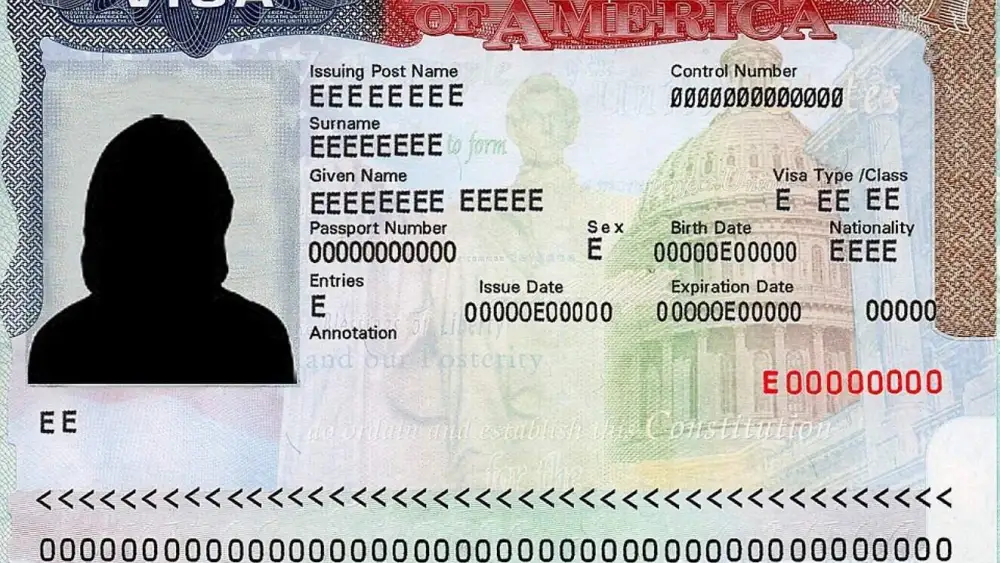
The U.S. State Department announced on Wednesday changes in the procedures for vetting student visa applicants.
“It is an expectation from American citizens that their government will make every effort to make our country safer, and that is exactly what the Trump administration is doing every single day,” a senior State Department official said. “This is particularly true when it comes to our visa system.”
Amid a number of controversies involving the detention and proposed deportations of several foreign students deemed to be supporting Hamas and other terrorist organizations, which have brought about court challenges, the State Department announced that it is “helping to make America and its universities safer while bringing the State Department into the 21st century.”
Under new guidance issued to consular officers, a “comprehensive and thorough vetting” of all applicants for student and exchange visitor visas will include applications being “asked” to adjust their social-media privacy settings to allow for public viewing.
JNS has learned that applicants will be told that their failure to do so could be construed as an effort to evade or hide certain activity.
Consular officials are being told to look for “any indications of hostility toward the citizens, culture, government, institutions or founding principles of the United States,” JNS has learned.
“The enhanced social-media vetting will ensure we are properly screening every single person attempting to visit our country,” said the senior official.
The new guidelines affect applications for F, M, and J visas. The F visa is for academic students, the M visa is for vocational or non-academic students, and the J visa is for exchange visitors.
State Department officials have previously said that consular officers are ultimately responsible for using their best judgment in making determinations about visa applicants.
Officials have previously confirmed that U.S. Secretary of State Marco Rubio launched an artificial intelligence-powered “Catch and Revoke” program aimed at canceling the visas of foreign nationals who appear to support Hamas. Officials have been coy about how AI might be used to track the social-media activity of those in the application process.
Rubio stated that as of late May, the State Department had revoked at least 300 visas of individuals, including several international students, scholars and faculty. He said that number would grow, with revocations taking place daily.
A federal court, however, recently ruled that Columbia University graduate Mahmoud Khalil, a Syrian national and organizer of anti-Israel activity on the school’s campus in New York City, could not be held or deported under the Immigration and Nationality Act. Rubio had said the document gave him the authority to strip Khalil’s visa status due to his “presence or activities would compromise a compelling U.S. foreign policy interest.”
While the judge ruled that interpretation as being unconstitutionally vague, Khalil remains detained under separate charges of falsifying or omitting information on his green-card application.