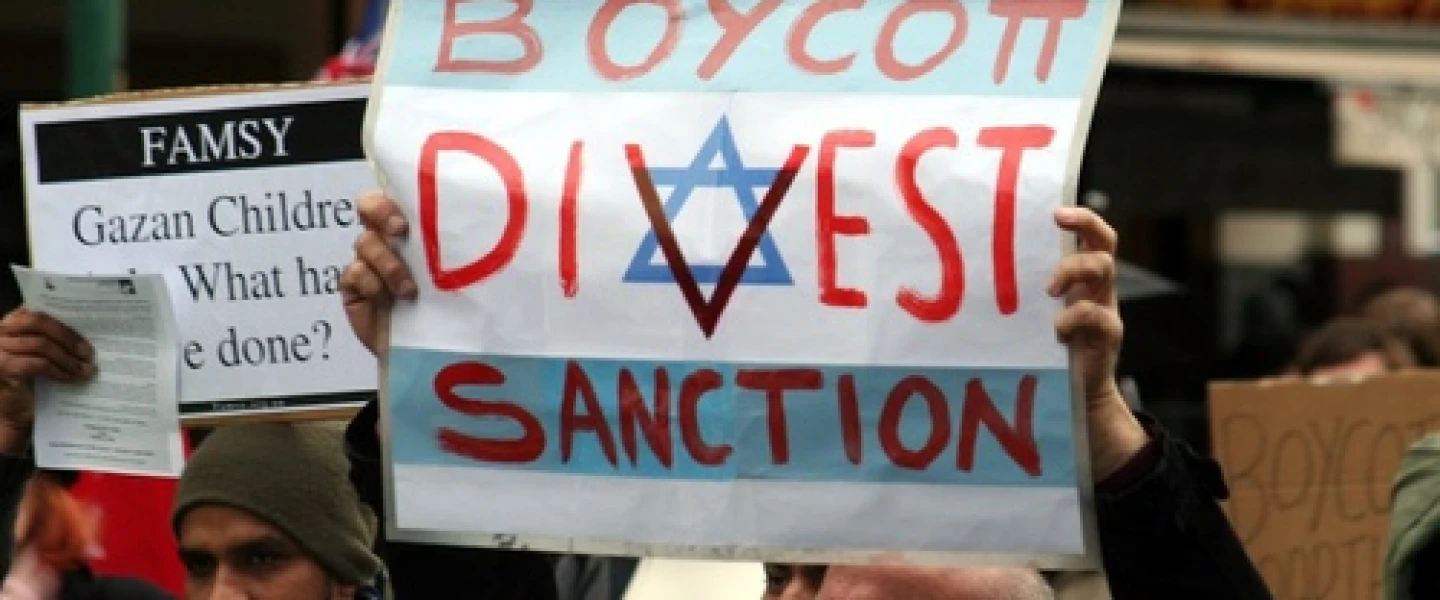
As anti-Israel protests erupted at Microsoft against the company’s tech contracts, including the use of artificial intelligence, with the Israel Defense Forces, Jewish employees and resource members told JNS that there has been radio silence from higher-ups regarding their safety.
Anti-Israel protests at the computer software giant called for a “worker intifada”; vandalized Microsoft’s campus in Redmond, Wash., with red paint; and were charged with “trespassing, malicious mischief, resisting arrest and obstruction.” The melee resulted in 18 arrests.
It has left some Jewish employees feeling fearful, angry and abandoned.
“There has been no response or acknowledgement within Microsoft to the Jewish ERG or otherwise,” Steven Phillips, founder and executive director of JewishERGs, a global network of Jewish employee resource groups, told JNS. He added that “no employee has told me that there has been any internal communications” about the incident.
Phillips told JNS that a number of Jewish employees at Microsoft “avoided going to the campus” in the wake of protests, which entered their third day on Thursday and were said to have been organized by the employee-led No Azure for Apartheid group.
No Azure for Apartheid is part of No Tech for Apartheid, according to its website. No Tech for Apartheid is supported in part by the nonprofit group MPower Change, of which anti-Israel activist Linda Sarsour serves as executive director.
A Jewish project manager at Microsoft who asked to remain anonymous told JNS: “There’s no way that I can feel safe at work when protesters are on campus calling for a ‘workplace intifada.’ In the span of a day, they escalated from protest to property destruction—and our senior leadership has said nothing.”
The employee added that “I have not seen or heard anything from our senior leadership.”
In response to an investigation published by The Guardian claiming that Israel was using the company’s Azure cloud computing platform for mass surveillance of Palestinian civilians, Microsoft published a statement on Aug. 15 that said the tech company was “undertaking a formal review of allegations,” adding that “Microsoft’s standard terms of service prohibit this type of usage.”
When JNS asked Microsoft if it could guarantee the safety of its Jewish employees, it responded that the company would “continue to do the hard work needed to uphold its human-rights standards in the Middle East, while supporting and taking clear steps to address unlawful actions that damage property, disrupt business, or that threaten and harm others.”
It did not specifically mention Jewish employees or detail what those “clear steps” are.
A Microsoft spokesperson did make a point to say that it “deeply appreciates and supports the actions of local law-enforcement officers and the Redmond Police Department.”
In July, after the Louis D. Brandeis Center Under Law threatened to file a complaint with the Equal Employment Opportunity Commission, the company agreed to recognize the company’s Jewish group as one of its “employee resource groups.”