Newsletter
Newsletter Support JNS

Report: Under Sudan peace deal, illegal migrants in Israel may be sent home

“We are not afraid of being returned. We hope the agreement with Israel points to the current situation in Sudan,” says Sudanese asylum seeker.

Sudanese Refugees
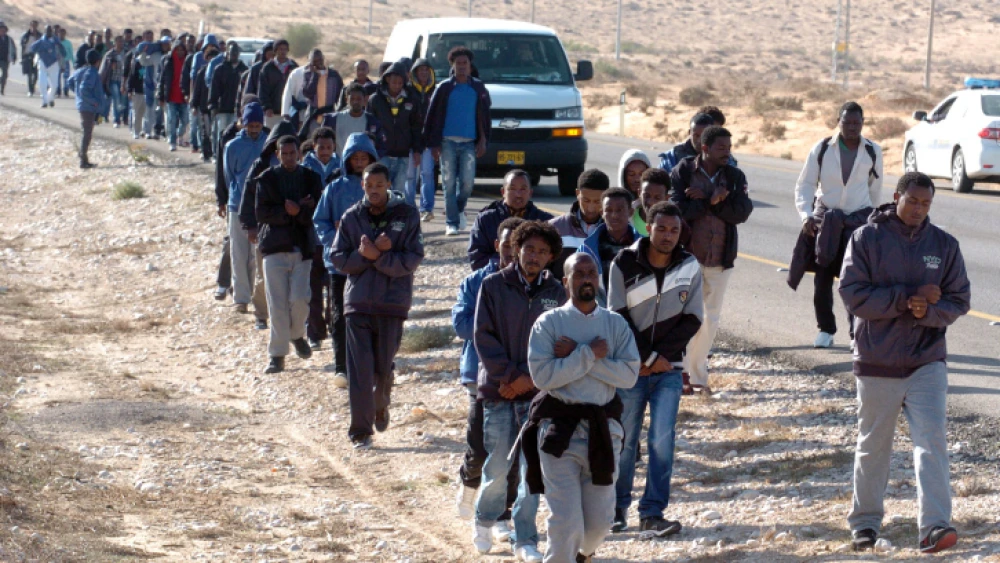
Sudanese refugees in Israel march in protest against the new “Holot” detention camp for illegal migrants on Dec. 19, 2013. Photo by Flash90.

The Israel-Sudan peace agreement announced by U.S. President Donald Trump on Friday reportedly includes a provision allowing Israel to send back illegal Sudanese immigrants, Ynet reported on Sunday.

Sudanese nationals in Israel are paying close attention to developments. There are around 6,000 Sudanese in Israel, the majority of whom live in southern Tel Aviv.

A Sudanese asylum seeker named Faisal told Ynet, “We are not afraid of being returned. We hope the agreement with Israel points to the current situation in Sudan. If there is peace and a stable government, we all would want to return. No one wants to live in a different country, far from his family.”

Local residents in southern Tel Aviv have complained for years about the impact of the Sudanese migrants in their neighborhood.

“I’ve read and seen a lot of what others have had to say in response, and I understand the hurt I caused and am truly sorry,” Rama Duwaji told an online arts magazine.
The legislation would empower the New York City Police Department to set limits on how close demonstrators can gather near schools, as critics warn of free speech infringement.
The move aims to boost long-haul capacity as other airlines scale back routes to and from Israel.
“School districts, like colleges and universities, must take prompt and effective action to address antisemitic harassment,” stated Harmeet Dhillon, assistant U.S. attorney general for civil rights.
Just one Democratic congressman voted against the measure to require U.S. forces to be withdrawn from the conflict with Iran.
“This tool makes it easier to confront and understand family histories connected to the Nazi era,” Die Zeit stated in its introduction of the database.