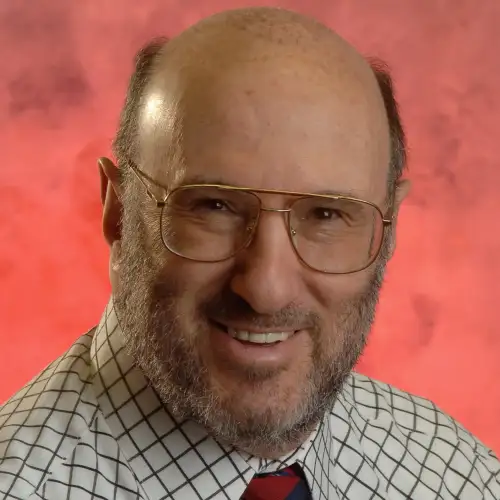
Shari Ungerleider from New Jersey and Myra Sack from Boston share a heartbreaking bond: Both lost a child to Tay-Sachs disease. Shari’s beloved son, Evan, passed away more than 25 years ago, while Myra’s daughter, Havi, died in 2021. Even after decades of progress in medicine, babies are still being born with Tay-Sachs and other devastating genetic diseases.
The challenge is preventing future families from experiencing such suffering. The solution is simple: comprehensive genetic screening and personalized counseling for prospective parents.
Shari and Myra are now vocal advocates for genetic testing, determined to protect other families from the pain they endured. They support the work of jscreen, a national nonprofit public health initiative dedicated to preventing Jewish and other genetic diseases through education and preconception genetic testing. This September, for Tay-Sachs Awareness Month and the Jewish New Year, jscreen is raising awareness so every family can plan for a happy new year and a healthy future.
Myra and Matt’s Story
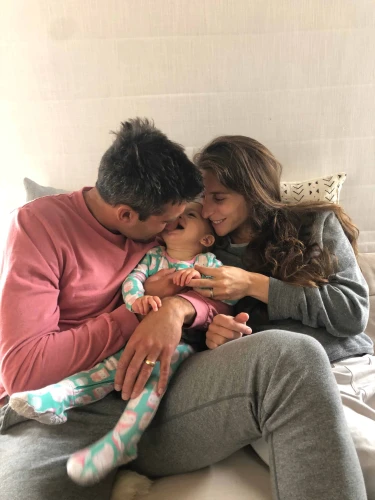
Myra chronicled her family’s journey in Fifty-seven Fridays: Losing Our Daughter, Finding Our Way—a memoir about Havi’s short but meaningful life, and her parents’ poignant struggle to help her live and die with dignity. Critics describe the book as “an act of grace.”
Since Havi’s passing, Myra and her husband, Dr. Matt Goldstein, have found purpose in their grief. Myra is now certified in Compassionate Bereavement Care, serves on the board of the Courageous Parents Network, and founded e-motion, Inc., a non-profit blending bereavement science, spirituality and sport to support families living with loss. Matt has become the CEO of jscreen, leading its mission to provide high-quality, preventive genetic testing and counseling.
“Losing Havi changed everything for our family. It’s impossible to walk through the world unchanged after losing a child,” says Myra. “As part of our transformation, we’re devoted to serving the world with grace, compassion and courage—the essence of Havi. jscreen is a community with compassionate leadership, cutting-edge science and the power to save lives. It’s a community every couple considering children should lean on.”
Shari’s Mission
Shari now serves as outreach and education director at jscreen.org.
“Not a day goes by that I don’t think of Evan and miss him,” Shari reflects. “I wanted to honor his memory by turning our tragedy into something positive. Raising awareness about genetic testing helps spare other families the suffering we experienced. Reproductive carrier screening, paired with genetic counseling, identifies couples who are at risk and provides them with options to ensure a healthy future for their children.”
How jscreen Helps
jscreen makes genetic testing simple, accessible and affordable through at-home saliva test kits.
- Reproductive Carrier Screen: For individuals ages 18-45, tests for more than 260 diseases (including Tay-Sachs and other conditions common in both Jewish and non-Jewish populations). If results reveal that a couple is at increased risk, jscreen provides access to telehealth genetic counseling to guide next steps.
- Hereditary Cancer Test: jscreen also offers a separate test for hereditary cancer risk. This test screens for genetic mutations linked to risk for breast, ovarian, colorectal and other cancers, enabling prevention or early treatment.
What is Tay-Sachs Disease?
Tay-Sachs is a rare, inherited genetic disorder that primarily affects infants and young children, though late-onset cases exist. The disease is caused by the absence of the enzyme HexA, leading to the toxic buildup of lipids in the brain and nerve cells and resulting in severe neurological damage.
Children with infantile Tay-Sachs typically develop normally for a few months before regressing, becoming blind and deaf, suffering seizures and losing motor function. Most die before the age of 5.
- Carrier frequency: 1 in 30 Ashkenazi Jews; 1 in 300 in the general population.
- Inheritance risk: If both parents are carriers, there is a 25% risk of Tay-Sachs disease in each of their pregnancies.
- Options for at-risk couples: In vitro fertilization with preimplantation genetic testing and other reproductive technologies can help ensure the health of their future children.
In recognition of the urgent need for awareness, the U.S. Senate designated September as National Tay-Sachs Awareness Month in 2008.
“A simple at-home saliva test can spare families heartbreak,” says Karen Arnovitz Grinzaid, founding executive director of jscreen. “We’re here every step of the way to provide education, genetic counseling and support so families can make informed decisions about their future.”