


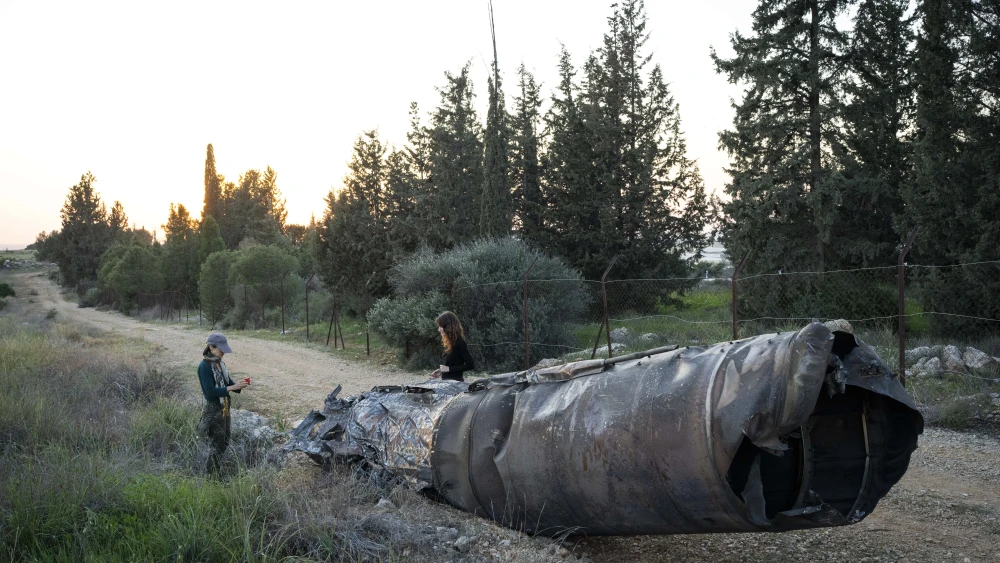
America and Israel are currently fighting against the Iranian regime on behalf of much of the world; Iran has murdered or maimed civilians from Bulgaria to France and from Spain to Argentina.
False claims that America is fighting “Israel’s war” ignore nearly half a century of Iranian aggression against the United States and the West. Since the 1979 Islamic Revolution, Iran and its terrorist proxies have repeatedly targeted Americans through hostage-taking, violence and attacks on U.S. forces. Iran’s terror campaign began in 1979 when militants seized the U.S. embassy in Tehran and took 66 Americans hostage for 444 days.
During the Iraq War, Iranian-backed militias killed hundreds of U.S. troops using weapons supplied by Iran’s Islamic Revolutionary Guard Corps. In recent years, Iran has killed three U.S. soldiers at a base in Jordan and an American civilian in Iraq, while plotting assassinations and launching cyberattacks inside the United States.
American officials stated that the current campaign is degrading Iran’s military capabilities. Iran’s facilities were significantly weakened after last year’s joint U.S.-Israeli strikes on its nuclear infrastructure. While U.S. and Israeli officials have concluded that most of Iran’s missile launchers have been destroyed, missile and drone attacks continue.
Despite cautious optimism from American officials, public opinion is more divided. Some recent polls suggest that a majority of Americans oppose the war. Views remain sharply divided along political lines, with most Republicans supporting the war and most Democrats opposing it. At the same time, many military and national security experts have described the campaign against Iran as a necessary effort that could reshape the Mideast and significantly reduce the threat posed by Iran.
The nature of Iran’s regime can be seen in the way it treats its own citizens—violently suppressing protests and reportedly slaughtering as many as 36,500 Iranians in recent months.
Women have been harshly persecuted for how they dress or speak. Players on Iran’s national women’s soccer team recently refused to sing their national anthem, prompting Iranian leaders to brand them “traitors.” Five players requested asylum in Australia, where they were playing. Israeli Technology Minister Gila Gamliel urged the Australian government to protect them: “They are asking for the opportunity to live in safety, freedom and dignity—fundamental values upon which the world’s leading democracies are built.”
The players’ experience reflects the danger of Iran’s religious fundamentalist leaders now confronting America and its allies.
Iran’s regional attacks may have backfired
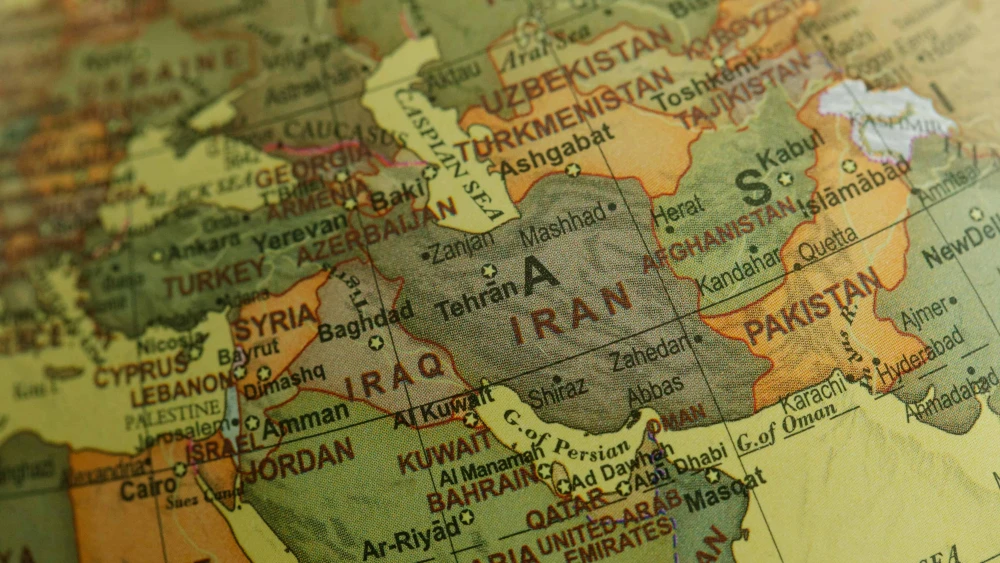
Iranian leaders made a “catastrophic” decision to attack neighboring Arab countries, including nations that traditionally maintain warm ties. Qatar, which had previously criticized U.S. strikes against Iran, condemned the Islamic regime’s “reckless and irresponsible” attacks.
Iran’s missile and drone assault against Gulf states—more than 1,400 strikes—and threats to international shipping raised fears of wider instability and skyrocketing fuel prices. Iran recently warned that oil tankers “must be very careful” passing through the Strait of Hormuz, highlighting how important regional stability is for global commerce. Helping to stabilize oil prices, America, France and other countries offered naval escorts for commercial vessels.
Another front involves the Iranian-backed Hezbollah terror group in Lebanon. The terror group continues launching rockets into Israel while threatening American interests, despite opposition from the Lebanese government. Hezbollah openly pledges loyalty to Iran rather than its ‘host’ country and calls America the “Great Satan.”
Extremists promote conspiracy theories blaming Jews
Conspiracy theories blaming Jews for the conflict have spread rapidly across social media and political commentary.
Far-right political podcaster Tucker Carlson is blaming the war on a strict Orthodox Jewish religious movement. Founded in Eastern Europe in 1775, the Chabad-Lubavitch movement operates Jewish community centers and synagogues in all 50 states and more than 100 countries, serving as a spiritual home for Jews around the world. The group was the center of international attention recently in Australia when father-and-son terrorists murdered 15 people at a Chanukah celebration on Bondi Beach, sponsored by Chabad.
Carlson blames Chabad and Jews for orchestrating a “global religious war.” After several visits to the White House, U.S. President Donald Trump disavowed him, telling ABC News that “Tucker has lost his way.”
Candace Owens, another far-right podcaster and media personality, supported Carlson’s false claims. She warned her millions of followers to be “aware of the Chabad nearest your home” and that “these people are dangerous.” Owens also falsely blamed Israel again for the 9/11 terror attacks.
U.S. Navy veteran Nick Matau responded by sharing his experience with Chabad: “As a non-Jew stationed in Hawaii, I once stumbled into a Chabad center at the end of a Shabbat celebration. They welcomed me in, didn’t care that I wasn’t Jewish, and the rabbi told me to call anytime if I needed help. Chabad truly spreads light to the world, including to non-Jews!”
Hate rarely stays confined to social media. Anti-Israel activists recently staged a blood libel display near the White House. Actors wearing masks staged a grotesque street performance, tearing apart bloody plastic babies and drinking fake blood. The blood libel falsely claims that Jews murder non-Jewish children to use their blood in rituals, such as baking Passover matzah. For centuries, political and religious leaders around the world have used the blood libel to justify murdering Jews.
Extremists are promoting claims that Jews, Zionists or Israelis control Washington and are responsible for the war, while accusing American Jews of being more loyal to Israel than the United States.

Wars lead to attacks on Jews
Wars involving Israel often tend to trigger global spikes in hostility, discrimination and violence against Jews. As the conflict continues and conspiracy theories gain traction, extremists are targeting Jewish communities far beyond the Middle East.
In the United Kingdom, fans at a soccer game for kids shouted “Go back to the gas chambers,” “Dirty Zionists” and “Dirty Jews” at players from a Jewish school. Two Israelis were attacked at a California restaurant after being overheard speaking Hebrew. In Toronto, gunmen fired at three different synagogues, and a bomb exploded outside a synagogue in Belgium; no one was hurt.
And on March 12, Ayman Mohamad Ghazali, who was born in Lebanon but became a U.S. citizen, rammed his truck into a Reform synagogue in the Detroit suburbs, injuring a security guard. Armed with a rifle, he was shot and killed by law enforcement.
Belgium’s prime minister warned about the threat to Western values: “Antisemitism is an attack on our values and our society, and we must fight it unequivocally.”
Points to consider:
1. Iran’s war against America and its allies did not begin in 2026.
Iran’s terrorist regime has spent decades targeting Americans, U.S. allies, including Israel, jeopardizing global stability. Since the 1979 Islamic Revolution, Iran has used hostage-taking, terrorism and proxy warfare as core tools of state policy. Iranian-backed groups have attacked U.S. forces, civilians and diplomatic facilities across the Middle East. The current conflict is not a sudden escalation but part of a long-standing pattern of Iranian aggression by a regime that openly declares America the “Great Satan.”
2. Iran’s intentional attacks against neighboring countries threaten worldwide security.
The Islamic Republic has expanded the conflict beyond Israel by targeting neighboring Arab states and international shipping routes. Missile and drone attacks against Gulf countries and threats to oil tankers passing through the Strait of Hormuz have destabilized global energy and stock markets and pose risks to international trade. Iran’s support for armed proxies, including Hezbollah in Lebanon, continues to widen the conflict.
3. Extremists are reviving classic antisemitic conspiracies to large audiences.
Periods of conflict involving Israel often trigger conspiracy theories blaming Jews for international events. The tropes, reframed for the current conflict, are spreading across political and ideological movements. Influential media personalities are amplifying these anti-Jewish conspiracies to their millions of followers. These narratives recycle centuries-old false accusations that Jews secretly control governments or manipulate American foreign policy.
4. Anti-Jewish propaganda online leads to real-world attacks.
Conspiracy theories and dehumanizing rhetoric often translate into harassment, vandalism and violence against Jewish communities. Demonstrations featuring blood libel imagery and calls to target Jewish institutions illustrate how quickly hateful narratives can escalate into intimidation and attacks. Recently, gunmen fired on three synagogues in Toronto; a bomb was detonated outside a Belgian synagogue; and a Lebanese-born man, armed with a rifle, rammed his truck into a Reform synagogue outside of Detroit, injuring a security guard.
5. Jews should not be blamed for international conflicts.
Holding Jewish communities responsible for the actions of Israel’s government is reckless and dangerous. Just as Muslims should not be targeted because of Iran’s regime, Jews should not face discrimination, threats or violence because of events in the Middle East. Protecting civil society requires rejecting collective blame and confronting hate, whenever and wherever it appears.


