Newsletter
Newsletter Support JNS

Argentina reportedly pulling troops out of UN force in Lebanon

A UNIFIL spokesman appeared to confirm reporting that Argentinian President Javier Milei decided to exit the U.N. mission on Nov. 1.

UNIFIL
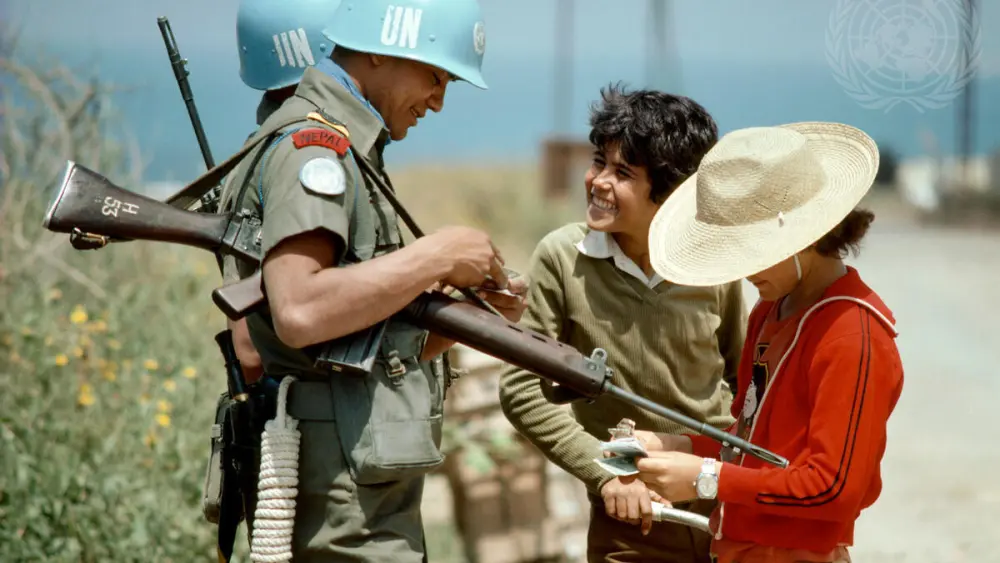
Nepalese soldiers serving with UNIFIL chatting with two young Lebanese boys outside UNIFIL headquarters in Naqoura, April 27, 1978. Credit: John Isaac/U.N. Photo.

Andrea Tenenti, a spokesman for the U.N. Interim Force in Lebanon, said on Tuesday that Argentina intends to withdraw its troops from UNIFIL, Reuters reported.

“Argentina has asked its officers to go back,” Tenenti said at a U.N. press briefing, per the news service. The statement appeared to confirm two-week-old reporting that Javier Milei, the Argentinian president, made the decision to exit UNIFIL on Nov. 1.

JNS sought comment from the Argentinian embassy in Washington.

Israel has asked UNIFIL to exit certain areas ahead of its attacks on Hezbollah terror sites. The U.N. mission has declined to do so, putting itself in danger, Israel has said.

UNIFIL recently blamed “non-state actors” for ambushing a facility without naming Hezbollah.

Rami Elghandour has accused the public school of ignoring free speech and of “virtue-signaling.”
“Almost a year ago, on June 1, 2025, there was a heinous antisemitic attack on 29 members of the Boulder community during a peaceful gathering in front of the Boulder County Courthouse,” the county said.
“In this country, public art doesn’t become off-limits just because it may make some people think about religion,” Joseph Davis, an attorney representing the city, told the court.
“There is no tolerance for hatred of Jewish New Yorkers, which we have seen time and time again, whether it be in the graffitiing of swastikas on a number of homes across Queens recently,” the New York City mayor said.
Ali Maarij Al-Bahadly “abuses his position to facilitate the diversion of oil to be sold for the benefit of the Iranian regime and its proxy militias in Iraq,” the department said.
When Americans are threatened overseas, “nine out of 10 times you scratch the surface of that threat, and three nanometers later, you find Iran,” Sebastian Gorka, the White House counterterrorism head, said.