


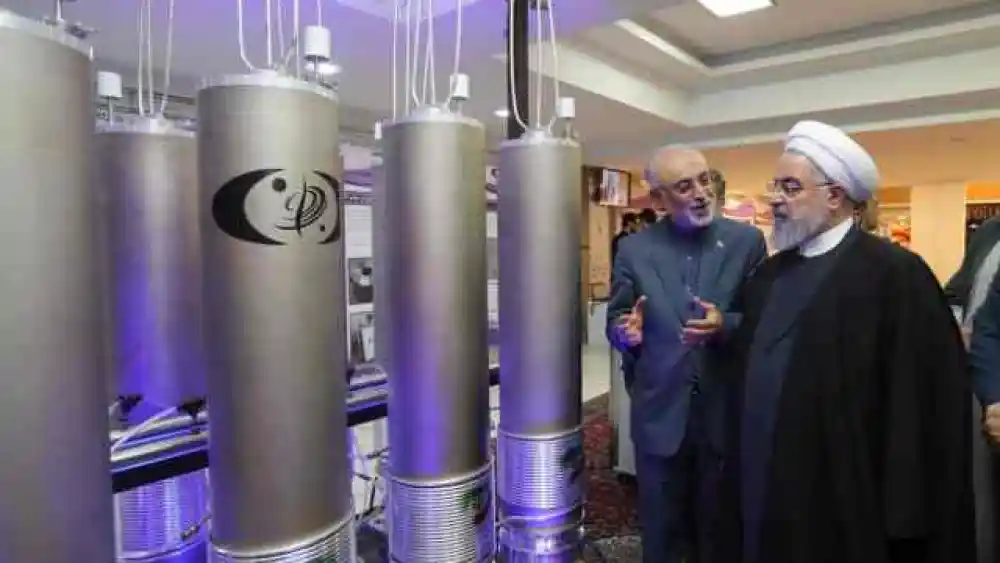
Iran has begun enriching uranium to 60% at its underground Fordow nuclear site, Reuters reported on Tuesday.
Tehran had sent a letter to the United Nations’ International Atomic Energy Agency informing the nuclear watchdog of the move, said the report.
The decision was a “strong response” to the IAEA board of governors’ adoption of a resolution on Thursday calling on Iran to cooperate with the agency’s probe into uranium traces discovered at three undeclared sites, stated the report, citing Iranian state media.
Iran’s Foreign Ministry on Monday dismissed the resolution as “politically motivated,” according to Reuters.
As of Oct. 22, Iran had amassed 62.3 kilograms (137.3 pounds) of uranium enriched to 60%, a level just a short technical step away from producing 90% or weapons-grade, fissile material.
Due to restrictions Tehran placed on U.N. inspectors last year and the regime’s removal in June of the agency’s monitoring and surveillance equipment from nuclear sites, the IAEA said in its last quarterly report that it could not determine the precise size of Iran’s stockpile of highly enriched uranium.
Also in June, Reuters reported that Tehran was preparing to use advanced IR-6 centrifuges at the Fordow site.
Israel Defense Forces Military Intelligence Directorate chief Maj. Gen. Aharon Haliva said on Monday that Iran would soon start enriching at least a “symbolic” amount of uranium to 90%, although he added that it was unlikely to make a dash for the bomb.
Haliva warned that Tehran had made “significant progress” on its nuclear program, and that the international community would soon face its “greatest test” in preventing the Islamic Republic from obtaining a bomb.
Haliva’s comments came a day after IDF Chief of Staff Lt. Gen. Aviv Kohavi arrived in the United States for a five-day visit focusing on the Islamic Republic’s nuclear program and regional expansionism.


