The Israel Defense Forces has struck approximately 4,500 Hezbollah targets in the past five months since the start of the war with Hamas in the Gaza Strip, the military spokesperson’s unit announced on Tuesday.
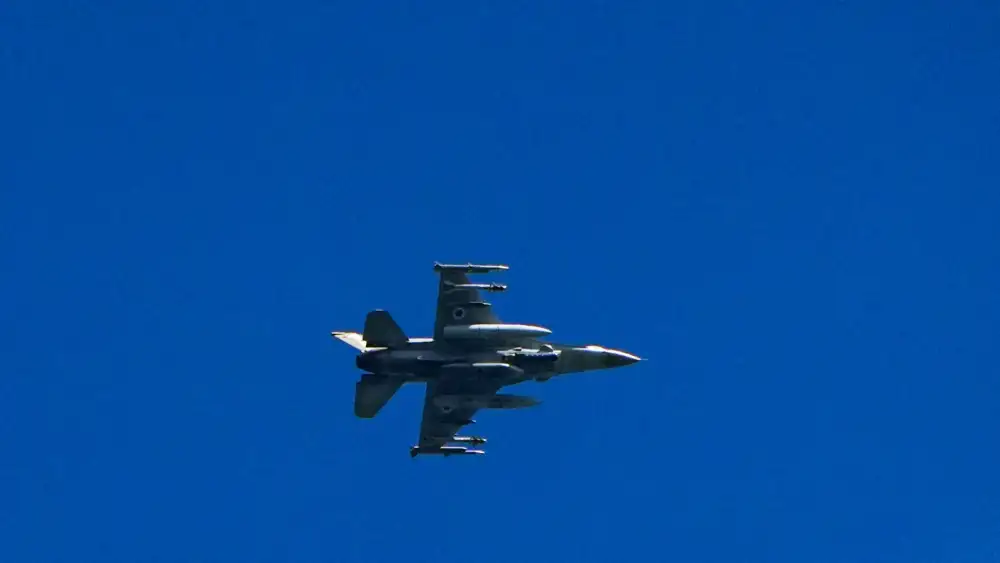
“Over the last five months, IDF troops—under the direction of the Northern Command’s Fire Control Center and the Israeli Air Force—have struck over 1,200 Hezbollah targets from the air and more than 3,100 Hezbollah targets from the ground,” the spokesperson’s unit said in a statement.
“These Hezbollah terror targets, located in both Lebanon and Syria, include weapons storage facilities, military structures intended for Hezbollah’s offensive activity, and operational command and control centers where terrorists were located,” it added.
Since the beginning of the war, the IDF has eliminated more than 300 terrorists in the north and wounded more than 750, according to the military, including five senior Hezbollah commanders, and dozens of terrorist cells that directed or fired anti-tank missiles and rockets.
“These strikes impair Hezbollah’s air and ground capabilities, as well as its chain of command,” the IDF said. “The IDF’s operations against Hezbollah terrorist targets and operatives are in response to the organization’s ongoing attacks against civilians and communities in northern Israel. The IDF is continuing to operate to drive Hezbollah and its forces out of Southern Lebanon in order to enable the residents of northern Israel to return to their homes in safety and security.”
The military released a video of Maj. Gen. Ori Gordin, commanding officer of the IDF Northern Command, which is responsible for the northern arena, speaking to members of the Command’s Fire Control Center, which coordinates ground-based and aerial strikes against Hezbollah.
“In the last five months, the number of targets we struck, and the number of targets we approve each day for the following day and week, is in my view very impressive,” said Gordin.
He added that he had full confidence in the Northern Command’s Fire Control Center and Headquarters to “prepare the command for this significant step, both at this rate and for when we will need to move up a gear.”
Joint naval drill with China and Russia
Meanwhile, in the Gaza Strip, troops from the elite Egoz Unit are continuing to operate and conduct targeted raids in the Hamad area of Khan Yunis. The unit located a military compound containing weapons in the area, including AK-47 rifles, vests and explosive devices, the military said. Ground forces with air support eliminated a terrorist who fired mortar shells at Israeli territory as well.
The IAF also hit Hamas military compounds in southern Gaza. Four terrorists seen planting an explosive device were eliminated in an airstrike after Givati Brigade combat teams spotted the threat.
In northern and central Gaza, the IDF’s 162nd Division sent combat teams led by the Nahal infantry Brigade to destroy rocket launchers used to attack Israel, acting on precise intelligence.
“The troops cleared the area of weapons and dismantled the launchers. In addition, two rockets were fired at IDF troops, who located the terrorists that exited the source of the fire. In response, an aircraft eliminated the terrorists,” said the IDF.
Further afield, Iran held an annual joint naval drill with China and Russia in the Gulf of Oman, the Associated Press said on Tuesday, noting that the drill, held since 2019, took place in a strategic waterway.
The “Marine Security Belt 2024” drill saw Chinese guided-missile ships join Russian vessels and Iranian warships, with naval helicopters taking part as well.
The drill comes days after the U.S. Military’s Central Command (CENTCOM) Commander Gen. Erik Kurilla told the Senate Armed Services Committee on March 7 that Iran is not paying a cost for facilitating Houthi missile attacks on American ships.
At the same time, Kurilla noted at the hearing, “We have not had an attack in 32 days in Iraq or Syria.”