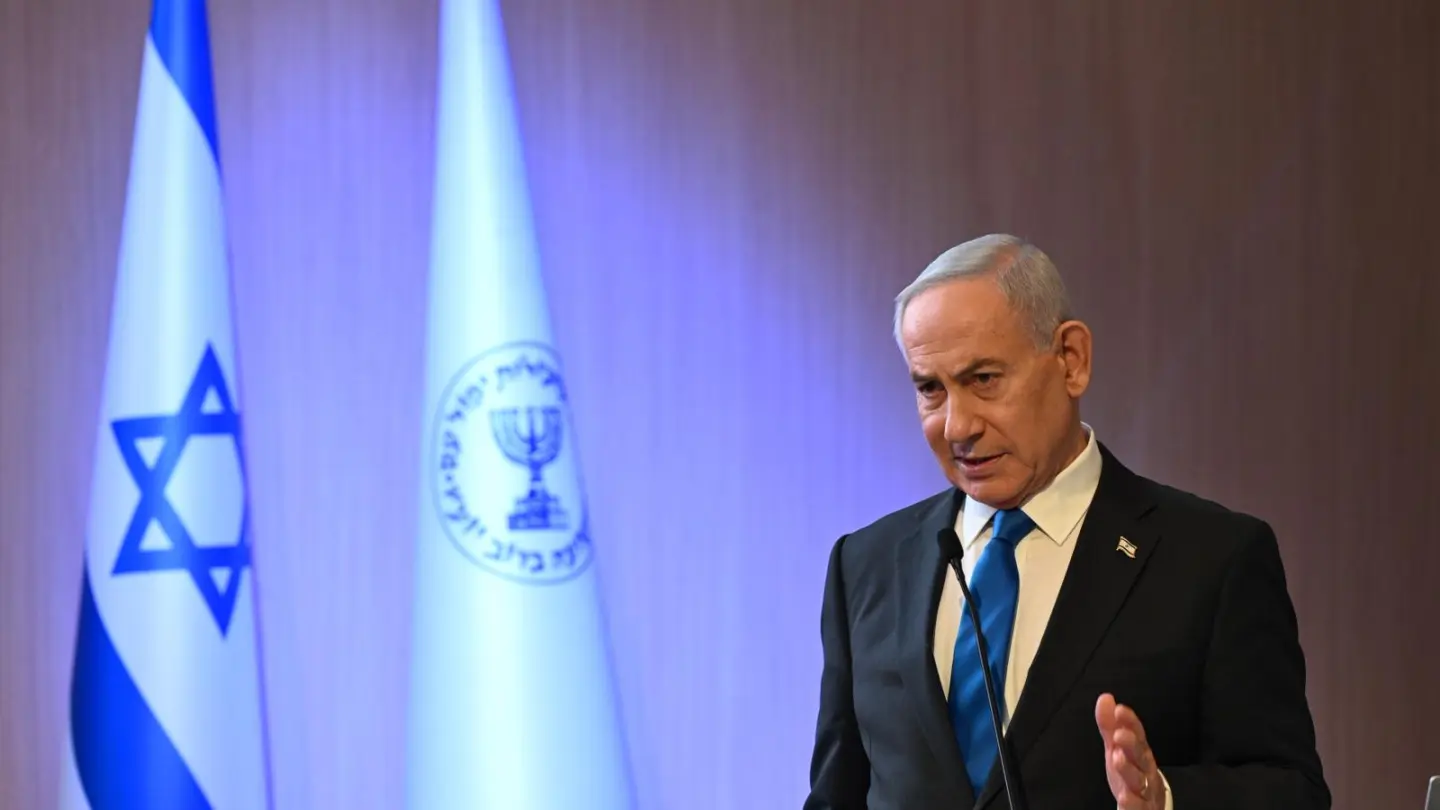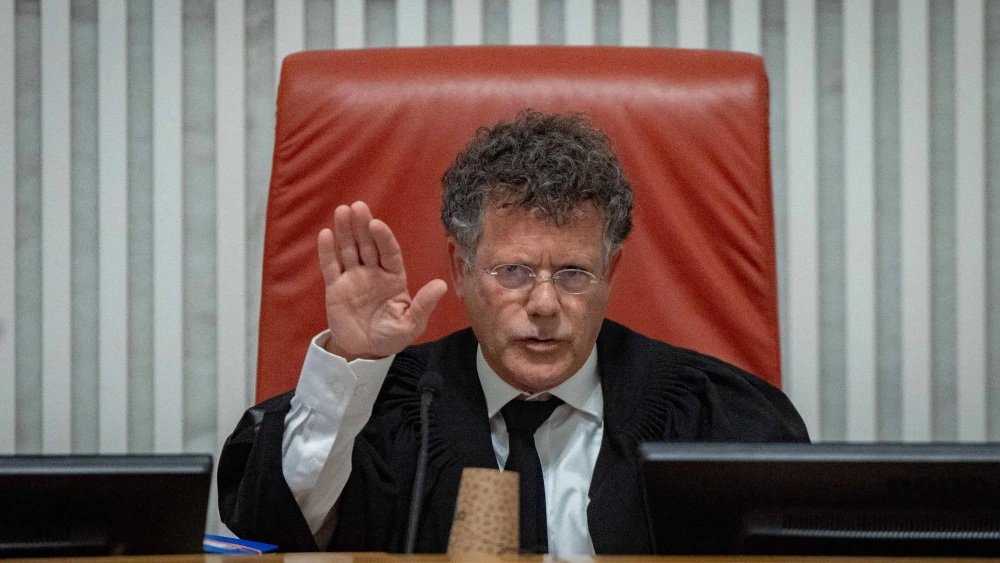

The debate in Israel over whether to launch an official state probe into the Oct. 7, 2023 Hamas massacre has become a proxy battle over something far larger than procedure. The discussion centers on Israeli Prime Minister Benjamin Netanyahu’s proposal for a new inquiry mechanism, which seeks to replace the traditional format for such inquiries. At stake is not only how Israel investigates one of the darkest days in its history, but whether the country preserves national cohesion, moral clarity and strategic focus during an existential war.
A question of political polarization
Avi Bell, a professor at the University of San Diego School of Law and at Bar-Ilan University’s Faculty of Law, attributes the controversy to deeper issues within Israeli politics.
“The real cause of the controversy is the ever-growing polarization of Israeli politics, including the opposition’s insistence on refusing to cooperate with any proposal favored by Netanyahu, and the ever-growing politicization of Israel’s Supreme Court, and especially its president Yitzhak Amit, whose partisan identity with the left in opposition to Netanyahu is ever clearer,” Bell told JNS.
Much of the pressure for an immediate probe comes from figures who opposed the current government long before Oct. 7. That alone does not invalidate their concerns, but raises legitimate questions about motivation. A commission perceived as a vehicle to relitigate pre-war political disputes—particularly over judicial reform—will lack public legitimacy and deepen internal polarization.
There is also concern that such a probe could morph into a trial-by-media, where leaks, selective testimony and legal grandstanding erode trust in institutions Israelis must rely on in wartime.
Two competing models
“Under Israeli law, ministers, ministries, the Knesset, committees in the Knesset and the government can all appoint commissions of inquiry,” Bell told JNS.
There’s currently broad agreement that the government will appoint a state commission of inquiry into the Oct. 7 Hamas invasion. According to Bell, the debate centers on the mechanism for selecting commission members.
Bell explained that the judicial mechanism favored by the opposition appears in the 1968 Investigative Commissions Law.
“Under this framework, the government appoints the commission and sets its mandate, but the president of the Supreme Court—in this case, the controversial Yitzhak Amit—chooses its members,” he said.
The bipartisan mechanism favored by the coalition, he explained, is new to Israel, based on the 9/11 Commission in the United States and would be anchored in new legislation. The commission would be appointed by the Knesset, its mandate would be set by a committee appointed by the Knesset, and its members chosen by a bipartisan process in a Knesset committee.
“For the most part, the duties and powers of the investigative committees would be identical in both proposals,” Bell explained. “The main difference is whether Yitzhak Amit would choose the members of the commission, as in the opposition proposal, or whether members will be chosen by a joint coalition-opposition process in the Knesset.”
A shift in legitimacy
Professor Ori Aronson of Bar-Ilan University’s Faculty of Law views the proposal differently, focusing on its structural implications.
“The most significant feature of the current legislative proposal to investigate the events of Oct. 7 is not its stated purpose, but its deliberate departure from Israel’s established mechanisms of state inquiry,” Aronson told JNS.
Israel has a long-standing statutory framework for commissions of inquiry, used repeatedly in moments of national crisis. The government’s choice not to rely on that framework represents, according to Aronson, a clear political decision.
A shift in who controls the composition of the investigative body represents a structural change signaling “a different source of legitimacy,” according to Aronson. Previous commissions derived their authority largely from the professional standing and neutrality of their members—judges, academics, former military commanders selected for their perceived independence and expertise.
The proposed model, by contrast, is more overtly political, grounding its legitimacy in public representation, political balance and popular acceptance rather than expertise, according to Aronson.
“Such a shift would likely affect not only how the committee is perceived, but also the type of work it produces,” he told JNS. “Historically, most Israeli commissions of inquiry have focused on diagnosing institutional failures and recommending operational reforms.”
A key uncertainty, he said, is “whether the opposition will participate in the process at all.” If the opposition boycotts the process, “responsibility will fall squarely on the Speaker of the Knesset to determine whether the committee becomes a purely coalition-driven instrument or an effort with broader national responsibility.”
Historical precedents and legal challenges
The experience of the Winograd Committee after the Second Lebanon War illustrates the political flexibility in this area. Although the government avoided establishing a formal state commission, the alternative body it created functioned in nearly identical fashion, exercised comparable powers and produced a highly critical and influential report. In retrospect, Winograd is widely regarded as equivalent in substance and impact to earlier state commissions.
Bell noted that there have been many previous state commissions of inquiry, both judicial and otherwise, nearly all of which have been accompanied by controversy. Judicial commissions have not been immune to criticism—the Agranat Commission was considered in retrospect to have been stacked against the senior staff of the Israel Defense Forces, and the Kahan Commission treated several figures, especially Ariel Sharon, exceptionally harshly according to critics.
“Obviously, both proposals are lawful,” noted Bell. “The opposition’s proposal is anchored in existing legislation; the coalition’s proposals will be anchored in new legislation.”
However, Bell emphasized the political dimensions at play. “The opposition’s support for the judicial mechanism is grounded in its belief that Amit is aligned politically with the Israeli left and the anti-Netanyahu bloc, and that Amit is therefore likely to choose commission members that will punish Netanyahu. The coalition’s support for the bipartisan mechanism is an attempt to neutralize the politicization that would accompany an Amit-appointed commission.”
From a legal perspective, Aronson pointed to relevant Supreme Court precedent. Following the establishment of the Winograd Committee, petitions were filed arguing that the government was legally obligated to form a full state commission of inquiry. The court rejected those petitions by a narrow 4–3 majority, ruling that as long as the government created a mechanism capable of conducting a serious investigation, the court would not dictate its formal structure.
Bell, however, challenged this interpretation of judicial authority. “Claims that the court ‘allows the government some flexibility in an inquiry’s formal structure, provided it’s deemed capable of serious work’ fundamentally misunderstand the law,” he said. “The structure of an inquiry is set by existing legislation, and the court has no authority under the law to veto structures or to pronounce judgment on their ‘seriousness.’”
He added that “the reality, unfortunately, is that notwithstanding this clear law, the Supreme Court will act as a supreme governing authority on this issue, as it does on all political issues in Israel, rather than as a court of law.”
The path forward
“There is no doubt that the commission of inquiry into the Palestinian invasion of Oct. 7, 2023, under any format, will be strongly criticized and highly controversial,” Bell acknowledged. “The best chances for its success in getting its hands on the evidence and getting to the truth are in bipartisan support, if any is to be forthcoming.”
Looking ahead, Aronson said he anticipates “extensive litigation” if the current bill passes, with constitutional challenges likely against the statute itself, and later administrative law petitions targeting the committee’s composition, its powers and the government’s authority to define the scope of its inquiry.
Bell identified two important political reasons for the opposition to resist a bipartisan inquiry “even if it knows it is a better structure.”
“First, the opposition is confident that Amit is a political ally and any success in getting Amit to appoint commission members will be a powerful political blow against Netanyahu,” he said.
“Second, even if the opposition does not get the commission it wants, it is succeeding in insinuating that any ‘real’ commission of inquiry would pronounce Netanyahu guilty and punish him. This is a potent political message that is transmitted every time the opposition complains about the structure of a commission.”