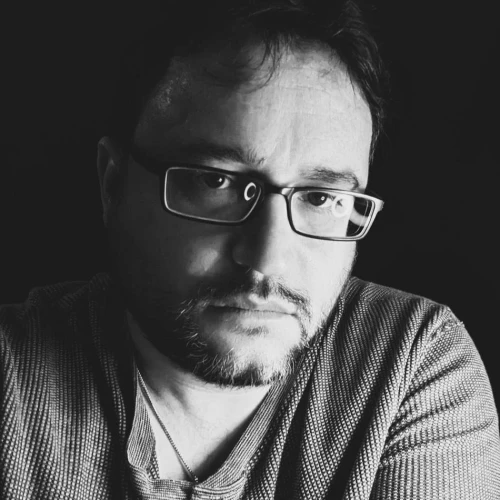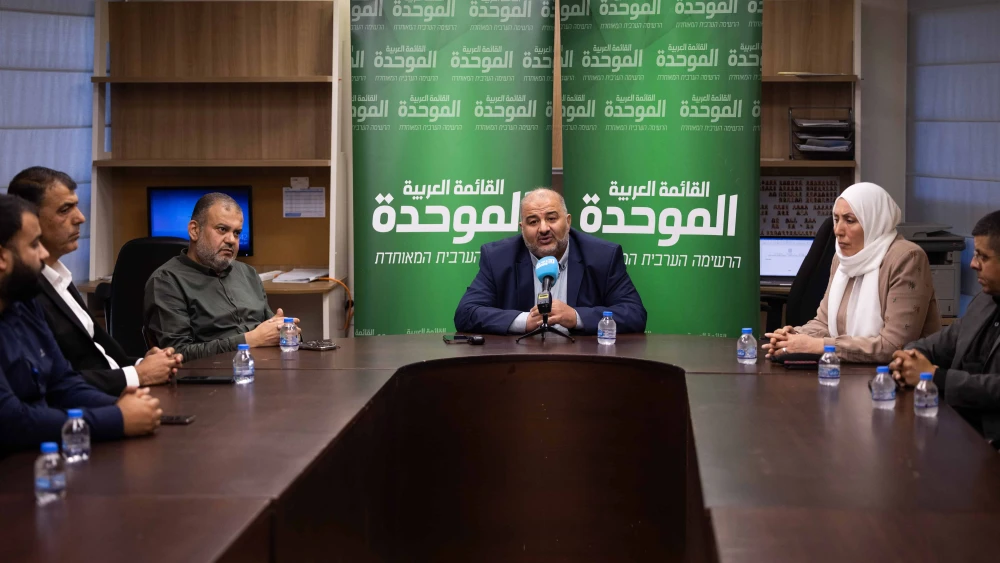

Mansour Abbas, head of Israel’s United Arab List, or Ra’am Party, recently announced he would cut ties to the Shura Council, a body associated with the Muslim Brotherhood-inspired Southern Branch of the Islamic Movement, which guides the party and ultimately makes its decisions.
After denying that the party had any connection to the Muslim Brotherhood, Abbas told Israel’s Channel 12 News program “Meet the Press” that “Ra’am is moving in the direction of becoming a completely civil [non-religious] party.”
“We have a conference next month and it will approve the changes,” he said.
The party, which already attracts a broad section of the public, including Druze, Christians and even Jews, wants to better represent a wider swath of Israeli voters, Abbas told Channel 12. “Ra’am must give expression to new communities, and that is what we are doing,” he added.
However, last month Israeli Prime Minister Benjamin Netanyahu announced that he intends to ban the Muslim Brotherhood. His declaration followed a similar announcement by President Donald Trump.
Is Ra’am sincere or just engaged in political theater, attempting to survive a process that would render it an outlaw?
“It is what they call in Arabic taqiyya. Taqiyya means making a face ‘as if,’” said Mordechai Kedar, an expert on the Muslim Brotherhood and a senior research associate at the Begin-Sadat Center for Strategic Studies at Bar-Ilan University in Ramat Gan.
According to the Encyclopedia Britannica, taqiyyah, in Islam, is “the practice of concealing one’s belief and foregoing ordinary religious duties when under threat of death or injury.”
“They’re doing this to fit into the Israeli political arena, especially after Oct. 7, [2023,] when people became much more aware of the Islamic problem and the Muslim Brotherhood,” said Kedar.
“The Muslim Brotherhood is an Islamic mass movement, at the bottom of whose worldview is the belief that ‘Islam is the solution.’ It declares that it strives for the establishment of a world order and the rule of Islamic jurisprudence (a caliphate) on the ruins of Western liberalism,” according to a March 2011 report by the Meir Amit Intelligence and Terrorism Information Center (ITIC), an Israeli research group.
Last year, a Ra’am-linked charity, Aid 48, was caught sending large sums to Hamas, Kedar noted. “So who can believe what they say?”
The Southern Branch of the Islamic Movement, which Ra’am represents, recognizes the State of Israel and participates in its politics, unlike the more militant Northern Branch, which was banned in 2015 and refused to participate in Israeli national politics on the grounds that the country is an illegal entity.
Much as the Southern and Northern Islamic branches in Israel, both of which subscribe to Muslim Brotherhood aims, disagreed over the best strategy to achieve their goals, Brotherhood groups in other countries pursue different strategies depending on the environment they operate in. Sometimes they work through democratic means, sometimes through violence.
“The Muslim Brotherhood’s approach differs depending on circumstances, covering a spectrum from ‘hard’ to ‘soft’ methods. It does what it can get away with,” Edmund Fitton-Brown, a senior fellow at the Foundation for Defense of Democracies (FDD), a Washington, D.C.-based think tank, explained to JNS last month.
In 2021, Ra’am joined the “Change Government” led by Naftali Bennett and Yair Lapid, becoming the first Arab party in decades to take part in the formation of an Israeli government. It bills itself as focused on civil society issues, such as crime, housing and economic opportunity. Currently, Ra’am has five members in the Knesset.
In 2009 and 2019, the Knesset Central Elections Committee banned Ra’am from running due to its extremism, only to have its ruling reversed by the Israeli Supreme Court.
Kedar said the Elections Committee should ban Ra’am again, basing its decision “not on what they say, but on what they do,” adding, “They should be in jail rather than in the Knesset.”
Noor Dahri, a U.K.-based expert on counter-extremism and an analyst on the Israel-Palestinian conflict, agreed that Abbas’s announcement appears to be “more political stunt than fact.”
“When Abbas was in a coalition government in 2021, he didn’t disassociate his party from the Muslim Brotherhood at the time, but only now,” he told JNS.
Netanyahu’s announcement that he will finish the job of banning the Muslim Brotherhood—meaning outlawing the Southern Branch as he had outlawed the Northern— “has created fear among the Arab political parties in Israel,” said Dahri.
The Israeli people shouldn’t ignore the political ideology of Ra’am, he added, which is based on the vision of establishing a Palestinian state with Jerusalem as its capital; ending the “occupation"; dismantling the settlements in Judea and Samaria; and releasing all Palestinian prisoners.
Ra’am’s platform also calls for the “right of return” of Palestinian Arab refugees, a move people across the Israeli political spectrum agree would mean the demographic demise of the Jewish state.
“These key provisions of Ra’am’s vision show a clear ideological commitment to the Muslim Brotherhood. These are clauses of the Hamas Charter,” said Dahri.
Ra’am did not respond to a JNS request for comment.
Opposition politicians have largely remained silent regarding Abbas’s latest announcement. Right-wing politicians have been more vocal, dismissing it outright. Israeli Finance Minister Bezalel Smotrich tweeted on the day of Abbas’s announcement:
“Mansour Abbas was and remains a wolf in sheep’s clothing. A terrorism-supporting enemy who heads a movement that is a sister to Hamas and repeatedly tries to disguise himself and deceive the Israeli public.”
Smotrich also said he would work to stop a repeat of 2021, when Ra’am played a crucial role in forming the Bennett-Lapid government. Ra’am’s four Knesset seats put that coalition over the top, giving it the necessary 61-seat majority in the 120-seat Knesset.
“As someone who stood at the breach last time and was the first to warn against Mansour Abbas’s lie, I commit to doing everything to prevent the State of Israel from being sold to its enemies by irresponsible and power-hungry politicians,” said Smotrich.
Liron Lavi, a member of the Department of Political Studies at Bar-Ilan University in Ramat Gan, agreed that one of the reasons Abbas wants to distance Ra’am from its religious associations and issues related to the Arab-Israel conflict is to make his party more palatable to opposition parties in a post-Oct. 7 world.
“Abbas positioning Ra’am as a more moderate, civil-oriented party might make it a bit easier for the opposition to accept him,” Lavi told JNS. “In a sense, he has nothing to lose because the Arab parties face severe delegitimization.”
Although opposition parties have declared they won’t include Arab parties in their coalition, they might not have a choice, according to Lavi. According to polls, just as in 2021, the opposition will need Ra’am’s seats if it is to have any chance of achieving a majority in the Knesset and forming a government.
Perhaps acknowledging this reality, former prime minister Naftali Bennett, whose new party is leading in polls among opposition parties with 20-plus seats, refused to rule out the possibility of including an Arab party in a future coalition during a conference with supporters in Jerusalem in late November.
According to Israel’s Kan News, when asked if he would promise not to sit with haredi or Arab parties, Bennett said, “If there are a lack of mandates, we will have to make compromises on a thousand things, and that will be very bad.”
It was a change of tune from a talk he gave in March at New York’s Columbia University, when he said the next government should be a “Zionist coalition” and “due to the composition of the Arab parties, there is no logic in including them in the government.”
The opposition parties undermine their own chances by declaring they won’t include Arab parties, or in the above case with Bennett, suggesting they may be forced to do so against their better judgment, said Lavi.
There are other reasons Abbas made his announcement, according to Lavi. By separating from the Shura Council, he gains more control. “It creates more independence for him and for the party,” she said.
A question that remains unanswered is how Abbas will finance the party once he’s cut ties with outside organizations, Lavi noted. (According to Ra’am, the party plans to build its own independent institutions.)
A still bigger question is how Arab voters will respond. Lavi, who has experience polling Arab Israelis, said it has become challenging in the wake of the Oct. 7 war.
“They weren’t very enthusiastic to participate to begin with, even before Oct. 7, but since October and the war, there are very few polling agents who are able to come up with a representative sample,” she said.