
The Palestinian municipal elections conducted on April 25 functioned less as a broad democratic exercise and more as a choreographed attempt by the Palestinian Authority to project administrative control amid a deepening legitimacy crisis. The P.A. officially slated 420 local authorities for the cycle, including the Deir al-Balah Municipality, which served as a hand-picked pilot site in Gaza.
A defining feature of this cycle was the “Acclamation Factor,” which made voting in nearly half of the designated localities effectively irrelevant. In 197 local authorities, approximately 47% of the total, only a single electoral list was submitted, resulting in automatic wins for those slates without a ballot being cast. This trend was most pervasive in village councils, where 155 out of 248 councils remained uncontested, reflecting a political landscape where Fatah-affiliated slates or local power-brokers faced no organized opposition. In the municipal councils, 42 of 132 authorities were decided by acclamation.
The voting was carried out with a high presence of security forces. In Judea and Samaria, the Palestinian Authority Security Forces (PASF) established rigid security cordons around polling stations in Areas A and B. Despite the deployment of 10,677 polling staff and the presence of accredited observers, voter engagement was markedly uneven. Preliminary results indicated a 56% turnout in Judea and Samaria, and only 23% in Deir al-Balah.
A history of autocracy
The April municipal elections occurred against the backdrop of a two-decade freeze on the Palestinian democratic process. Ever since the violent Fatah-Hamas split in 2007, the Palestinian Legislative Council (PLC) has been rendered non-functional. While local elections were held sporadically in Judea and Samaria in 2012 and 2017, the Gaza Strip had not participated in a municipal vote since 2005. This vacuum was further cemented in May 2021, when P.A. President Mahmoud Abbas canceled scheduled legislative and presidential elections by presidential decree, citing voting restrictions in eastern Jerusalem.
This prolonged absence of a popular mandate has concentrated power within an aging executive branch that increasingly governs through decree. Abbas, currently 90 years old, is in the 21st year of a four-year term. In the absence of a functional legislature, the P.A.’s legal framework is managed mostly through executive mandates. This institutional decay has fueled a perception that the 2026 cycle is a maneuver to generate a sense of proactive initiative for an administration facing a looming legitimacy crisis.
The Trump factor
Beyond the domestic driving factors, experts describe the elections as a calculated response to the “20-point plan” unveiled by the U.S. administration in September 2025. Lt. Col. (res) Maurice Hirsch, director of the Initiative for Palestinian Authority Accountability and Reform at the Jerusalem Center for Security and Foreign Affairs (JCFA), told JNS that while the vote was “politically irrelevant,” these low-stakes elections were being utilized by Abbas as a “presentation to the international community” of “reforming and engaging in democratic processes.” The 20-point framework conditions any “credible pathway to Palestinian self-determination” on the achievement of a “Revitalized Palestinian Authority.” To secure this status, the Palestinian Authority must demonstrate “verifiable democratic processes and institutional reforms.” In this sense, deferring to the framework of the 20-point plan carries major political incentives for the P.A., as it bolsters the P.A.’s flailing legitimacy by naming it the rightful heir to Gaza.
While the 20-point plan does not explicitly mandate municipal-level voting, the Abbas administration has branded 2026 as “the year of Palestinian democracy” to signal its compliance with these international benchmarks. The official Palestinian news agency, WAFA, highlighted this link between the municipal elections and a projection of democratization in the P.A., saying “local council elections will be held in April... paving the way for general elections at the appropriate time.”
Additionally, the 20-point plan offers significant financial benefits for the P.A. Currently, the institution with the greatest claim to sovereign oversight in Gaza is the Board of Peace (BoP), an international body chaired by U.S. President Donald Trump. The BoP functions as a supreme authority with “final approval over all Gaza governance decisions,” effectively placing the territory under a form of international trusteeship. The board coordinates capital mobilization through its Gaza Executive Board and the National Committee for the Administration of Gaza (NCAG), and has already collected pledges for $17 billion as a working budget. This massive influx of capital, sitting primed to be pumped into the Palestinian economy, is a major carrot that further makes a demonstration of the P.A.'s “democratic” character valuable to Abbas.
Moving into Gaza
Beyond the political dance vis-à-vis the BoP, the municipal elections represent the latest maneuver in a factional struggle that has defined Palestinian politics since the violent 2007 Fatah-Hamas split. While the 2007 conflict saw the total destruction of Fatah’s influence in Gaza, the post-2024 landscape has seen a resurgent Fatah presence in the strip.
A crucial factor in the resurgence of Fatah influence in Gaza has been armed clans, which have engaged in an intense insurgency against Hamas over the past year and a half. This clan-based resistance has created a fragmented security environment characterized by localized “bubbles” of influence. Many of these groups, such as the Abu Samra Clan in Deir al-Balah and the Al-Mujaida Clan in Khan Yunis, are run by families that were affiliated with Fatah before the 2007 civil war. Many of these families were brutally targeted during the initial fighting, contributing to their fighting zeal and determination to avenge themselves on Hamas for the crimes of 2007. This violent history directly shapes Gaza’s current disarmament stalemate.
Hirsch emphasized that “the Fatah people haven’t forgotten what Hamas did to them in 2007,” creating a dynamic where Hamas inherently knows that “when the PA comes back, they will avenge those deaths and they will kill them.” Consequently, Hirsch argues that Hamas’s refusal to disarm is at this point driven not only by a desire to fight Israel but also by the need “to defend themselves against the PLO, Fatah and these different clans.”
NCAG, the Palestinian technocratic committee selected by the BoP, serves as a second pillar for resurgent P.A. influence in Gaza. While NCAG is supposed to serve as a new institution charged with overseeing civilian administration in the enclave, its institutional composition reflects a significant degree of administrative continuity with the P.A. hierarchy. Its leadership consists largely of individuals with extensive histories in the Ramallah-based civil service. Chief Commissioner Ali Shaath, for example, previously served as a P.A. deputy minister, while the interior portfolio is held by Sami Nasman, a former major general in the P.A. Intelligence Service. NCAG has already signaled that it is little more than a different name for the P.A. by issuing passport stamps marked “State of Palestine,” with the official logo of the P.A. at the Rafah crossing, in February.
With the twin supports of the internationally recognized NCAG and the armed Fatah clans in Gaza, the P.A. is currently in the strongest position to re-enter Gaza in 20 years. In this context, while the municipal elections were postponed across the majority of the Gaza Strip, the city of Deir al-Balah served as the cycle’s singular outlier, functioning as a high-stakes pilot for the P.A.'s attempted return to the coastal enclave. The city’s selection was not arbitrary; as a primary humanitarian hub with relatively preserved civil infrastructure, it provided the most stable environment for the Central Elections Commission (CEC) to operate. However, an additional convenient factor was the presence of a resilient anti-Hamas power base, specifically the Abu Samra clan, whose leader was killed by Hamas in October of last year.
The Deir al-Balah vote
The legal mechanism facilitating this localized vote was the “Emergency Transition Law,” a negotiated agreement between the CEC and local Gazan “notables” that bypassed the broader decree suspending elections in Gaza. This framework seems to be partially designed to formalize traditional tribal authority as a counterweight to Hamas’s internal security apparatus. Central Elections Commission (CEC) Regional Director Jameel al-Khaldi explicitly hinted that the vote in Deir al-Balah was an important step in bringing Gaza back under Ramallah’s control, stating, “We are pleased today to open polling stations in Deir al-Balah to elect a municipal council for the city. This step comes alongside elections in the West Bank and carries political significance in linking the West Bank and Gaza through this process.”
The election procedures and results support the claim that this municipal election served primarily to project a sense of democratic priority while solidifying Fatah’s re-entry into Gaza’s political power. Three hundred and thirty-six accredited observers from 12 different observer bodies, and 131 journalists, were brought by Ramallah to provide the “clean” audit required by the BoP (one journalist/observer for every 34 actual voters). Of the four lists and 60 candidates contesting the city’s 15 seats, the winning slates were composed almost entirely of members of Fatah-aligned families and local power-brokers, with a Hamas-aligned list securing only 2 of the 15 seats.
Despite Fatah’s rising influence in Gaza, it must be noted that its impressive performance in Deir al-Balah is not purely the result of a wave of popular support. In the run-up to the election, the “democratic reform” narrative was utilized as a valuable political tool by underpinning a legal filtering system designed to neutralize political opposition under the guise of institutional reform. In the spirit of “democratization,” the P.A. added a bylaw to the April elections requiring all candidates “to sign a statement accepting the Palestine Liberation Organization’s national program,” implicitly agreeing to a recognition of the State of Israel. Hirsch noted that Abbas “changed the municipal election law and said that only parties that accept the position of the PLO will be allowed to run,” signaling that “this is going to be the archetypal way that they are then going to prevent Hamas from participating in the next national election.” This structural barrier effectively purged Hamas, the Popular Front for the Liberation of Palestine (PFLP) and Palestinian Islamic Jihad (PIJ) from the formal ballot, ensuring a field dominated by Fatah loyalists. However, he argued that this kind of maneuver “would not prevent Hamas from running in a national election.”
Hamas’s strategic quiet
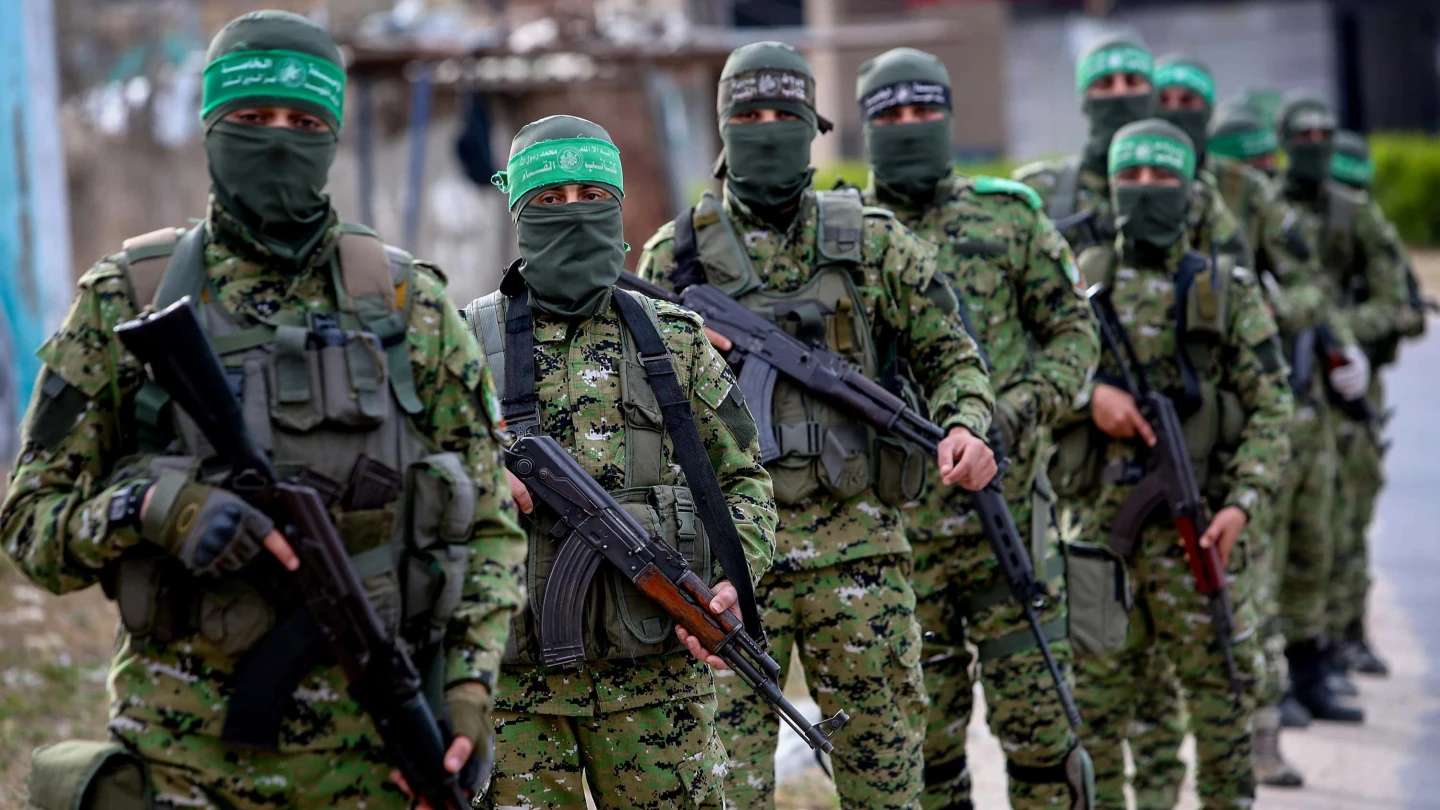
Despite its power being challenged by several Fatah-aligned groups, Hamas allowed elections in Deir al-Balah to move forward, unlike in previous elections, and justified its absence by what it defined as “administrative necessity.” This compliance is largely transactional. Hamas’s survival strategy involves allowing the technocratic NCAG to take the lead on reconstruction and service delivery while the movement reorganizes its logistics and recruits new fighters, with an estimated 15,000 new fighters taken in since the ceasefire in October of last year. This tactical retreat allows the movement to offload the burden of governance and the risks of reconstruction and municipal administration onto P.A.-affiliated bodies while preserving its core military infrastructure. According to Hirsch, Hamas “knows that the municipal elections are largely irrelevant, and they have no problem letting other people deal with the local day-to-day work while they focus on fighting.”
Furthermore, Hamas maintains a robust “shadow influence” that operates independently of the elected councils or the technocratic NCAG. This influence is primarily exercised through entrenched municipal employee unions. Regardless of who occupies the mayor’s office, the rank-and-file workers responsible for the daily management of water, waste and local administration in Gaza remain part of Hamas-affiliated structures. This bureaucratic entrenchment ensures that Hamas remains a relevant “veto-player” in Gaza governance, capable of disrupting or enabling administrative functions at will. By preserving this grip on the civil service, the movement ensures that no “revitalized” administration can function without its implicit consent, even if it doesn’t participate in formal elections.