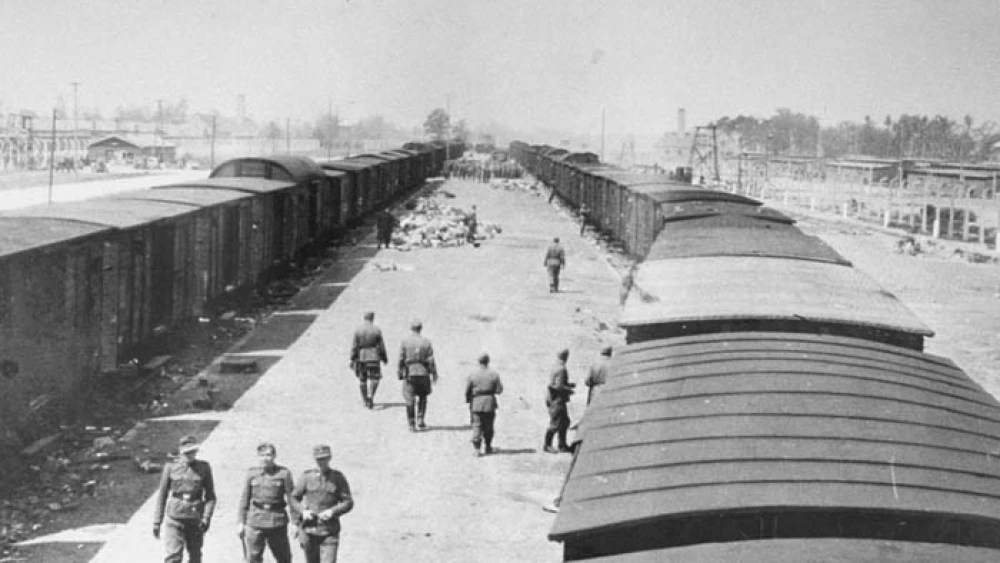
Archivist Ewa Bazan at the Auschwitz-Birkenau Museum discovered new names and stories linked to the German Nazi concentration and death camp.
“We didn’t know what to expect when we started the project,” Bazan told AFP in a report published on Wednesday. The work of Bazan and her colleagues found 4,000 previously unknown identities and information about 26,000 others.
The identities of 300,000 prisoners out of 400,000 are known, according to the report.
Around 90 percent of the files were destroyed by camp guards before they fled. A recently completed two-year project with the Arolsen Archives of Germany revealed new information.
Krzysztof Antonczyk, head of the museum’s digital archive, told AFP that 905,000 other people, who were not prisoners, were brought there and murdered upon arrival without leaving any records.
“Their names sometimes appear only on transport documents that the Nazis were using,” he said.
The project has digitized 120,000 documents dealing with prisoners at Auschwitz. One new example is two Hungarian Jewish brothers, Jeno and Mor Hoffmann, who were transported from Auschwitz to Buchenwald and then back again to Auschwitz.
“Auschwitz is the world’s biggest cemetery without any tombs,” stated Antonczyk, according to the report.