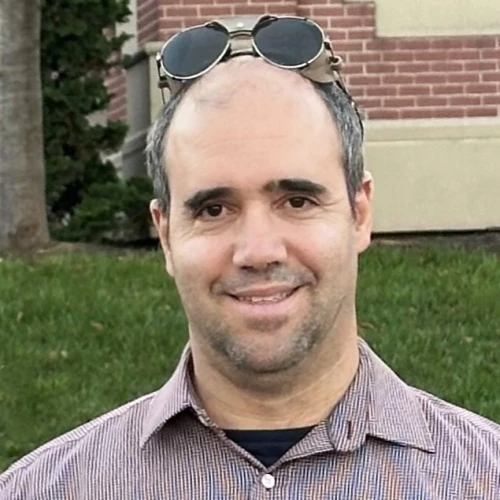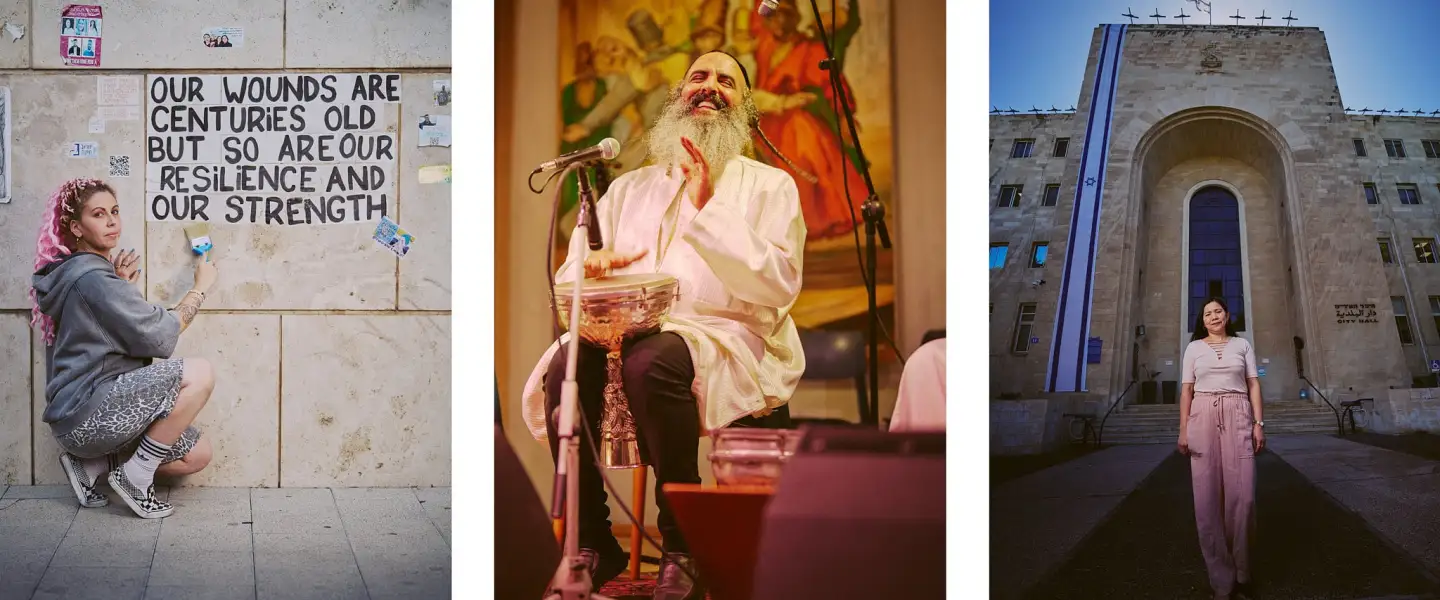
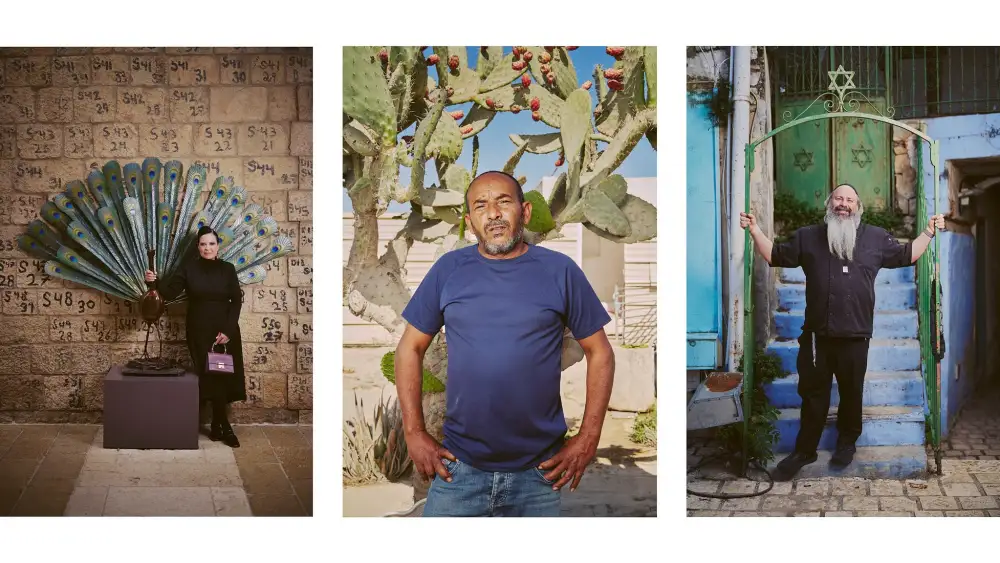
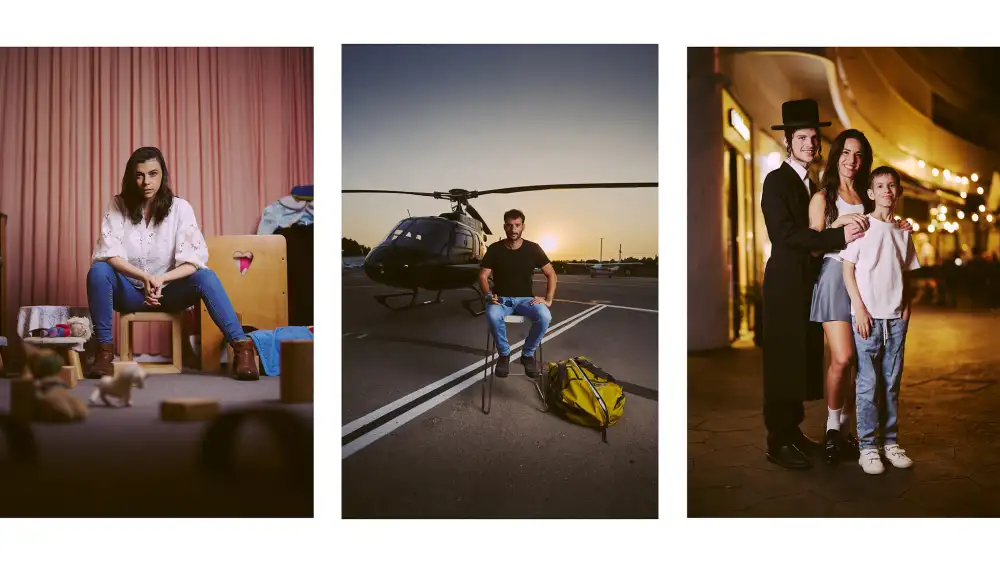
To better understand Israel’s population of 10 million or so, professional photographer David Shlachter opted to capture 100 faces and tell their life stories.
Shlachter traces the project, “Hinenu: Israel at 10 Million,” back to a decision he made with his wife in California, where they were raising three young children, after Oct. 7.

“I’d lived 44 years in what I would say is the golden age of American Jewry,” he told JNS. He had “never once felt discriminated against,” he said. “Then, almost overnight, I was just made to feel very, very unwelcome, unwanted, not liked, even hated.”
The couple had talked for years about taking a two-year sabbatical (it helps that he is self-employed) to “really integrate into Israeli society and know that that place is part of them, and is always there for them,” he told JNS.
In 2024, the family moved to Tel Aviv. The children, with “maybe 50 words of Hebrew” between them, enrolled in public schools, and Shlachter, having negotiated a sabbatical from work, needed something to do.
“My dad is a trial attorney, and my mom is an artist,” he told JNS. “I was finally at a point where I could really spend a lot of my time cultivating my creative side.”
He found himself drawn to Israelis as people. “They’re incredibly warm and honest and fun,” he told JNS. “They’ve lived very real lives, and they don’t waste time.”
Within weeks of making aliyah, Shlachter noticed that history was occurring, as Israel’s population was set to hit 10 million. The government was to release its first detailed census in 15 years, which would break the numbers down by age, gender, religion, location and place of origin.
“This would be a really interesting opportunity to try to answer a question: Who is Israel right now, at this moment?” he told JNS.
Working off the census, he built a spreadsheet of 100 potential profiles that, taken together, would “exactly match the demographics of the whole country,” he said.
Then came the hard part. Finding the religious and secular Jews and Arabs, sabras and immigrants, elders and children, and others to fit those profiles.
The photographer had arrived in Israel without a deep Rolodex but quickly discovered how well-networked Israelis are among themselves.
He started sending text messages to friends. “Hey, I’m looking for a sabra male, age 30-39, who lives in Tel Aviv, who’s Jewish, and half-Ashkenazi, half-Sephardi-Mizrahi,” he would write. “Do you know somebody?”
Word of mouth worked wonders, even for very specific requests, like a Sephardi-Mizrahi woman in her 70s from Kiryat Shmona, born in the Middle East or North Africa.
“It was like putting together the craziest puzzle ever,” Shlachter told JNS.
‘Show up every day’
Identifying people proved easy, but scheduling photographs during a war was much harder.
One of his last profiles was of an Arab Muslim student from eastern Jerusalem who studies at Tel Aviv University. They were supposed to meet on the day that Israel launched a major strike on Iran.
The next week, as rockets continued to arc over Jerusalem toward Tel Aviv, Shlachter texted to ask if they could still do the photoshoot.
“I’ll be free in exactly one hour,” she told him.
He raced from Tel Aviv to Jerusalem in 55 minutes and took her portrait that evening.
The project occupied three days of the week for him, when he traveled to “every corner of this country.” The other four days a week, he was “totally focused on family,” he said.
He recorded hundreds of hours of interviews with his 100 subjects. The longest ran more than six hours, he told JNS. He whittled each person’s story down to about 750 words, and subjects got to see their chapters pre-publication.
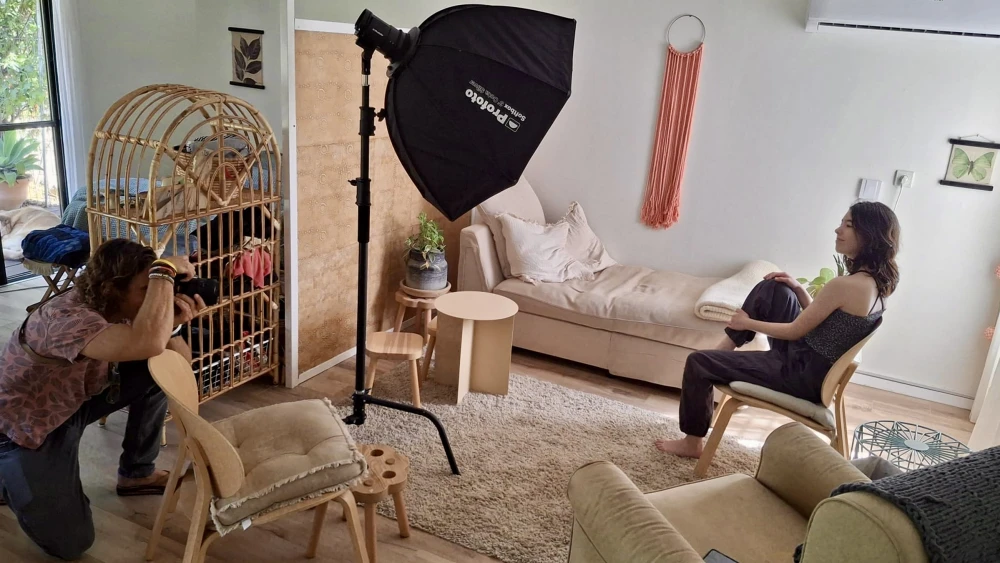
Common themes, such as trauma and resilience, emerged in the conversations. The latter, he said, can be “such an essential, integral part of their environment that they’re almost not even aware of it.”
He also found a lot of community—a stark contrast, he said, to the loneliness epidemic in the West.
“Israel does not have that problem,” he told JNS. “Everybody does everything in groups, in community. Friendships are extraordinarily tight, cherished and nurtured.”
Shlachter also learned about himself and his own assumptions during the project. That was particularly true in Judea and Samaria.
He came into the project having read in the news about “hilltop youth” and violence. Instead, he found an “unbelievable diversity” of backgrounds, religious approaches and relationships with Palestinian neighbors.
“It really trained me to just show up every day, forgetting everything I thought I knew about a certain community,” he said. “With a beginner’s mind.”
“It made me much more empathetic and, I think, just a better human,” he added.