Newsletter
Newsletter Support JNS

Jerold S. Auerbach

Jerold S. Auerbach is the author of 12 books, including Print to Fit: The New York Times, Zionism and Israel (1896-2016) and Israel 1896-2016, selected for Mosaic by Ruth Wisse and Martin Kramer as a “Best Book for 2019.”

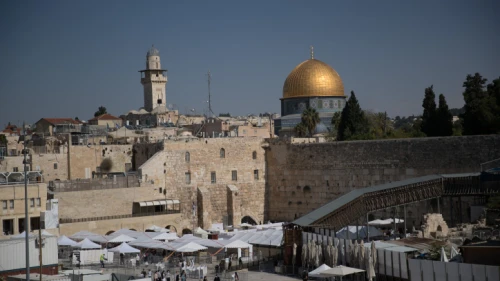
Readers are told that “much of the world” considers Old City Jerusalem to be “occupied,” but no supporting evidence is provided, largely because there is none.
When it comes to conflict and terror, the Palestinians are somehow never the villains.
In 1979—one week after Passover and 50 years after murderous Arab rioters destroyed the millennia-old Hebron Jewish community—a momentous decision was made.
It long ago became evident that when he writes a column about the Jewish state, readers should expect a barrage of criticism.
The British government was “well disposed towards the Arabs in Palestine.” Still, “Palestine” does not exist, and the State of Israel thrives.
In Jerusalem’s Old City and in Hebron, women have played a prominent role in the restoration of Jewish life in the ancient holy cities of the Jewish people.
Patrick Kingsley’s favorite word of opprobrium is “occupied.”
Our deepening friendship eventually spanned both of our countries.
In 2018, the U.S. State Department, referring to UNRWA’s “endlessly and exponentially expanding community of entitled beneficiaries,” declared it to be an “irredeemably flawed operation.”
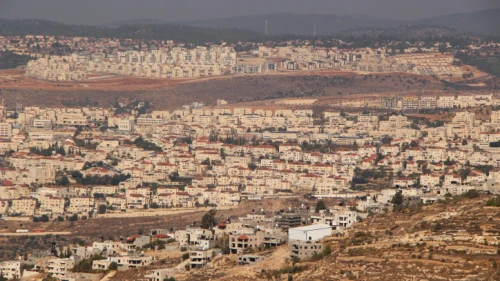
Either way, demography and geography reinforce historical Jewish claims to this land.
For “The New York Times,” an amusement park is not amusing if it is located where biblical Judea and Samaria converge.
Millennia before Jordan claimed its “West Bank” following Israel’s war of independence in 1948, biblical Judea and Samaria were deeply embedded in Jewish history.