The European Union’s external service has prepared a document ahead of a meeting of the 27 E.U. foreign ministers in Brussels outlining options for contributing to the implementation of U.S. President Donald Trump’s 20-point plan for Gaza, Reuters reported.
Israel and Hamas agreed in October to the first phase of the plan, but the implementation of further parts of the deal,including the disarmament of the terrorist group, remains highly uncertain.
According to Reuters, the European External Action Service has outlined proposals to expand the E.U.’s two civilian missions in the region, which focus on border assistance and supporting the Palestinian Authority’s (P.A.) policing and justice reforms.
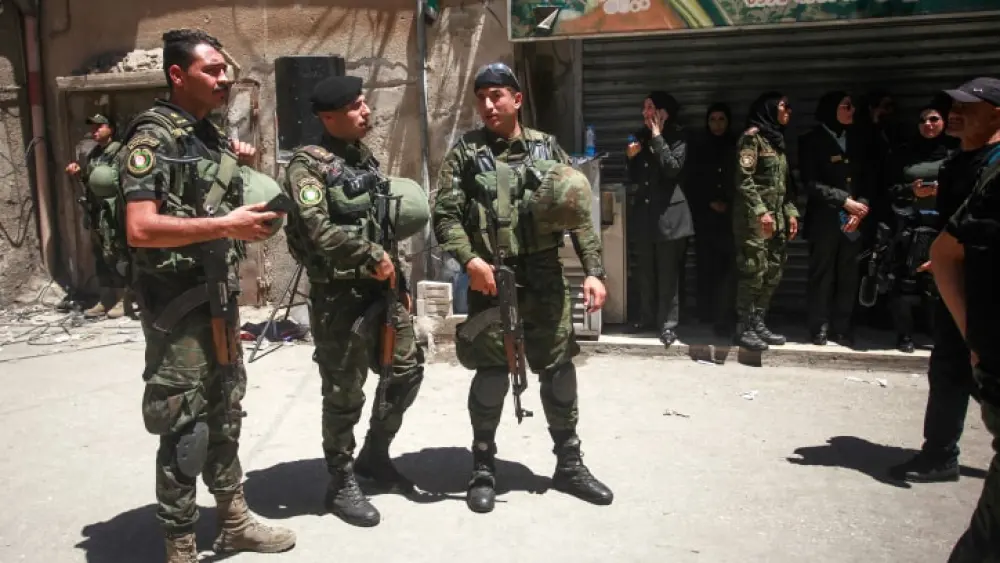
EUPOL COPPS, the E.U.’s Mission for the Support of Palestinian Police and Rule of Law, could “take leadership in training the Palestinian police force in Gaza by providing direct training and support to approximately 3,000 Palestinian police officers from Gaza, with a view to training the full 13,000 Palestinian police force,” it said.
The document also raises the idea of expanding the E.U.’s civilian border monitoring mission in Rafah to other border crossing points.
EUPOL COPPS, established on Jan. 1, 2006, is meant to “assist the Palestinian Authority in building its institutions, for a future Palestinian state, focused on security and justice sector reforms. This is effected under Palestinian ownership and in accordance with the best European and international standards. Ultimately, the mission’s objective is to improve the safety and security of the Palestinian people.’’
“The Mission forms part of the wider E.U. effort to support Palestinian state building, in the context of working towards a comprehensive peace, based on a two-state solution,’’ it said.
EUBAM Rafah is a civilian mission under the E.U.’s Common Security and Defense Policy, established in November 2005 to support the implementation of the Agreement on Movement and Access between Israel and the P.A.
The Mission provides a neutral, third-party presence at the Rafah Crossing on the Gaza–Egypt border. “Its role is to help build trust between the parties, support coordination among all sides, and contribute to the Palestinian Authority’s ability to manage the crossing effectively,’’ according to the body.
Following the Hamas takeover of Gaza in 2007, the Mission suspended its operations and entered standby mode. Since 2014, it has implemented a long-term capacity-building project with the Palestinian border authorities, offering training and strategic advice to support preparations for a future return to the crossing and promote sustainable, Palestinian-led border management.
In January 2025, EUBAM Rafah redeployed to the Rafah crossing, reportedly alongside the P.A., for the first time since 2007, following a ceasefire between Israel and Hamas that enabled a limited reopening of the border. Operations paused in March due to renewed hostilities, but the Mission says it “stands ready to resume activities when conditions allow, in coordination with all relevant parties.’’
Originally published by the European Jewish Press.