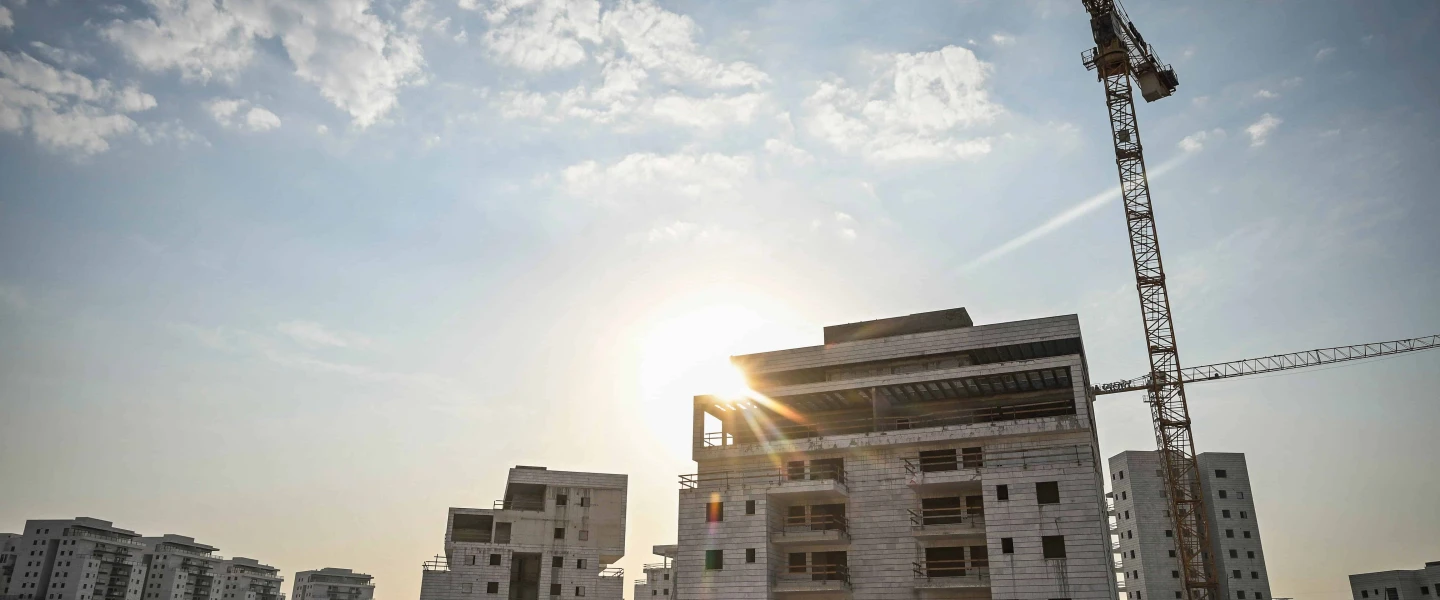
Although Israel’s property boom is still frozen, there are signs that a recovery may be on the horizon, according to new data published by the Treasury. Despite ambitious construction, more than 80,000 new apartments remain unsold nationwide, creating a surplus of supply that is stalling the market and keeping buyers hesitant.
Overall, the housing market continues to show signs of caution, with prospective buyers largely on the sidelines. According to a recent report by the Chief Economist’s Office at the Israeli Ministry of Finance, only 6,925 apartments were sold in September 2025, including government-subsidized units—a 17% drop from September 2024 and 9% below August’s totals.
When excluding subsidized programs such as “Mechir Le’Mishtaken” (first-time home program), open-market transactions fell to 6,048 units, representing a decline of nearly 20%.
These figures signal a general sense of risk among potential homeowners. Many are said to be waiting for a meaningful price drop that has yet to arrive, while others remain wary of the long-term burden of mortgages in a high-interest-rate environment.
Israel experienced a major property boom from 2007 to 2017, with prices rising dramatically due to factors such as low interest rates, a chronic housing shortage and expansionary monetary policies. This surge saw prices increase by about 84% between April 2007 and July 2013, continuing, though less steeply, through 2017.
Financing incentives
With demand sluggish in the past year, mostly attributed to the war, developers are turning to financing incentives to revive activity. In September, 31% of all transactions included special payment terms, up from 27% in August.
The popular “10/90” scheme—in which buyers pay 10% at signing and the remainder upon delivery—is making a comeback. In Tel Aviv, the use of these incentives rose from 23% to 30% in a single month, reaching its highest point since late 2024.
Yet even generous offers have not fully revived activity. In cities such as Netivot, Lod, Ramat Gan, and Acre, transaction volumes declined - despite incentives. According to BuyItInIsrael, this reflects broader buyer hesitancy following prolonged market stagnation and economic uncertainty
Off-plan purchases drop, but not everywhere
The Finance Ministry’s report highlights a slowdown in off-plan purchases, where buyers commit now, and the apartments are delivered years later. Nationally, according to Mako, these accounted for 57% of new sales, down seven percentage points month-over-month.
Regional differences are notable. In Netanya, off-plan purchases fell from 80% to 45%, signaling heightened caution. In contrast, Tel Aviv saw off-plan sales rise from 63% to 75%, reflecting tight urban supply and continued demand in Israel’s major metropolitan hubs.
Investor behavior is changing
The retreat among first-time homebuyers is particularly pronounced. In September, only 3,907 first-home purchases occurred— a 15% decline overall and 24% lower in the open market.
In Beersheva, first-time purchases fell by 36%, the steepest drop since the start of the Oct. 7 war, now officially called the War of Redemption. Even those looking to upgrade are being cautious: 1,826 transactions were recorded, down 15%, with roughly a quarter representing “downsizers” moving to smaller, more affordable units.
Investor activity is also shifting. In September, 1,191 investment purchases were made, down 15% year-over-year (but up 8% from August), largely driven by institutional buyers such as Real Estate Investment Trusts (REITs).
Globes reports that some private investors are selling at real, inflation-adjusted losses, highlighting caution in this sector. Foreign buyers remain scarce, with 103 purchases in September, roughly half the volume from the previous year.
Rising inventory, stable prices
Inventory continues to grow. BuyItInIsrael reports that unsold new homes reached 83,920 units by the end of September this year—nearly 28.8 months of supply at the current sales rate. Other analysts report that in some regions, supply exceeds 30 months, creating further buyer hesitation.
Despite the surplus, apartment prices remain largely stable, with only minor localized reductions. The market is effectively frozen, with buyers delaying decisions and developers relying on financing incentives rather than deep price cuts.
Several factors are sustaining the market’s inactivity:
- High borrowing costs: Elevated mortgage rates discourage first-time and marginal buyers.
- Investor caution: Both institutional and private investors are wary of overexposure in this period of uncertainty.
- Government and regulatory dynamics: Lending rules, taxes on second homes, and other regulatory factors influence demand.
- Oversupply risk: Many peripheral regions face historically high unsold inventory, limiting market momentum.
Looking ahead
As Israel’s housing market navigates this uncertain period following the Oct. 10, 2025, ceasefire, much will depend on how buyers, developers and policymakers respond to the situation.
Some households may step off the sidelines should mortgage rates ease or if government programs provide significant relief.
Meanwhile, developers may be forced to rethink pricing strategies to entice cautious buyers. The coming months could bring with them a slow thaw or a longer pause, either of which could shape the landscape of the market for years down the line.
David Zwebner, a property professional since 1971 and owner of Ashkelon Properties, said he has noticed that the housing market in Israel had “woken up” since the New York City elections on Nov. 4, after which the victory of Zohran Mamdani had caused some Jews to consider purchasing properties in Israel.
“Real estate prices in general have been sliding in the major towns like Tel Aviv and Netanya, whereas in Ashkelon prices have not dropped,” Zwebner told JNS.
He said Ashkelon is somewhat disconnected from the general real estate slowdown in Israel, noting that “a major chip manufacturer has just committed to investing almost $1 trillion in a chip plant to be built here.”
“Prices were always lower because buyers were concerned about the proximity to Gaza and vulnerability to Qassam missiles,” Zwebner said. “During the Iranian war [in June], activity slowed down dramatically with little sales, although building activity was not affected. During the last two weeks, because of the New York municipal elections, the market has woken up with lots of queries about property availability and people looking for bargains.”
He added, “It feels like the market is starting to recover as buyers are rushing in to buy, specifically sea view properties near the beach.”