Journalists who challenged Hamas propaganda after the terrorist organization’s onslaught on Israel on Oct. 7, 2023, discovered the limits of Western tolerance—losing careers, receiving death threats and requiring police escorts simply for reporting a perspective sympathetic to Israel.
They live in democratic countries with freedom of expression and work for major media outlets—yet they paid a heavy price for criticizing Hamas. Despite everything, they continue to speak out, while their colleagues criticize Israel or choose comfortable silence.
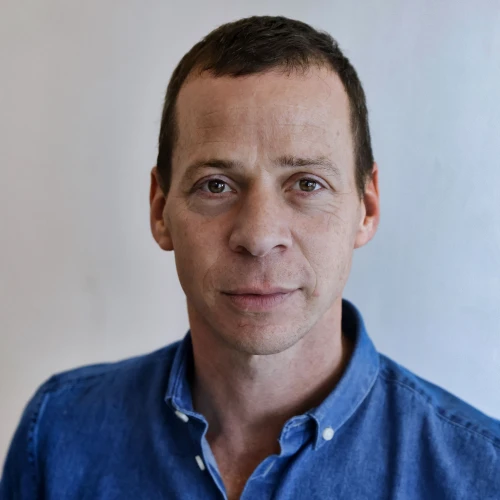
In early November, Yotam Konfino, 35, a Danish-Israeli journalist, was invited to lecture at the Tivoli Hotel in Copenhagen about propaganda and misinformation in the Gaza war. Konfino, who reports from Israel for leading media outlets in Denmark, the U.S., and Britain, arrived early. He knew pro-Palestinian activists were preparing a “reception” for him. As someone who is half Israeli, he has always been under a magnifying glass, but since Oct. 7, he has been accompanied by police to every public event.
“About 400 people registered for the lecture, including members of parliament and Danish leaders who wanted to hear a different angle from what’s in the local media,” Konfino said. “The lecture dealt with misinformation that reached the media during the war—mainly from Gaza, but also from Israel. The focus was on the media’s devotion to information conveyed by Hamas, which continues to mislead it.
“Usually, protesters go out against a prime minister or political figure, not against a journalist,” he said. “For me, this is a new level of hatred. But I have no doubt I’m on the right side of history. These people are terror supporters, and if I’m causing them to react like this, apparently I’m hitting where it hurts them.”
Konfino is the only journalist in Denmark against whom demonstrations are held, and the only one who needs police protection at every public event. He is one of the prominent voices supporting Israel’s right to fight terrorist organizations and defend itself, while many others act against it or remain silent for fear of threats.
“For two years, I’ve experienced a campaign that includes threats, silencing and harassment. They call me a Nazi,” Konfino said. “Pro-Palestinian elements pressured to fire me from TV2, Denmark’s leading television channel—and succeeded. There are people here calling to put me on trial for war crimes, and even a member of parliament from the radical left who criticizes me. It’s gotten out of control. The threats have become routine, which no longer moves the authorities.
“There’s a hunt here for anyone who publicly expresses positive views about Israel,” he said. “You no longer need to be a pronounced pro-Israeli to receive threats—it’s enough that you expose Hamas propaganda.
“I respect the Danish Police, they’re doing their maximum, but they don’t have enough resources, and some of them don’t understand the nuances,” he said. “In my world, if you call for the death of all the IDF—you’re calling for mass murder. But here they think it’s just a slogan. Every weekend in Copenhagen, police escort pro-Palestinian protesters shouting ‘Death to the IDF’ and carrying Hamas flags and pictures of [deceased Hamas leader Yahya] Sinwar. If this were an Al-Qaeda demonstration with pictures of bin Laden, it’s clear they would act differently.
“I’m sure there are journalists who are afraid to cover the conflict fairly, because they know that if they expose lies from Gaza, they’ll start receiving threats,” Konfino said. “As someone who is half Israeli, I’m a clear target, but they’re also ‘hunting’ others who support Israel, even if they’re not Jewish.”
‘My heart broke when I saw the videos’
Another prominent example is Erin Molan, 42, an Australian journalist who paid a heavy price for supporting Israel. “My heart broke when I saw the videos from the Gaza border communities,” she said. “The shock turned to shame when I saw Australians celebrating the massacre in front of the Sydney Opera House, a day or two later. I have a television show, and even though I’m not Jewish or Israeli, I immediately stood with Israel because I knew it was the right side. From that moment on, my life changed.”
Support for Israel led to threats on her life and police escorts for her and her daughter. She was forced to change her residence after direct threats, which included exposure of personal details on social media and in pro-Palestinian groups, including where her daughter studies.
“I received death threats, harassment, threats against my child,” Molan said. “It’s hard to continue fighting under such a threat, and all because of my support for Israel. But I continue—also for the sake of my daughter’s future. The people going against Jews won’t end there; they’ll continue with Christians, and it won’t end.”
Within a few months, Molan lost all her positions—as a television host, columnist and sports journalist. A career she cultivated for more than two decades.
“I can’t say everything is because of my support for Israel, but apparently in some cases there’s a connection,” she said. “At the same time, I try to look at the good—new opportunities have opened for me in markets outside Australia, and I’m reaching many people I didn’t know before.
“But the career isn’t what determines it—rather the knowledge that I’m doing the right thing,” she said. “I go to sleep every night knowing I’m on the right side. The Jews are worth it, the Israelis are worth it, and the West is worth it. You need to fight evil.
“During the Holocaust, there were many people who remained silent, and there were those who helped despite the danger,” she said. “I want to believe that if I had lived in that period, I would have helped the Jews, I would have passed the test. I wouldn’t have stood by then, and I won’t stand by today.”
‘The celebrations after the massacre shocked me’
Nicole Lampert is a Jewish-British culture journalist who wrote for years for the kingdom’s leading newspapers. Over the years, she began writing about antisemitism as well, especially during Jeremy Corbyn’s leadership of the Labour Party, but her main occupation remained cultural—at least until Oct. 7.
“I saw people celebrating the massacre in front of the Israeli embassy, and a pro-Palestinian demonstration of hundreds of thousands [just] days after—and it shocked me,” she said. “I started writing for The Telegraph and Daily Mail newspapers about antisemitism, talking with survivors and bereaved families. Suddenly, this became the central topic in my writing.
“I was one of the first British journalists to speak about the Israeli side,” she continued. “The British don’t know Israelis as victims. Every time I write something, I receive hatred on social media—Nazi messages, accusations of ‘genocide denial’ and ‘loving apartheid,’ pictures of a swastika inside a Star of David.”
Lampert had discovered that in her regular posts, about 6% of respondents are fake bots—but in posts about Israel, the number doubled to 13%. She also experienced hostile reactions from feminist journalists after criticizing the feminist movement for not standing with Israeli women around the Oct. 7 incidents of rape.
“We Jews stand on the frontline of a cultural war between radical Islam and the right,” she said. “The right is growing in Britain and other countries, and the significant reason for this is immigration. The Conservative Party and Labour allowed globalization of the intifada on British streets. Calls like ‘From the river to the sea,’ which are forbidden in Germany, are heard here without a firm response from authorities.”
Originally published by Israel Hayom.