Minutes after an Iranian missile struck a building in Tel Aviv on Monday, Dr. Gal Rosen was already treating the wounded “like a robot,” as he described it.
Rosen, 31, a Magen David Adom official and former infantry paramedic, was referring to the instinctive, drilled response that medical professionals rely on in high-stress situations.
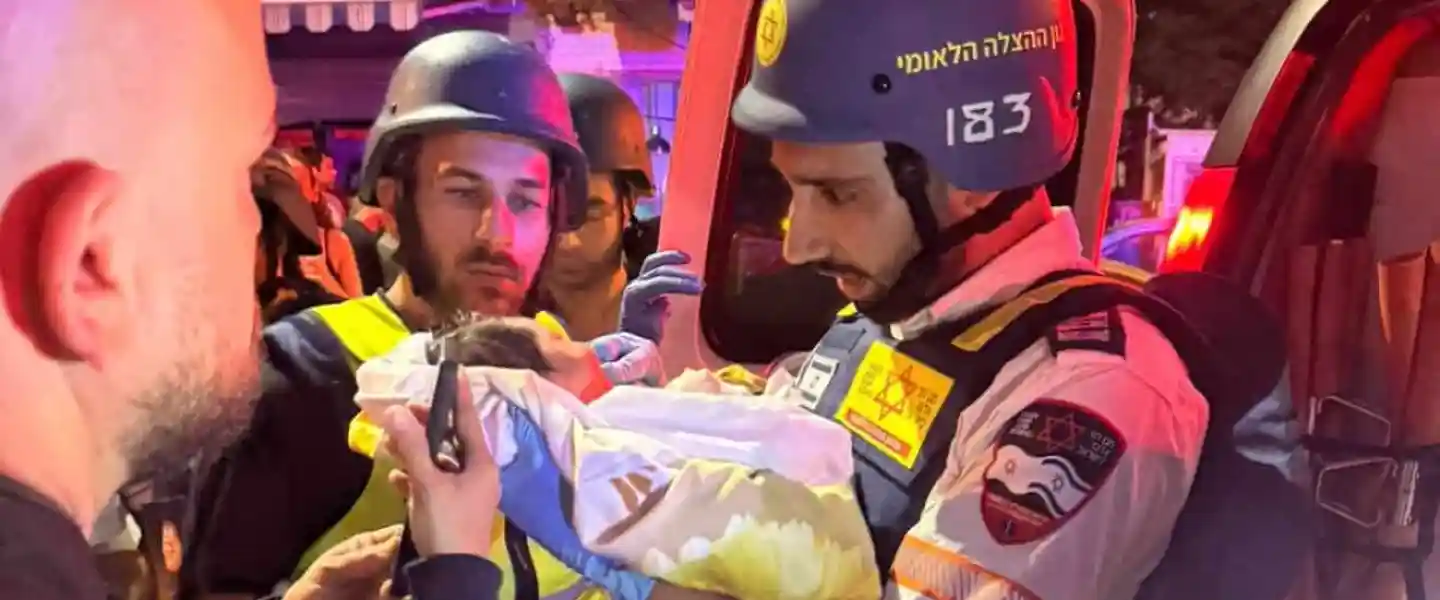
But then a rescue worker handed him something that broke through his training: a 6-day-old baby, alive and unharmed, wrapped in blankets. “For a few moments, the baby threw me off balance,” Rosen recalled. “It took effort to refocus—put away questions like ‘Where’s the mother?’—and resume treatment.”
The baby—a healthy girl whose mother, a Philippine national, had been briefly trapped in an apartment—illustrated the emotional toll on rescuers, who often balance their physical and emotional well-being against that of the people they risk their lives to save.
Upon arrival at the scene, Rosen started toward the damaged building but paused. “I saw burning cars, burst water pipes, smoke—then realized I had come too close. I stepped back and began setting up the triage area,” he said.
Medical teams are instructed not to enter compromised structures until they are cleared by firefighters or IDF Homefront Command. Yet medical staff sometimes take that risk anyway.
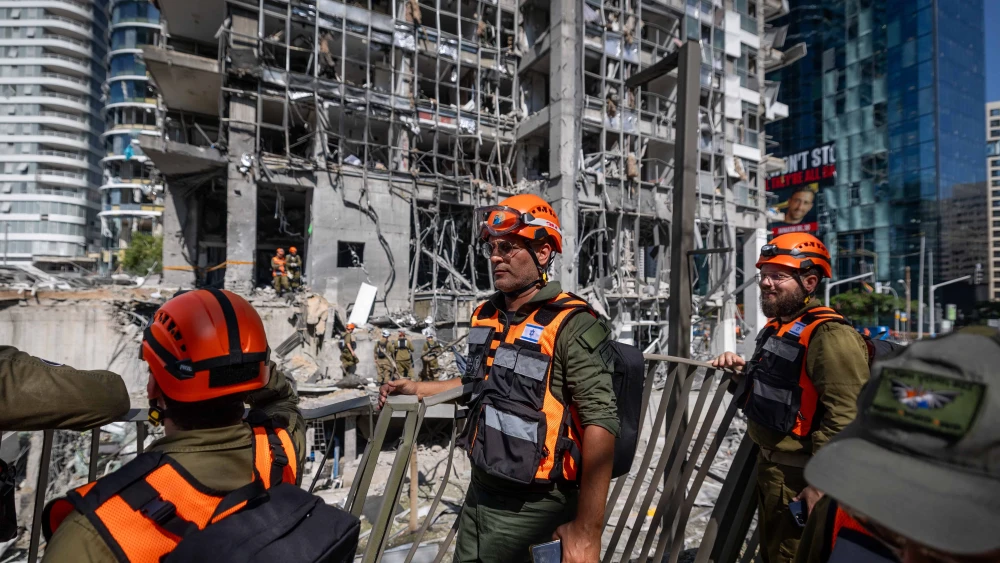
Jamal Waraki, a 36-year-old MDA volunteer from Holon, described how he entered his own apartment building on Thursday, seconds after impact. The building got hit mere days after he moved in.
“I knew the building. That helped,” said Waraki, who is trained in extractions and has 15 years of experience. “I also knew there were elderly residents trapped inside.” One neighbor was bedridden, her mattress covered in rubble.
“You don’t think—at least not at first. You just jump in. The thinking starts once you’re already inside. Each second counts,” said Waraki, a Muslim originally from the Haifa area who is married and has a son.
“Even after assessments, firefighters are still risking their lives,” said Motti Bokchin, a senior official with the ZAKA disaster response organization, where Waraki also volunteers. “There’s too much uncertainty at each site for any operation to be risk-free.”
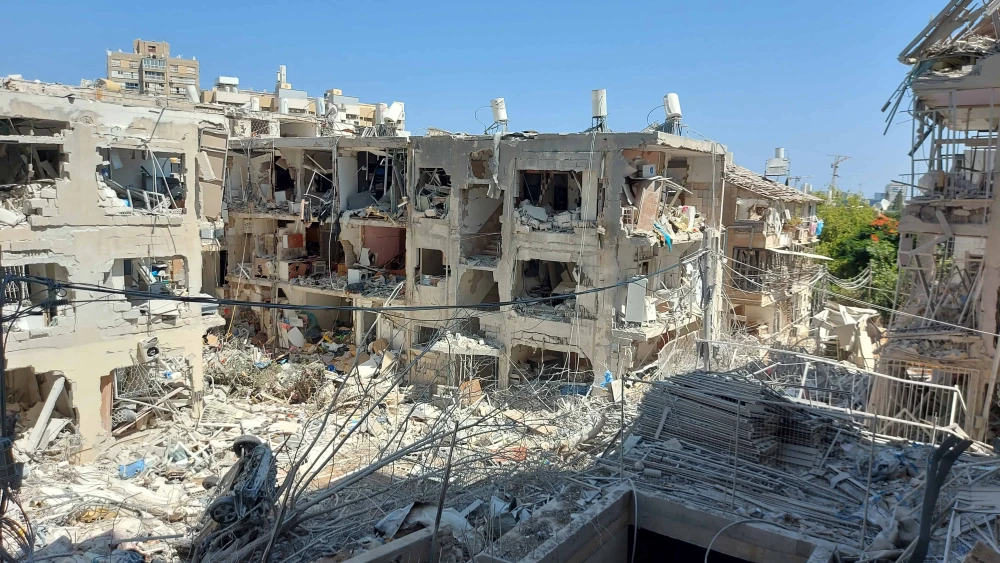
Waraki’s new home in Holon was destroyed in the attack. He had just relocated after a missile struck his previous home in Rehovot on Sunday. His wife and son are in Eilat, where they went for safety after war with Iran began on June 13.
Among the people rescued in Rehovot was a Holocaust survivor, carried out on a stretcher wrapped in a thermal blanket.
One video from Petach Tikvah, filmed after a missile strike on Monday, shows three firefighters navigating a debris-filled corridor. One uses a pneumatic tool on a blocked door while another pries it open with urgency, revealing two survivors. One survivor asks to go to the bathroom. “No, we need to leave now,” a firefighter replies.
In another video released by ZAKA, a man breaks down in tears after learning his father survived and was safely extracted.
For Rosen, who began volunteering with MDA at age 15, the dilemmas sometimes begin before reaching the scene. Recently, air-raid sirens blared while he was en route to a strike area. “Simply put, I was afraid,” he said. Rosen waited for the Homefront Command’s all-clear, aware that every minute could mean lives lost.
Rosen lost his mother in a terrorist attack when he was 15, and volunteering with MDA helped him find “purpose” as a teenager. “It saved me,” he said, adding it also put him on a path to become a physician.
A former Paratroopers Brigade combat medic who served in Gaza during the “Protective Edge” campaign of 2014, he has promised his maternal grandmother not to take additional risks. “She told me she’s lost enough. And that is always somewhere in the back of my mind, also when I’m in the field,” he said.
“In training, they constantly remind us that our safety comes first, ’cause if we get hurt, we can’t help anyone,” he said. “But in the field, that’s the first thing we forget. The balance between saving lives and staying alive is constant.”
The emotional toll is just as heavy. “I saw elderly couples standing outside in slippers, crying over the homes they lived in their whole lives,” Rosen said. “It’s heartbreaking.”
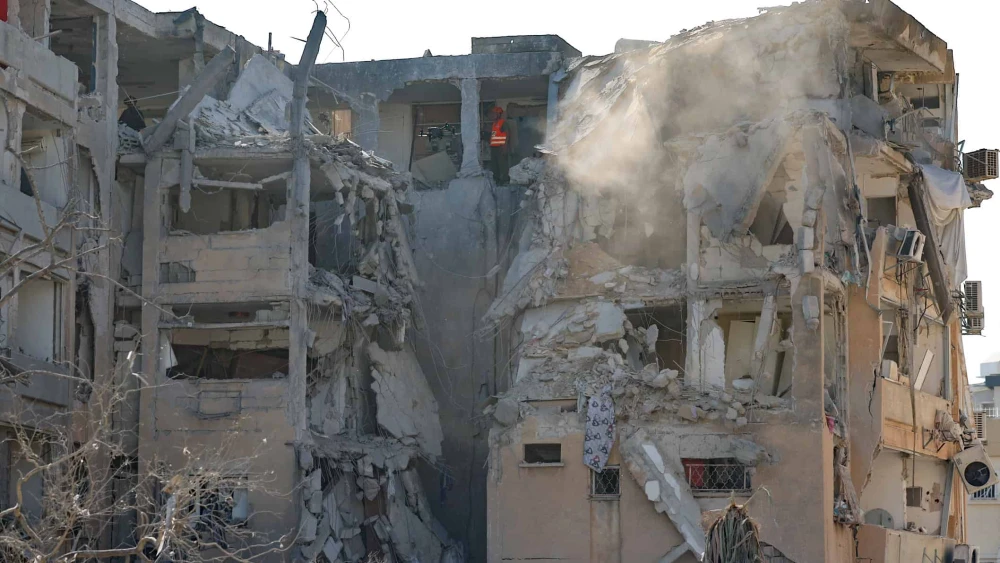
According to Tel Aviv University’s Institute for National Security Studies, Iran’s ballistic missile assault has killed 24 Israelis and wounded around 1,500 since June 13. Nearly 4,000 residents have fled their homes. Iran has launched 22 barrages totaling more than 500 projectiles—dozens of which have penetrated Israel’s air defenses.
Israeli strikes have reportedly killed over 600 people in Iran, including more than 25 senior officers and at least 11 nuclear scientists. Israeli forces have targeted more than 1,100 sites, including five linked to Iran’s nuclear program, and destroyed about 120 rocket launchers—around a third of Iran’s arsenal, the Institute for National Security Studies reported. Israel launched a surprise attack on June 13 against Iran’s nuclear program sites and ballistic arsenal.
Whenever possible, rescue workers also save pets. One case that made headlines involved Zvika, an elderly dog belonging to the Shabtai family from Rishon Lezion. Their home was destroyed on June 14, and they assumed Zvika had died.
Rescue troops from the IDF’s Oketz canine unit found him during a training operation. “I cried and mourned. I was sure he didn’t survive,” the mother, Tally, told Ynet. “Then I cried again—from joy—when they found him.”