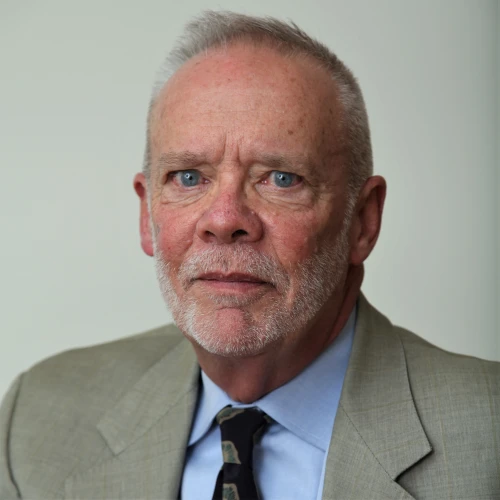
The citizens of Israel are united behind the just war against the terrorist Tehran regime, Yesh Atid legislator Matti Sarfatti Harcavi told JNS in a recent interview.
“The IDF and the security forces have done and are doing a wonderful job in their mission. I hope that the achievements of the campaign will help the Iranian people to overthrow the regime that oppresses them,” she said.
“The days of war are challenging, but it is important to obey the instructions of the [IDF] Home Front Command—they are life-saving. The citizens of Israel have demonstrated inspiring resilience over the last two-and-a-half years. Together we will know good days of brotherhood and peace,” she added.
Addressing the Palestinian issue and the Gaza Strip, Sarfatti Harcavi said that Israel must have a seat on the Gaza Board of Peace.
“We achieved significant military gains, but there was a vacuum regarding Gaza’s future until Trump stepped in. It serves his interests—strengthening alliances in the Middle East and weakening the United Nations, which is no longer an objective international platform, through the Board of Peace. We cannot stand aside; we must be part of it,” she said.
On Feb. 19, U.S. President Donald Trump presided over the first Board of Peace meeting in Washington, where officials gathered to discuss Phase 2 of his Gaza plan.
Trump told the Board’s inaugural meeting that he believes Hamas will lay down its weapons under his plan, warning that the terrorist group will be “very harshly met” if it refuses to do so.
Sarfatti Harcavi chair of the Knesset Caucus for Strengthening Israeli Agriculture, served in the Israeli Air Force in 1981-83. A plant genetics expert by training who hails from Israel’s periphery, she has focused on agriculture and environmental protection.
She warned that Israel is facing a waste crisis, noting that 5,500 people die prematurely each year due to air pollution.
“There is no more space for landfills, and the rate of recycling is very low. Much of the waste is transferred illegally to Judea and Samaria and burned, creating air pollution that affects communities along the Seam Line,” she said.
“The state comptroller has issued reports for 20 years urging the government to act. Municipalities also send waste to the south at high cost. It is a serious problem,” she added.
A member of the Knesset Science and Technology Committee, Sarfatti Harcavi criticized recent government cuts to research and development budgets across ministries.
Before entering the Knesset, Sarfatti Harcavi served for 12 years as head of the Yoav Regional Council in the south. While leading the Council, she addressed challenges facing Israel’s periphery and agricultural sector. She said the south requires improved infrastructure and services.
“We need greater access to public services, better education and transportation. Israel is a small country—services must be more available, and trains need to run on time,” she said.
She noted that unlike in many countries, local authorities in Israel have limited autonomy. “If I want to introduce public transportation on weekends in my municipality, I need a Cabinet decision,” she said.
300 dairy farms
Addressing Finance Minister Bezalel Smotrich’s dairy reform, which would eliminate protective tariffs of up to 40% on imports, reduce national milk production from 1.5 billion liters to 1 billion liters annually, and lower by 15% the price farmers receive for raw milk, Sarfatti Harcavi warned of serious consequences if it is implemented.
The reform would also dismantle the centralized planning system overseen by the Israel Dairy Board, ending quota allocations and price controls in place since the state’s founding.
Smotrich says that three companies—Tnuva, Tara and Strauss—control 85% of the market and charge prices more than 50% higher than abroad, and that opening the market to imports would ease the burden on consumers.
Sarfatti Harcavi said the reform could lead to the collapse of roughly 300 dairy farms along the southern and northern borders.
“We need to examine every stage of the value and distribution chain to identify where the highest margins are—and it’s not the milk. Importing products does not necessarily lower the cost of living. Supermarket chains can simply raise prices upon arrival. Nutella costs twice as much as in Europe, and the same goes for Sensodyne toothpaste. The issue is not the milk; it is the dairy processors and the supermarket chains,” she said.
She added that there is an urgent need to address monopolistic control by large supermarket chains such as Rami Levy and Shufersal.
Sarfatti Harcavi said Yesh Atid is a liberal party with almost 50% female Knesset representation. Asked why the party doesn’t hold primaries to choose its candidates list, she said she does not believe primaries are a good process.
“It encourages corruption and all kinds of deals. People with money can buy votes. In Yesh Atid, we elect the chairperson. Then, there is a very professional committee that chooses the list; they take into consideration gender, education and fields of expertise,” she said.
“I was chosen for what I bring. I did not know party leader Yair Lapid before being elected to the Knesset [in November 2022]. They wanted someone from the periphery, from rural areas, who is a female, educated, and who understands agriculture,” she added.
Reflecting upon the ‘government of change’, Israel’s 36th government, which was in power from June 13, 2021, to Dec. 29, 2022, led first by Naftali Bennett and then by Lapid, Sarfatti Harcavi said Lapid succeeded in bringing together the left and the right and had them agree on most issues, leaving disagreements for later.
Asked whether she believed bringing Mansour Abbas, head of the Ra’am party, aka the United Arab List, as part of that government was the right approach, she replied that “at that time it was. However, in the upcoming election, we will be a majority of Zionist parties that want Israel to be liberal and democrat. That is what I hope,” she added.
(An election must be held by Oct. 27.)
The debate on the military draft, she said, will take center stage and has the potential to shake the nation in the election.
For more than 70 years, the Jewish state has allowed ultra-Orthodox yeshivah students to postpone compulsory military service until they reach the age of exemption.
The bill making its way through the Knesset would sets annual enlistment targets for ultra-Orthodox men that increase over time, and would count national service alongside military service, while leaving most full-time yeshivah students eligible for continued service exemptions.
“A draftee can go to the army at 18, serve in a suitable role, then go to yeshivah for the rest of his life. They refuse because they are allowed to. I didn’t want my kid to go to the army, but I didn’t have a choice,” Sarfatti Harcavi said.