Though the media often paints a picture of a dark and precarious world, there are stories that remind us of the human capacity to do good in it. Qualities such as compassion, self-sacrifice and quiet heroism can be seen in everyday heroes who ask for no thanks and receive minimal praise.
Few organizations deserve such accolades as much as Magen David Adom and United Hatzalah, whose thousands of volunteers work tirelessly to be the first responders on the scene, providing medical care in emergency situations across Israel.
Magen David Adom
The country’s largest volunteer organization of first responders is Magen David Adom (MDA), which has some 35,000 volunteers and is considered “the national rescue organization of the State of Israel.”
According to its director-general, Eli Bin, when the Israel-Iran war began on June 13, MDA had already made preparations in coordination with the Israel Defense Forces’ Home Front Command and other emergency services.
“That same evening at seven o’clock, we spoke with all the commanders at all the stations to familiarize them with the situation that was expected to develop at any moment,” he told JNS. “We had a Zoom conference call with all the managers and officials in Magen David Adom. We brought them in and we made sure that they would be on full alert and at maximum readiness.”

Early on the Friday that Israel attacked Iran in what Israel dubbed “Operation Rising Lion,” Bin ordered all MDA’s employees and volunteers to stations throughout the country and mobilized all its emergency vehicles together with its emergency response teams and paramedics.
“MDA has close to 700 motorcycles operated by volunteers, including motorcycles that render intensive care. There are about 300 emergency response vehicles,” said Bin. “This is an organization in terms of volunteers on a scale that is unmatched in the world. It’s 10% employees and 90% volunteers who carry out the work, and are prepared and do it mainly during their free time. There are also about 10,000 teenage volunteers.”
Bin noted that MDA’s emergency procedures are the result of years of preparation, and that its investment in volunteers and their ability to go above and beyond are “qualities that are part of the DNA” of the organization.
“With the help of incredibly advanced systems, MDA people are warned when a missile has been launched and where it might fall. We can estimate which street and in which neighborhood and therefore we are already preparing our teams from the moment of the missile launch,” he said. “People leave their jobs, their busy lives, wives, children and their families to go carry out lifesaving missions. They are called on holidays, weekends and this is what they did during ‘Operation Rising Lion.’”
After the devastating Iranian missile attacks on Bat Yam and Rehovot, MDA deployed the largest number of personnel and vehicles, said Bin. “We deployed 283 ambulances rendering intensive care to both these events simultaneously,” he said. “I always say that when the alarm is sounded, Israeli citizens enter shelters. Magen David Adom members report to their stations. Everyone else goes to protect themselves and our volunteers go out to save lives.”

Noting that Israel had been in a state of war since Oct. 7, 2023, Bin praised “the courage and collective capability” of MDA volunteers, arriving at missile-strike scenes from all over the country and “saving many lives.”
Some 30 people were killed and more than 3,000 wounded and taken to hospitals by MDA ambulances and crews during the 12-day war. If not for the first responders, he said, many more lives would have been lost.
Bin said he grew up as a youngster in MDA, climbing his way up the corporate ladder to become its CEO. “Magen David Adom is already finding new means and technologies to prepare the State of Israel and the organization itself for the next state of emergency,” he said. “In the last decade we have gained extraordinary capabilities, including boats, helicopters, new motorcycles, buses and trucks.”
Bin also pointed out that MDA’s Blood Bank provided for Israeli hospitals and for the army. “During the war we recruited 1,200 volunteers each day to come and donate blood,” he said, “In such an emergency, there is great willingness from the public to donate blood.”
While there are many life-saving organizations in the State of Israel,” Bin concluded, “there is only one organization that works with the army, the police and the security forces. Everyone can deploy forces where they want, but MDA is the only body that is actually committed to providing a response to the State of Israel in every minute and every emergency.”

United Hatzalah
The organization was especially active during the missile bombardment from Iran in June, when during those 12 days of sleepless nights and air-raid sirens, the volunteers of United Hatzalah were busy working with the IDF Home Front Command to ensure that civilians received immediate medical care and safe rescue from collapsed buildings, saving “many lives.”

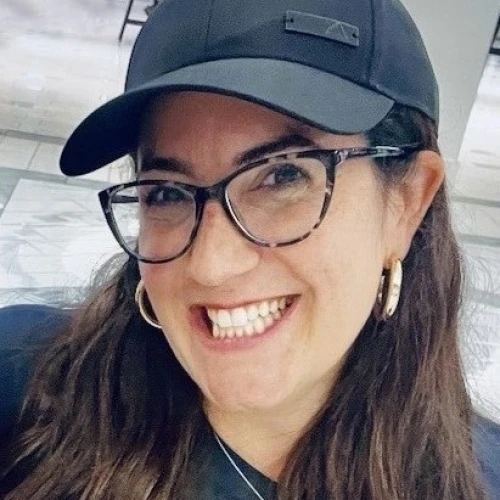
One United Hatzalah worker who wears many hats, among them those of a medic, head of its Public Relations Division and the coordinator of Emergency Response Teams, is Linor Attias. She spoke to JNS about the organization’s lifesaving work during the Iranian missile attacks on Israel from June 13 to 24.
From the moment the first siren went off in Israel, alerting sleeping Israelis that their government was striking nuclear targets in Iran, United Hatzalah sprang into action. “The first moment,” explained Attias, “was tracking to understand how many volunteers we had in the area and how many were close by so we could ask them to go over and assist.”
United Hatzalah is a volunteer organization. Volunteers go through six months of intensive training, preparing them to render basic life support in the crucial first few minutes following a mass-casualty event.
They receive the medical training necessary to render basic medical care and ensure that the patient makes it to the hospital for further treatment. Attias explained that prior to Oct. 7, 2023, United Hatzalah had approximately 6,500 volunteers all around the country. Now, they number some 8,000, with another 1,000 civilians in various stages of their training. This, she said, is how United Hatzalah is able to provide immediate care, with their standard being to arrive at the scene in three minutes or less.

When describing the immediate aftermath of the Iranian missile barrages on civilian areas, Attias said that the United Hatzalah workers on the scene knew immediately that this emergency was unlike any they had previously encountered.
“We understood that the ballistic missiles from Iran caused damage never seen before,” said Attias. “It’s not like a rocket from Gaza or Lebanon. It’s different because you have so many buildings just bombed; everything collapsed. Seven buildings in one hit is chaos.”
Attias went on to say that one of United Hatzalah’s main problems during the war was people who hadn’t made it to shelters and so were buried under rubble.
As first responders, Hatzalah volunteers would show up immediately. Their next step was to understand the scope of the damage—how many buildings were destroyed, the range of the ballistic impact zone and if any survivors were buried under the rubble.

For this, United Hatzalah has a special drone unit, which it deploys to give a bird’s-eye view of the scene and to search for heat signatures. “The drone unit is a special operational unit that United Haztalah established five years ago,” Attias explained. “They hold all kinds of different drones, including those with thermal cameras.”
Additionally, understanding how best to enter a destroyed building can be challenging, she explained. “When I’m standing in the street and I’m just counting four buildings, I cannot see if I have more buildings behind them. Or, what’s the range that I need to handle? I also don’t see the other side of the building. So I don’t fully understand the way it collapsed, the way it’s been damaged.”
A view from above is key for ensuring safe passage for the Hatzalah volunteers and the Home Front Command soldiers who are first to enter the buildings to check floor by floor.
Hatzalah volunteers “worked hand in hand with the Home Front Command officers on the site to make the right decisions about scanning every floor, every apartment,” she added.
Hatzalah also dispatches its psychotrauma unit, comprising social workers and psychologists who provide critical support to prevent PTSD from setting in.
“We had those who were injured, but many more who were not injured, but just lost everything. They’re shocked. Their ears are still ringing, they don’t know what to do. They are still in their pajamas with bare feet,” she said.
For these people, Attias said, the psychotrauma unit is essential.
As a medic, Attias has had years of firsthand experience in the field, and also attended many of the worst scenes during the war with Iran. Describing her first impressions of a missile impact, Attias said, “I remember that first minute when I was standing in front of the building that had been hit, I couldn’t breathe. I couldn’t imagine the scale. I’ve been in earthquakes in Turkey and Morocco. I’ve seen the war in Ukraine. I saw all kinds of chaotic situations around the world.
“But that kind of scale, of a ballistic missile when it explodes in a civilian environment, it looked different from anything I’d seen before. Then you just start praying that [the residents] listened and were protected in the shelter.”
One memory stood out: “A mother with two kids, whose husband was in Gaza on reserve duty. She was all by herself and she was so shocked she couldn’t move. She couldn’t carry out her baby, who was six months old.”
United Hatzalah has grown, in numbers and in experience, since Oct. 7, 2023. In addition to the EMTs, paramedics and doctors that volunteer for them, Attias told JNS about the adjustments they’ve made to make their gear suitable for complex, urban scenarios. Special kinds of stretchers that can navigate tight corners, MCI (Mass Casualty Injury) bags issued to all personnel that are only opened in times of emergency, radio systems and communication devices for when there is no cellular signal, and most importantly, training.
“We train [our volunteers] how to work in darkness, no electricity, no communication, all by themselves ... We bring them challenges and train them,” so that when situations like this arise, they are prepared, she explained.
The essence of the organization, said Attias, is unity. “United means that we are uniting all sectors of Israel. In Beersheva, we had Muslim volunteers from Rahat driving to Beersheva to treat and save people, together with their fellow volunteers from Beersheva, who are religious Jews. We had everyone there, men and women. It’s a bridge between all religions, Christians, Jews, Muslims; everyone volunteers. As I said, we are 8,000 volunteers and growing.”
Attias concluded on a personal note. “I lost my uncle in a bombing attack in 2003,” she said. “If we had had back then, the first responders to be there immediately and stop his bleeding, he could still be alive today. This is the mission of United Hatzalah: to be there within three minutes or less.”
The timing is crucial, she stressed. “This is my motto: ‘Time is life.’ This is why I joined United Hatzalah, when I understood that their mission is to minimize the gap between the bombing attack and the first responders getting there.”
While living in a state of war can wear down the soul, Attias and the volunteers of United Hatzalah are a shining example of unity. They serve as a reminder of the strength of the Israeli spirit and the human ability to be our best selves, even under fire.