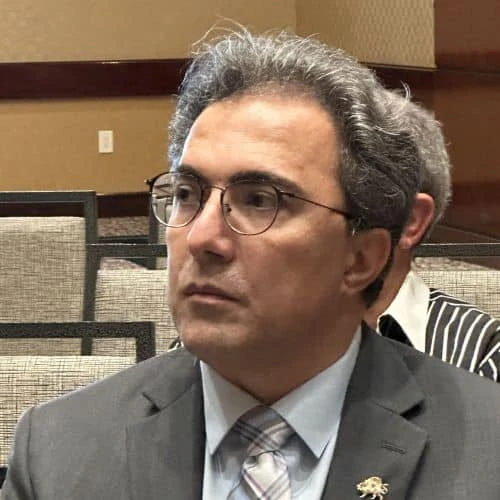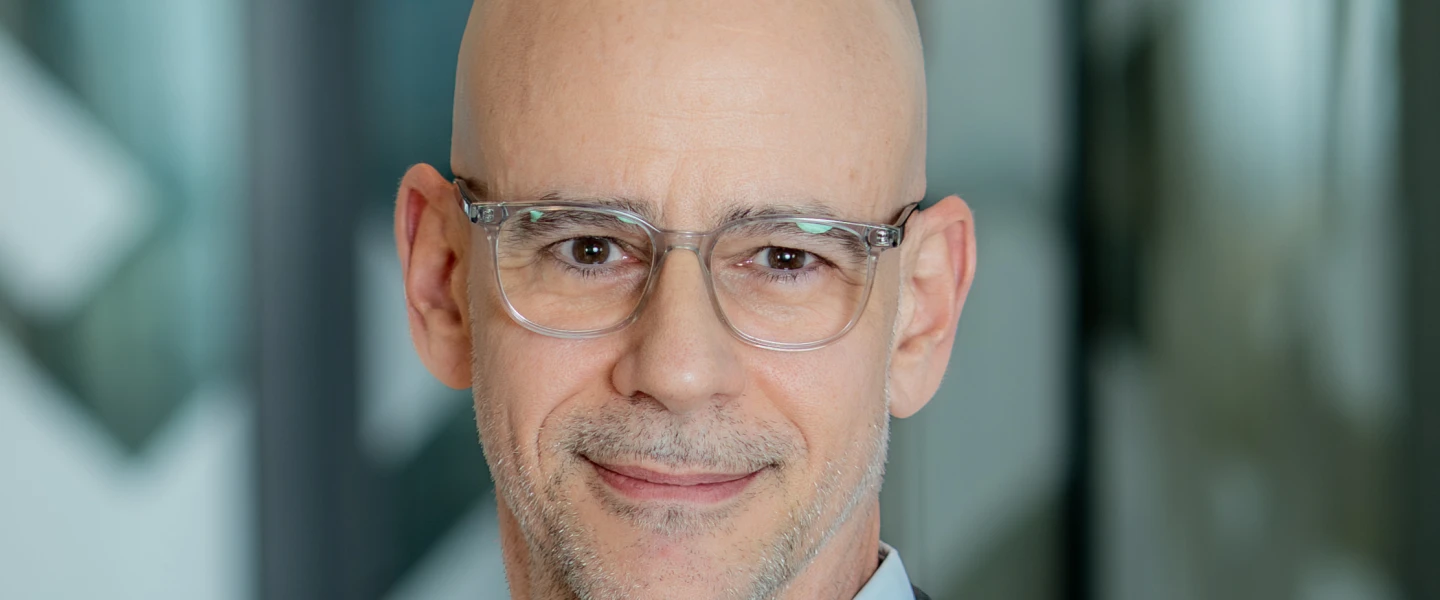
When Dror Bin became CEO of the Israel Innovation Authority in 2021, succeeding Aharon Aharon, he inherited an agency built to plan and fund Israel’s technological future. The IIA, established in 2016 as the successor to the government’s Office of the Chief Scientist, carries forward a public R&D support system dating back to 1965.
But what Bin did not inherit was five years of calm in which to do it.
By the time his term ends this month, Bin, a former Israeli Air Force officer who came to the IIA after leading telecom equipment maker RAD Data Communications, will have led the agency through multiple crises: the tail end of COVID-19, a global downturn in tech investment, political unrest across Israel in 2023 and nearly three years of war following the Oct. 7, 2023, Hamas attack.
His deputy will serve as interim CEO while the board searches for a permanent replacement, who will inherit an industry being reshaped by generative AI, geopolitical tensions and the war.
“In regular days, in normal days, the Innovation Authority is supposed to work on the mid- and long-term success of Israeli high-tech,” Bin told JNS, describing an agency that now deploys close to three-quarters of a billion dollars a year across direct investment and policy advocacy.
But over the past five years, the Authority has repeatedly found itself moving away from its traditional long-term role toward crisis intervention.
Two fast-track programs, three years apart
Asked which of the three biggest overlapping crises tested the Authority’s model most, Bin quickly corrected the premise.
“I counted much more than three,” he said.
Twice during his tenure, the IIA launched what it calls a “fast-track” program, providing emergency capital for companies suddenly cut off from ordinary financing. The first came in the weeks after Oct. 7.
“We realized that hundreds of very promising startups were caught in the middle of a fundraising round and the investors just froze,” Bin said. “This is obviously a situation that we could not allow: companies that need the money to pay salaries.”
The IAA established an investment program by early December 2023, ultimately reaching roughly 250 early-stage companies he described as “the gems of Israel’s next wave of innovation,” with each investment requiring matching private capital.
“There is almost no event that I go [to] and people don’t stop me and say, ‘This program saved our company,’” he said.
The second fast-track program, launched this summer, responds not to war but to currency markets: the sharp appreciation of the shekel against the dollar, which has eroded the runway of startups that raised capital in dollars but spend in shekels.
“Suddenly, something like 30% of their money was gone,” Bin said.
The 1.6 billion-shekel Finance Ministry package was designed to help early- and growth-stage technology companies with less than 12 months of runway extend it by six months.
Bin framed the intervention as triage, not resistance to structural changes taking place across the sector.
“I believe Israeli companies should adapt themselves,” he said. “The fast-track program is not coming to prevent this change, but rather to ... soften the transformation for those companies that are in the very early stages and were caught by surprise.”
Software, hardware and AI
In an August survey, the IIA described Israeli high-tech as undergoing a “profound structural transformation,” with software companies adjusting to AI while hardware and deep-tech fields continued to expand. The data showed a 6.6% layoff rate among software companies in the first half of 2026, compared with 1.1% among hardware companies.
“I don’t think that the layoffs are because of AI,” Bin said, attributing them instead largely to the strong shekel and pressure on companies “to streamline operations to remain competitive in the global landscape.”
In his view, the shift underscores his push toward deep-tech—technologies requiring scientific breakthroughs and aimed at problems in the physical world.
“Our thesis a few years ago was that the world will have to go back to innovating in the real world, not just the digital world,” he said, citing climate change, food security, aging populations and defense.
According to the IIA, roughly 1,500 deep-tech companies operate in Israel and have raised $28.6 billion since 2019, accounting for about 36% of all capital raised by Israeli high-tech companies during that period.
That strategy came with a fight attached. Asked what decision he would most strongly defend against his critics, Bin named the Authority’s refusal to fund an Israeli large language model to compete against giants such as OpenAI or Anthropic.
“We had to defend ourselves against populist criticism that we are not investing enough in AI,” he said. “Our professional standing was that Israel should not do that, because developing a large foundation model requires hundreds of billions of dollars, huge infrastructure, energy—which a tiny country like Israel cannot do.”
Instead, the IIA steered money toward infrastructure such as semiconductors and data centers, and the application layer above it.
“It was very difficult to stand and get all this criticism from leading stakeholders in the ecosystem, from the media,” he said. “But we felt that this is exactly what we should do.”
In August, the IIA appointed Assaf Horowitz as vice president of AI to lead its AI activities and help implement the country’s national AI strategy. Earlier this month, it announced an investment of 80 million shekels ($26.5 million) over five years in two new incubators focused on physical AI and human-machine interfaces.
Reaching past Tel Aviv
Another focus of Bin’s tenure has been expanding Israel’s innovation ecosystem beyond its traditional geographic and demographic boundaries.
The IIA built a network of regional innovation centers from Kiryat Shmona to Eilat, each organized around local advantages, including food-tech in the north, marine agriculture in Eilat and security and food-security ventures around the Gaza border.
“Israel has a glass ceiling, which is the number of brains that are working in the high-tech sector,” according to Bin. “As long as women are only one-third of high-tech, it means that we are missing opportunities.”
The same applies, he said, to Arab and Haredi Israelis and people living outside the country’s main technology corridors.
“Not everyone has the opportunity to serve in the army in 8200,” he added, referring to the Israel Defense Forces signals intelligence unit.
Beyond Israel’s borders
Asked where Israel might be falling short, Bin pointed to rising geopolitical tensions as governments take a more active role in their countries’ research and development.
“Since the geopolitical tension started, we see governments getting more and more involved, pouring tons of money into research and development, putting constraints on imports, exports, knowledge sharing ... and which countries allow [access to] GPUs,” he said.
For a small, trade-dependent economy, maintaining access to the Western technology ecosystem is critical, he said.
“Israel obviously is part of the Western world, and we should do anything that is needed to make sure that we get access to the state-of-the-art technologies, the state-of-the-art semiconductors, and remain part of the value chain of the Western world,” he said.
The Europe question
The deterioration in Israel’s relationship with parts of Europe has created additional challenges for its technology sector.
On antisemitism’s effect on Israeli innovation, Bin drew a distinction between industry and academia.
Global companies and investors, he said, have not retreated from Israel. On the contrary, Israel’s technological performance during the war has “only created more appetite” among investors and contributed to a booming defense-tech sector, he added.
Universities tell a different story.
The IIA oversees Israel’s participation in Horizon Europe, the European Union’s roughly €100 billion research program, and some European universities have called for severing ties with Israeli counterparts.
“I think they are making a huge mistake,” Bin said. “The whole point of science is being open and collaborative, and trying to get to scientific excellence, regardless of the nationality of the scientist. When you start to confuse political goals and scientific excellence, then I think they are shooting themselves in the leg.”
Between 2022 and 2025, the percentage of Horizon Europe projects that included an Israeli partner fell from 5.4% to roughly 2.5%.
“I hope that one day things will get back to normal,” Bin said. “At the end of the day, we are all democracies trying to defend ourselves. We share the same values with the United States, with Canada, with Europe, and other countries. So I hope that people will get back to their senses.”
As one of his final initiatives as CEO, the IIA announced three pilot accelerator programs: one in the United States focused on health care, one in Europe focused on climate technologies and one in India.
“Our goal is to help more Israeli companies overcome the technological challenges involved in entering global markets while further strengthening Israel’s position as a global innovation leader,” Bin explained.
A quiet handover
On Sept. 17, the IIA’s board began the formal search for Bin’s replacement. He will finish his tenure at the end of the month, with his deputy serving as interim CEO until a permanent replacement is named.
Asked what the board should look for, Bin pointed to industry experience and a willingness to move quickly—someone who has run a growth company or the Israeli operation of a multinational.
“Not conservative, and willing to take risks,” he said.
“I don’t expect the next year to be more relaxed than the previous year, so challenges will be popping up quite often,” he added. “You need to be very dynamic and understand very quickly what the need is.”
His parting advice to his successor, however, concerned independence rather than strategy.
“Keep the Innovation Authority independent in its decision-making, professional, non-political,” he said. “Because at the end of the day, investments and policies for high-tech should not be influenced, whether it’s right-wing or left-wing or whatever government ... You should be very professional, looking at the innovation, the risk, the economic potential, and making the right decisions.”
As for his own next act, Bin said he will begin a cooling-off period of roughly one year, partly because of restrictions barring him from working with or for companies or institutions in which the IIA has invested.
Beyond that, he declined to say more.
“Nothing that I can announce right now,” he said. “When it comes, I will make it known.”
Bin leaves an Israeli high-tech industry that remains one of the country’s greatest economic and technological successes, but one undergoing significant change.
Deep-tech, real-world technologies, regional representation and maintaining Israel’s place in the global technology ecosystem have become defining themes of his tenure. Where Startup Nation goes from here will soon become someone else’s test.