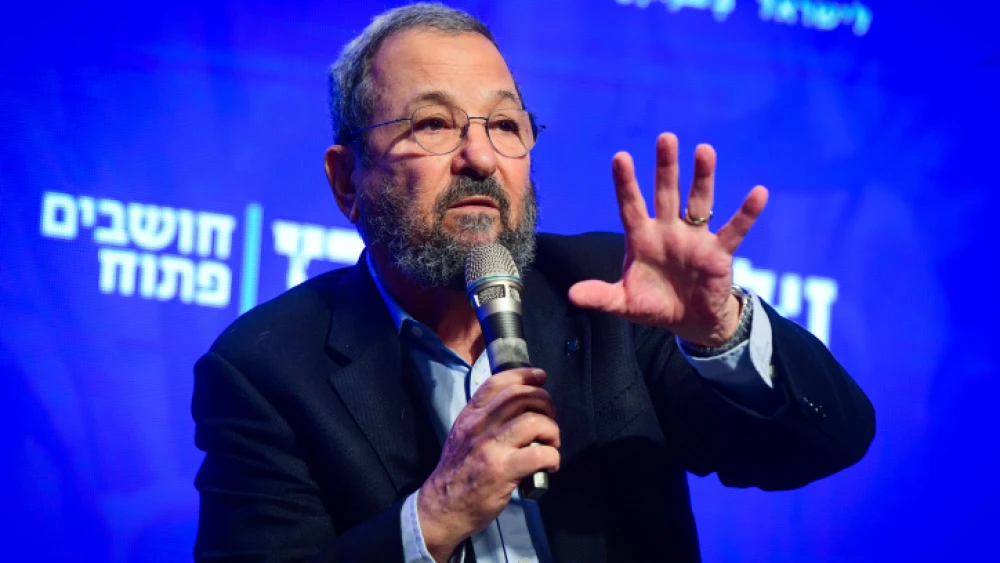
Former Israeli Prime Minister Ehud Barak confirmed on Tuesday that Israel has nuclear weapons, despite Jerusalem having long maintained a policy of “ambiguity” over the matter.
“It sounds delusional to us. But in conversations between Israelis and Western political officials, they express deep concern about the possibility that if the regime coup [the judicial reform effort] succeeds in Israel, a messianic dictatorship with nuclear weapons will be established in the heart of the Middle East whose zealots wish for a confrontation with Islam centered on the Temple Mount,” he wrote on Twitter.
Barak has emerged as one of the most determined critics of the Netanyahu government. Earlier this week, he revealed his strategy for a “counter-revolution” to overthrow it.
Speaking in an address to Chatham House, a London-based think tank, Barak—a supporter of the anti-judicial reform protests that have roiled Israel—said he was sure his side would win “because I know our people, and we have even empirical evidence for this.”
He referred to the U.S. research of Professor Erica Chenoweth and political scientist Maria J. Stephan, who co-authored a 2012 book, Why Civil Resistance Works: The Strategic Logic of Nonviolent Conflict.
Barak said the two researchers looked at hundreds of civil protests from 1900 to 2006, and “they found a common denominator.” That is, protests that succeeded included 3.5% of the population, or roughly 8% of the adult population, and “tenaciously and persistently” kept up the protests, boycotts and civil disobedience.
The Dimona nuclear research facility, officially called the Shimon Peres Negev Nuclear Research Center, is widely believed to house Israel’s alleged nuclear-weapons program.
Israel is estimated to have about 200 nuclear warheads.