Newsletter
Newsletter Support JNS

Lieberman says Israel headed back to elections in 2020

Though the addition of his eight mandates to the right-wing or a left-wing bloc would avoid elections, Yisrael Beiteinu Party leader Avigdor Lieberman said Likud, and Blue and White have made this impossible.

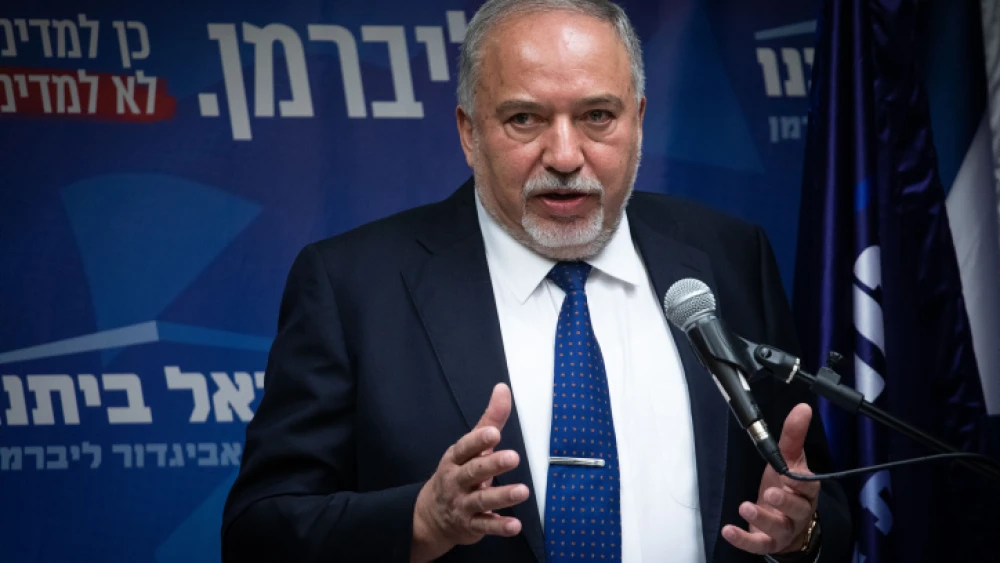
Yisrael Beiteinu Party leader Avigdor Lieberman speaks with the media during a faction meeting in the Knesset in Jerusalem on Dec. 2, 2019. Photo by Hadas Parush/Flash90.

Yisrael Beiteinu Party leader Avigdor Lieberman said on Tuesday that Israel is headed to its third round of elections with the course of a year.

“Elections are coming,” Lieberman told the Yediot Achronot daily in an interview. Unity talks had reached a dead end, he said, and he had decided against empowering a narrow government because “the combination of dramatic defense and economic decisions and a narrow government is likely to create a large rift and polarization in [Israeli] society.”

On Tuesday, a meeting between Blue and White Party leader Benny Gantz and Israeli Prime Minister Benjamin Netanyahu reportedly broke down after just 45 minutes.

Though the addition of Lieberman’s eight mandates to either the right-wing or a left-wing bloc, including the Arab parties, would allow Israel to avoid elections, he said both the Likud, and Blue and White leaders had made this impossible.

“To my regret, both [Gantz and Netanyahu] took a strategic decision to not go to unity; therefore, the two parties are responsible for another round of elections,” said Lieberman. “Our hands are clean.”

On Wednesday, Likud Knesset member Miki Zohar told Israel National News that Likud had engaged in negotiations with Lieberman to try to get him to join a Netanyahu-led bloc, but were “unable to reach understandings with him, unfortunately.”

Lieberman has said he would join a right-wing bloc if the Likud were to make major shifts in its views on Jewish religion and state connections, an agreement Likud would not make.

“Vang is currently riding a wave of progressive energy that has been deciding Democratic primaries across the country,” Dan Schnur, a political science lecturer, told JNS.
Preliminary data for 2026 suggests a volume of antisemitism that is second only to 2023, during which the Oct. 7 attacks occurred, B’nai Brith Canada said.
Only 93 members of the Democratic caucus opposed an amendment to end aid Israel in a vote that split the Democratic leadership and further revealed one of the sharpest divides in politics on the American left.
The law negates the binding nature of legal opinions and grants the government the authority to represent its own position in court even if it differs from that of the AG.
Republican lawmakers on the House Committee on Education and Workforce grilled the leaders of three public medical schools over their past diversity, equity and inclusion efforts.
Despite ongoing security concerns, families across the United States chose to send their children on the four-week educational trip to strengthen their connection to Israel.