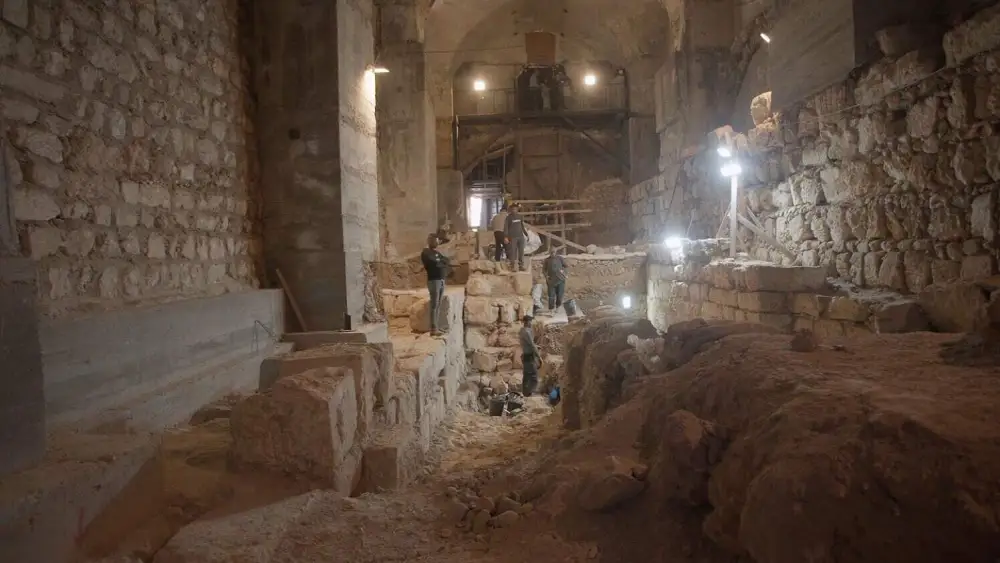
A section of Jerusalem’s city wall dating from the Hasmonean period more than two thousand years ago has been unearthed in the city’s Tower of David Museum, the Israel Antiquities Authority announced on Monday.
The wall was discovered during an excavation on the grounds of the museum, located just inside the Jaffa Gate of the Old City of Jerusalem, adjacent to the citadel, within the historic complex known as the Kishle, the state-run archaeological body said.
The newly uncovered section of the wall known in ancient historical sources as the “First Wall” is particularly impressive in both size and degree of preservation, being over 40 meters long and about 5 meters wide, according to excavation directors Amit Re’im and Marion Zindel.
The historian Josephus details the originally 10-meter high wall and its gates, and contended that it was “impregnable,” with 60 towers standing along its length.
“There is much more to this wall than meets the eye,” the excavation directors said. “It is clear that it was systematically destroyed and razed to the ground.”
The researchers surmise that the wall may have been dismantled by the Hasmoneans themselves, or that alternatively King Herod, in seeking to distinguish his rule from that of the Hasmonean kings, deliberately destroyed their construction projects, including their monumental city wall, as a political statement.
“We are committed to preserving this impressive and unique sight, and allowing the general public to experience this tangible link to Jerusalem’s past spanning thousands of years,” said Eilat Lieber, director of the Tower of David Jerusalem Museum.
“This segment of Jerusalem’s ancient city wall is tangible and moving evidence of Jerusalem’s might and stature during the Hasmonean period,” said Israeli Heritage Minister Rabbi Amichai Eliyahu. “The archaeological discoveries allow us to connect to the historical continuity that binds us—generations of Jews, to Jerusalem, and demonstrates and exhibits our proud heritage to the world.”