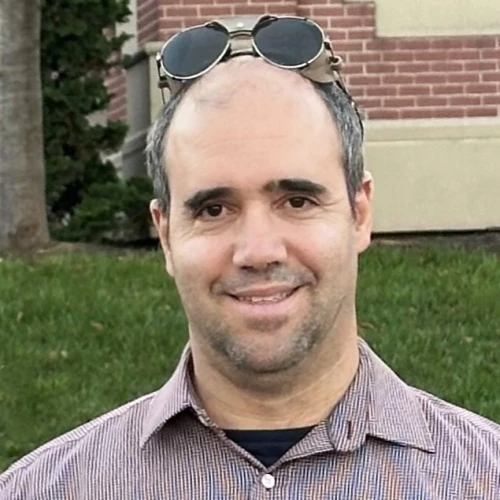
Lebanese Prime Minister Nawaf Salam told Qatar’s Al Araby Television Network on Saturday that Beirut is seeking to disarm all armed groups in the country’s south, including Hezbollah, by the end of the year.
Iranian-backed Hezbollah “accepted the ceasefire agreement, which restricts weapons to the hands of state forces,” Salam told the channel. “We are committed to restricting weapons south of the Litani [River] by the end of the year, and in the remaining areas during the next year.”
Lebanon will disarm all areas except for five points that remain under the control of the Israel Defense Forces, the prime minister declared.
The Trump administration has set Dec. 31, 2025, as the deadline for the Lebanese government to disarm the terror group, Israel Hayom cited diplomatic sources with knowledge of the matter as saying last month.
Salam said on Saturday that while talks with the Jewish state “have risen to a level higher than the military track,” economic cooperation “will not happen before peace,” despite talks on the issue held on Wednesday.
Hezbollah terrorist leader Naim Qassem on Friday criticized the government for sending a civilian delegate to the ceasefire committee, calling it a “free concession” to Israel and a violation of past positions.
Jerusalem and Beirut dispatched officials to talks in Lebanon as “a first attempt to create a basis for economic relations and cooperation,” the Israeli Prime Minister’s Office announced on Dec. 3.
The Israeli representative, Uri Resnick, senior director for foreign policy at Jerusalem’s National Security Council, met in Naqoura, Lebanon with “relevant Lebanese civilian representatives” as well as Morgan Ortagus, the deputy U.S. Special Envoy to the Middle East, the PMO stated.
The announcement came a day after the Israel Defense Forces warned that the Hezbollah terror group was rapidly rebuilding its capabilities in Lebanon despite ongoing airstrikes since a truce took hold last year.
The ceasefire went into effect on Nov. 27, 2024 following an intense two-month IDF military campaign that led to the weakening of the Iranian proxy’s leadership. The deal was cemented by the Israeli and Lebanese governments and five mediating countries, including the United States.
According to Israel’s Channel 12 News, Beirut has been aware of Hezbollah’s attempts to rebuild but has turned a blind eye, despite having voted around three months ago to bring all weapons under state control.
Nawaf on Friday told a visiting U.N. delegation that his country will need a follow-up force along the border with Israel to fill the vacuum once the U.N. Interim Force in Lebanon’s term expires by the end of next year.
Salam told the delegation that the peacekeepers could work much like the U.N. observers force that has been deployed along Syria’s border with Israel, according to a report by the Associated Press on Friday.