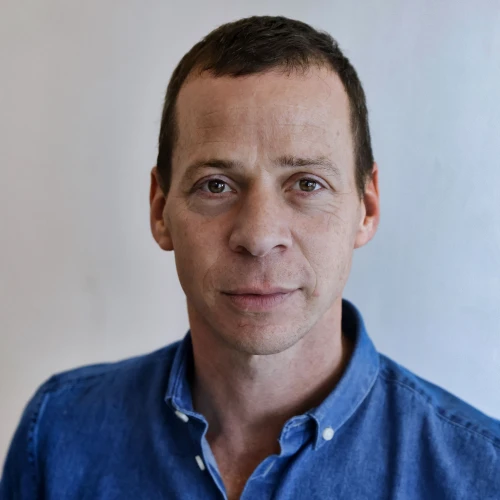
On the day her Galilee community of Klil was targeted by Hezbollah missiles, Michal Shiloah Galnoor was presiding over an event that brought together women entrepreneurs displaced by the war from the north and south of Israel.
“You Are Invited” took place at the Design Terminal Bat Yam recently in honor of International Women’s Day and was attended by 60 women small-business owners of all ages. They gathered to learn how to keep their businesses afloat during extraordinary times, as well as to enjoy a day off from the tensions of the past months.
The main idea of the organizers was to create a community for women from war zones near the Gaza Strip and Lebanon to network, and to give them a sympathetic ear and the tools to deal with the difficult situation.

Shiloah Galnoor is the founder and director of the nonprofit Western Galilee Now (WGN) project, which aims to promote awareness and appreciation for the diverse cultures in the region.
During normal times, WGN is involved with planning and publicizing local initiatives, workshops, culinary events, wine tours, guided tours, themed weekends and custom tours for Israelis and foreign visitors.
These days, almost everyone behind those activities (including Shiloah Galnoor) has been displaced from their homes for months and had their businesses disrupted. WGN has pivoted to do whatever it can to support those affected. The group now holds workshops on how to find new target markets and how to market in wartime.
International Women’s Day on March 8 provided a solid theme to get business owners together and give them a moment to breathe, relax a bit and start thinking out of the box, Shiloah Galnoor told JNS.
“We wanted to spoil them, to enrich them, give them some new tools and leave them with a bit of optimism,” she said. “Part of being Israeli is that every day is a new crisis. We have to be very creative, very flexible.”
She emphasized that “in the north, we’re really in limbo because no one knows what’s going to happen, and it’s very hard to operate any business right now.”
WGN mobilized quickly after the terrorist attacks in southern Israel on Oct. 7, and thanks to its affiliation with JNF-USA, which has supported the group since 2013, staff and volunteers immediately began preparing and distributing support packages for soldiers and Israeli evacuees. The contents were products from the small businesses run by women in the north and the Negev, Shiloah Galnoor explained.
“Because of the publicity from JNF-USA, people from all over the world buy the boxes. We sold thousands of packages in the Mitzvah Marketplace, and the income for those suppliers has crossed the 1 million shekel [$276,000] mark,” she noted.
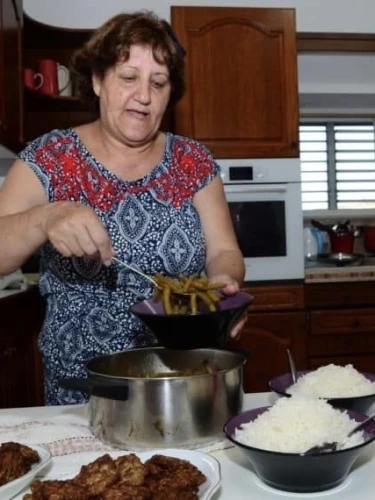
Some of the displaced women-run businesses offer experiences and not products. Before the war, Shula Giladi, better known as “Shula from Shtula,” had a successful business offering an introduction to Kurdish Jewish culture accompanied by home-cooked Kurdish food to small groups in her home close to the Lebanese border.
Giladi said almost every home in Shtula has been damaged by the war: “In my house, the windows blew out, and the doors are warped from the sonic booms of our jets.”
Shtula, a moshav with 300 residents, is now part of a closed military zone. Everyone was evacuated during the first week of the war and is currently housed at the Royal Beach Tel Aviv Hotel.
After taking part in a workshop at the Lauder Employment Center that helped her reframe her business options, Giladi, 70, is using the hotel kitchen and running a pop-up shop to sell her food on weekends to preserve at least a portion of her pre-war income.
Despite the disruption to her life, Giladi has only praise for the way the government is dealing with those evacuated from their communities north and south. “I salute the efforts of our government towards the evacuees, I salute the IDF,” she said.
She is one of those who are convinced that she will be going home at some point. “I’m going back there, with the border wall and the fence. I don’t have any problem living across from Hezbollah. Shula will be forever in Shtula,” she declared.
‘Tomorrow will be a new day’
For the past 20 years, promoting population growth in the Galilee and the Negev has been the goal of Talia Tzour, head of the Jewish National Fund-USA in Israel, another speaker at the “You Are Invited” day. Tzour, who had just returned from a visit to the United States, told the women how much support she found in Jewish communities all over America.
JNF-USA is going ahead with the building of the Galilee Culinary Center in Kibbutz Gonen, in addition to employment centers in Acre and Kiryat Shmona to help evacuees find work, Tzour told JNS. A $1 million JNF-USA fund to build 200 bomb shelters in the north is also underway.
Shiloah Galnoor told JNS that the women entrepreneurs had been taught by professionals “how to reinvent ourselves in moments of crisis. Israelis have this power. We tell ourselves, ‘Tomorrow will be a new day.’ This is how we grow up here.”