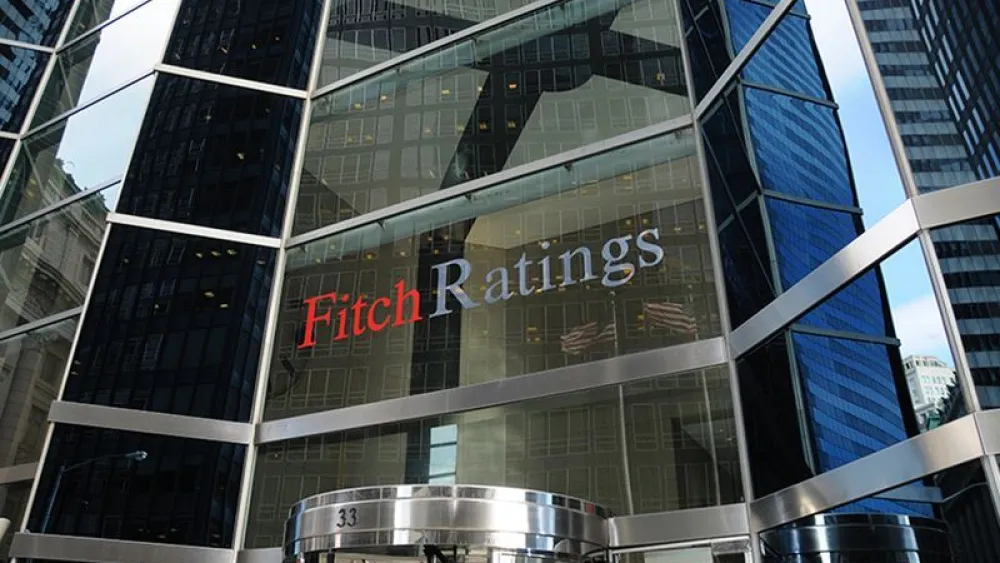
U.S. credit evaluation firm Fitch Ratings on Monday reaffirmed Israel’s A+ score with a “stable” outlook, causing the Tel Aviv stock market to rise and the shekel to strengthen against the dollar and the euro.
“Israel’s ‘A+' rating balances a diversified, resilient and high value-added economy and strong external finances against a relatively high government debt/GDP ratio, ongoing security risks and a record of unstable governments that has hindered policymaking,” Fitch said.
The firm indicated that it was unclear how the government’s judicial reform initiative will impact Israel’s credit metrics in the future, although it could bring negative changes “if the weakening of institutional checks leads to worse policy outcomes or sustained negative investor sentiment or weakens governance indicators.”
However, Fitch said that the current judicial reform measures “are unlikely to trigger a material exodus of talent and capital in the high-tech sector.”
The company held a round of meetings with Israeli economic officials ahead of the latest report, with one of its economists visiting Israel last month to discuss judicial reform developments.
Prime Minister Benjamin Netanyahu and Finance Minister Bezalel Smotrich issued a joint statement, saying, “The approval of Israel’s credit rating at the level of A+ and the leaving of the forecast at ‘stable’ prove what we have been saying all the time: Israel’s economy is strong, stable and solid.”
In May, Fitch Ratings issued a special update regarding Israel, when it complimented its economic strength but expressed concern that the judicial reform effort could hurt Israel’s A+ sovereign credit rating.
Last month, global credit ratings agency Moody’s maintained Israel’s “stable” A1 rating, while also warning of “negative consequences” for the country’s economy and security following the passing into law of key judicial reform legislation.
Meanwhile, the Morgan Stanley investment bank and financial services company moved to revise the Jewish state’s creditworthiness, downgrading its sovereign credit rating to a “dislike stance.”
In April, Moody’s changed Israel’s outlook rating from “positive” to “stable” due to the judicial reform program, while also affirming the country’s A1 rating, reflecting the country’s “strong economic growth and improving fiscal strength which Moody’s expects to continue in its baseline scenario.”
At the time, S&P Global Ratings, previously called Standard & Poor‘s, maintained Israel’s AA- credit rating, which Netanyahu called an “expression of confidence in the correct economic policy that we are leading.”