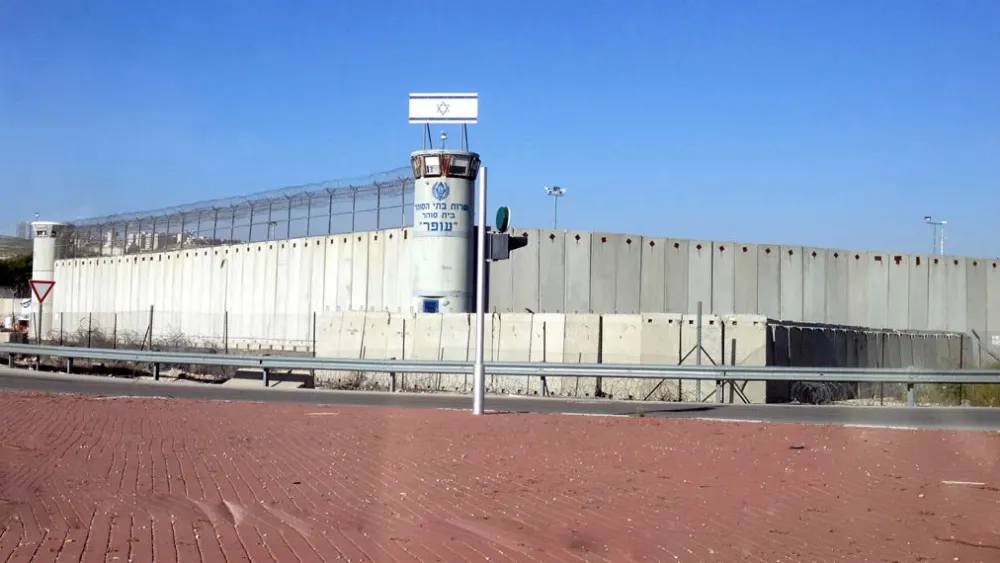
Two Israeli mothers whose children were murdered by Palestinian terrorists offered contrasting reactions to the government’s decision to release the killers and 248 other terrorists to free hostages from Gaza.
Brenda Lemkus denounced the move as “an invitation to the next murder,” while Alia Attias said she would “let the killer go” if it meant rescuing the abducted Israelis, Ynet reported.
The divide captured the anguish, anticipation and moral reckoning gripping Israel as the ceasefire deal with Hamas takes effect.
“I condemn the government for releasing the killer of my daughter Dalia Lemkus,” the news site quoted Brenda as saying.
The murderer is Palestinian terrorist Maher al-Hashlamun, who killed Dalia, 26, in Judea in 2014. According to unconfirmed reports, he is among the 250 terrorists Israel agreed to free to retrieve its hostages from Gaza.
His release, and the release of “all the terrorists who participated in murderous activity against Jews, immediately invites the next murder, and the blood of the murdered is on the hands of the ministers who voted in favor of releasing murderers,” Brenda Lemkus added. She called for introducing the death penalty for terrorists.
Alia Attias, whose son Eden was murdered by a Palestinian terrorist in 2013, told Ynet she supported releasing the killer, following reports that the killer is on the list of terrorists to be freed by Israel.
“I’m sure the murderer will return to terrorism,” she said. But “from the moment our brethren were taken, I felt I would let the killer go if only I could save them.”
The Justice Ministry in Jerusalem on Friday published the list of prisoners who are to be freed as part of the ceasefire agreement.
It includes Raad Sheikh, who was convicted of the murder of two Israeli reserve soldiers in Ramallah in 2000. The two men were lynched by a mob at a Palestinian Authority police station, in an incident that shocked Israelis and eroded their faith in the peaceful intentions of Palestinians. Sheikh bludgeoned the two reservists with a metal pipe.
Also on the list is Ahmad Kaabneh, who in 1997 murdered two young women, Hagit Zavitzky from Kfar Adumim and Liat Kastiel from Holon, in Nachal Prat in the Judean desert. The pair went hiking in the stream and entered one of the pools to bathe. Kaabneh attempted to rob the women and then attacked them and stabbed Hagit dozens of times, killing her.
Liat fled, but the terrorist chased her and stabbed her dozens of times as well, until she died. He was sentenced to two life terms in prison.
Absent from the list is arch-terrorism Marwan Barghouti, a former leader of the Tanzim group of young Fatah terrorists during the Second Intifada, who is widely considered the most prominent Palestinian terrorist held by Israel.
Early on Friday morning, the Israeli Cabinet approved the first stage of a U.S.-brokered plan aimed at ending the war in Gaza and securing the return of 20 living hostages in Gaza and the bodies of 28 deceased hostages. The IDF will withdraw to the “yellow line” outlined in Trump’s plan, leaving Israel in control of roughly 53% of the Gaza Strip. Prime Minister Benjamin Netanyahu said.
Israel reportedly agreed to release 250 terrorists serving life sentences and 1,700 Palestinians who were detained after Oct. 7, 2023.