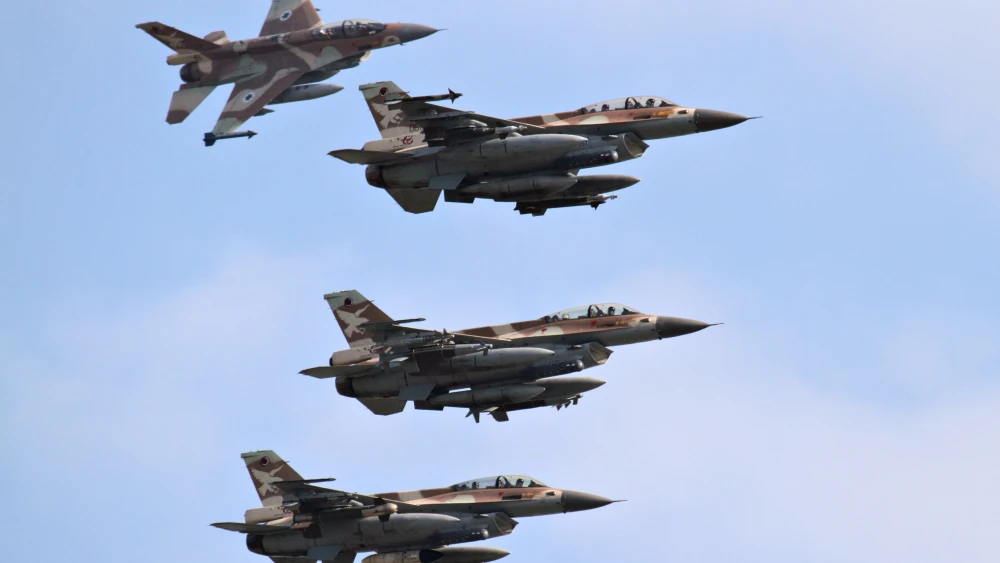
The Israel Defense Forces on Thursday night struck several Hezbollah underground sites in Southern Lebanon, calling the terrorist infrastructure a “blatant violation” of understandings between Jerusalem and Beirut.
In a separate operation on Friday, the IDF attacked Hezbollah targets above and below ground in the Beaufort Ridge area of southeastern Lebanon’s Nabatieh district.
“The IDF will continue to operate in order to remove any threat posed to the State of Israel,” said the military.
IDF Chief of Staff Lt. Gen. Eyal Zamir said on Wednesday that there had been a “profound shift” in Israel’s national security concept in the aftermath of the Hamas-led Oct. 7, 2023 massacre.
During a tour of Israel’s northern front, including Southern Lebanon, where the IDF has maintained a limited deployment since September 2024, Zamir said that Israel’s policy was “no longer containment and waiting, but the use of force in pursuit of contact.”
There is also a new guiding principle among Israel’s security forces “that neutralizing the threat also requires striking at its sources,” he added.
Last Friday, the Israeli Air Force killed Muhammad Hamza Shahada, intelligence chief of Hezbollah’s elite Radwan Force, in a strike near Aadloun in southwestern Lebanon’s Sidon District.
The elite terrorist force for years trained to invade northern Israel and seize communities under a plan known as “Conquer the Galilee,” on which Hamas modeled its Oct. 7 cross-border attacks in the northwestern Negev.
A day later, the IDF killed a Hezbollah terrorist who had been gathering information on troop movements in the area of Aynata in southeastern Lebanon.
The counter-terrorism operations come as Beirut continues efforts to remove weapons from non-state actors, primarily Hezbollah. The process was prompted by U.S. demands for the Lebanese government to disarm the Iranian terrorist proxy.
Hezbollah began launching missiles and drones into Israel on Oct. 8, 2023, the day after the Hamas-led invasion.
Last fall, Hezbollah’s leadership suffered significant losses from a series of Israeli operations targeting its communications equipment, followed by intense airstrikes on its rocket arsenal.
A fragile ceasefire between Israel and Lebanon took effect on Nov. 27.