


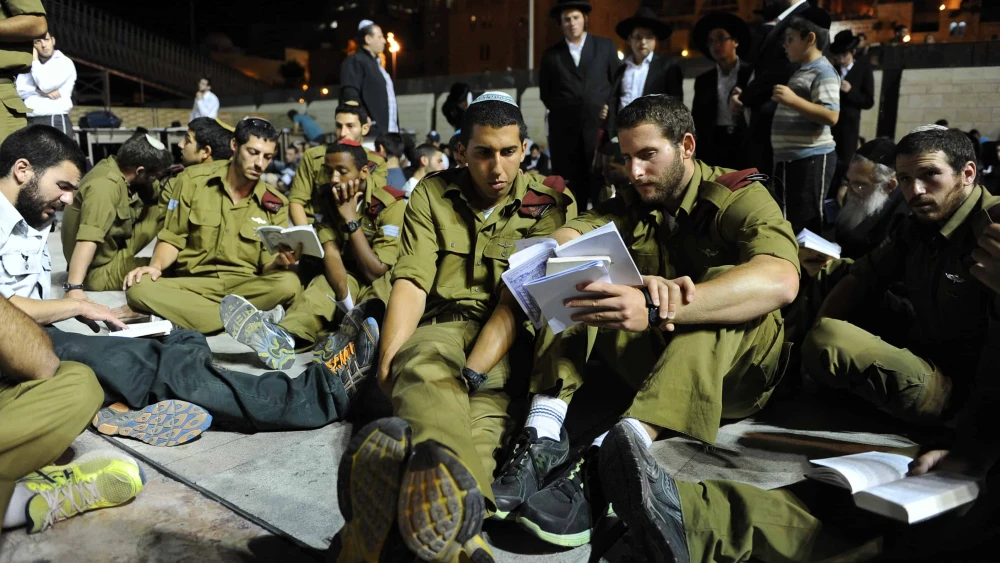
The Israel Defense Forces Military Rabbinate has issued a ruling that soldiers engaged in “operational activities” may not fast on Tisha B’Av, the Jewish national day of mourning, which begins at sundown on Monday.
“Fasting during operational activity is prohibited; it is a life-threatening matter,” the Military Rabbinate stated, according to local media reports.
Soldiers in all combat sectors, “including the Gaza Strip, the north of Israel, Judea and Samaria; soldiers who may be called up for operational activity; as well as soldiers on guard duty should eat and drink to be able to function optimally,” according to the statement.
The statement comes after two soldiers fighting in the Gaza Strip and on the northern border became dangerously dehydrated while observing the fast of the 17th of Tammuz on July 23, according to reports.
The 17th of Tammuz marked the start of a period known as “the Three Weeks,” during which many Jews observe stringent mourning practices in remembrance of the destruction of the two Temples in Jerusalem more than 1,950 years ago.
The period culminates in Tisha B’Av, the ninth of the Hebrew month of Av, a 25-hour fast that starts on Monday evening.
On Monday night, Jews worldwide will read the Book of Lamentations sung to a mournful melody. As a gesture of mourning, many religious Jews sit on low chairs or on the floor from nightfall through midday.
In Israel, the saddest day on the Jewish calendar takes on an additional meaning this year against the backdrop of the Oct. 7 massacre, in which Hamas-led terrorists murdered 1,200 people, primarily Jewish civilians, and devastated scores of the country’s southern border communities.
As the Jewish state heads into Tisha B’Av, a new intelligence assessment suggests that the Iranian regime is slated to launch an assault on Israel “within days” in a joint attack with its Lebanese Hezbollah terror proxy.
Some local reports have claimed that Tehran is planning to attack on Tisha B’Av itself to transmit a message to the Arab world that “Israel is vulnerable to destruction as the Jews have historically been.”


