Newsletter
Newsletter Support JNS

IDF soldiers begin to vote at special army ballot boxes

Voting has begun for Israeli military personnel, with 643 ballot boxes set up for Israel Defense Forces soldiers’ across the country, available 72 hours before national polls open on April 9.

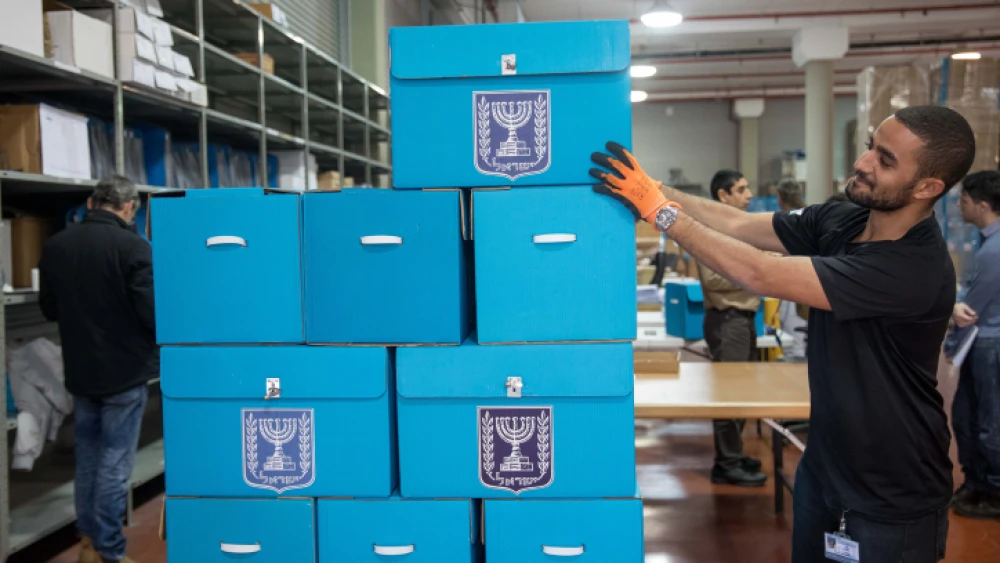
Ballot boxes at a Central Elections Committee warehouse in Shoham, prior to being shipped to polling stations across Israel, March 25, 2019. Photo by Noam Revkin Fenton/Flash90.

Voting has begun for Israeli military personnel, with 643 ballot boxes set up for Israel Defense Forces’ soldiers across the country, available 72 hours before national polls open on Tuesday.

Voting kicked off late Saturday night and will take place until ballots close on April 9 to enable soldiers stationed away from voting centers, in addition to those embedded in the field on missions, to vote along with the general public.

Some 130 mobile polling stations have been deployed by the military to remote outposts and distant units.

“The Central Elections Committee and the IDF will ensure the elections are fair ... and the soldiers are able to decide who to vote for, like the rest of the Israeli public,” said head of the Central Elections Committee, Justice Hanan Melcer, during visits to IDF voting booths.

For many soldiers, this will be their first time voting in a national election.

“We would expect any kosher food to have certification from a nationally recognized kosher certification agency,” Rabbi Yeruchim Silber, of Agudah, told JNS.
“Instead of focusing on disarming Hamas and ensuring that the terrorist organization never returns to power in the Gaza Strip, they choose to confront Israel with a series of one-sided demands,” Danny Danon, Israel’s U.N. ambassador, told JNS.
“I came here to share the thoughts of the children,” Ben Carasso told JNS.
“These observations are important for understanding human evolution,” said a researcher who published the findings.