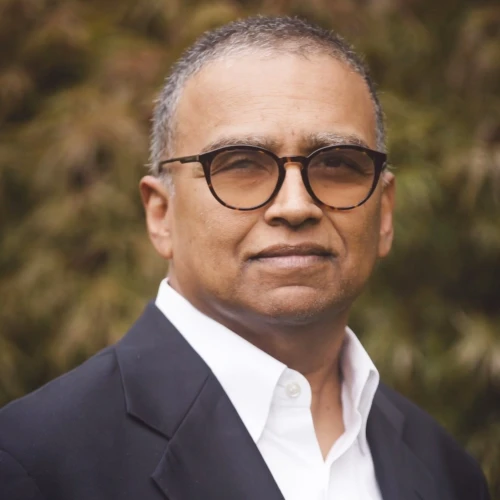
Jerusalem and Baku have forged a “strategic partnership” with relations between the two nations at an all-time high and only expected to grow, a senior Azerbaijani presidential representative said Monday.
The remarks come four months after secular Azerbaijan made history by, despite repeated violence and threats from neighboring Iran, becoming the first Shi’ite Muslim country to open an embassy in Israel. The diplomatic landmark was the product of a three-decade-old covert and overt relationship rooted in a centuries-long affinity between the two nations, which has blossomed from a people-to-people relationship to a robust security- and energy-related focus.
“Today we are at the peak of our bilateral relationship, with a strong will to deepen and expand this friendship and cooperation,” Elchin Amirbayov, representative of the president of Azerbaijan for special assignments, told JNS in an interview in Baku. “It is one of the rare cases in which we don’t see any clouds.
“What you see is the tip of the iceberg,” he added. “It’s multi-fold, vibrant and constantly expanding.”
The two nations’ ties furnish a textbook case of good interfaith ties, at a time when Baku’s ties with Tehran have hit rock bottom following Iranian attacks and threats of violence over the relationship with Israel.
“We have certain red lines we will never cross: We will remain allies and friends with those we want,” Amirbayov said.

Historic ties
Israel was one of the first countries to recognize Azerbaijan’s independence in 1991 after the breakup of the Soviet Union, and has operated an embassy in Baku since 1993.
For Israel, ties with Azerbaijan—which shares a 428-mile border with Iran, a country that is home to tens of millions of Azerbaijanis—are of strategic importance, both as a conduit for reconnaissance and because it supplies an estimated 30% of the Jewish state’s oil. At the same time, Azerbaijan is a leading purchaser of Israeli military hardware, which helped lift Baku to victory in its 2020 war with its archrival Armenia.
The ties that bind
Beyond the strategic considerations, the senior Azerbaijani official credits both the local Jewish population and the Azerbaijani community in Israel for the friendly ties.
“The Jewish population has always been part of our population, a vibrant community integrated in our society,” Amirbayov said. “They are part of us.”
About 25,000-30,000 Jews live in Azerbaijan today, while tens of thousands of Jews from Azerbaijan immigrated to Israel and maintain strong ties with the Caucasus nation.
“The Jewish population are ‘living bridges’ which unite our countries and solidify this relationship,” Amirbayov said.
Azerbaijan prides itself on its good relations with its Jewish community, one of some 50 ethnic groups in the country.
“There has never been a case of antisemitism, which is a rare thing not only for a Muslim country but for other countries as well,” he said.
While the Azerbaijani regime is sometimes criticized in the West for its authoritarian political system, it was the first parliamentary democracy in the Muslim world after the fall of the Russian Empire in 1918 for a short-lived 23 months before being incorporated into the Soviet Union for the next seven decades. The former Soviet republic prides itself on its diversity and freedom of religion.
Looking to the future
With peace talks progressing with Armenia, Azerbaijan is looking for Israeli businesses to participate in the restoration and rehabilitation of the territory it recovered in the mountainous region of Nagorno-Karabakh, which has been hard-hit by the three-decade-old conflict, Amirbayov said. It is also seeking investment from Israeli companies.
“We want Israeli businesses to be more present in Azerbaijan,” Amirbayov said.
Top-level visits and Iranian violence
The burgeoning relations between the two countries were on very public display during a slew of diplomatic visits to Baku since the beginning of the year, including one by Israel’s President Isaac Herzog and separate trips by its Foreign Minister Eli Cohen and Defense Minister Yoav Gallant.
Earlier this month, Azerbaijan arrested a 23-year-old Afghan national with Pakistani ties for planning an attack on Israel’s embassy.
Amirbayov declined to comment on the state of the investigation. But Gallant noted during his visit two days later that Israel and allied nations foiled more than 50 attacks Iran had attempted to carry out against Israelis and Jews across the world in recent years.
A friend in need
Azerbaijan, with its close ties and historic brotherhood with Turkey, pledged to work to improve ties between Israel and Ankara.
“I would be very surprised is nothing has already been done to have good relations restored,” Amirbayov said.
Indeed, a summit between the Israeli and Turkish leaders was recently set for this month only to be postponed by Prime Minister Benjamin Netanyahu’s hospitalization. At a Monday meeting in Ankara, the Foreign Minister of Azerbaijan spoke with his Turkish counterpart about trilateral cooperation between the three countries.
In the meantime, the Israeli-Azerbaijaini relationship is viewed as a win-win in both Jerusalem and Baku.
“Israel is a friend not only in words but in actions to a country that is so vital to its national security,” Amirbayov said.