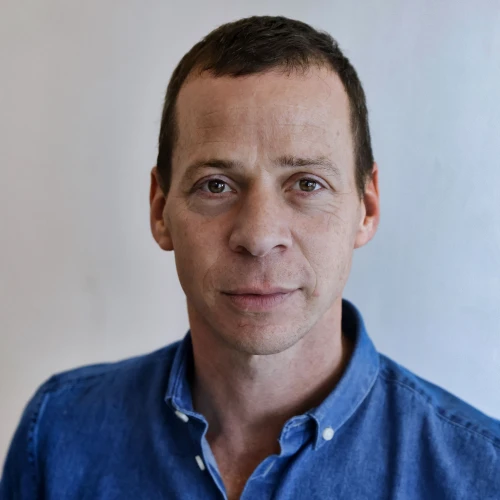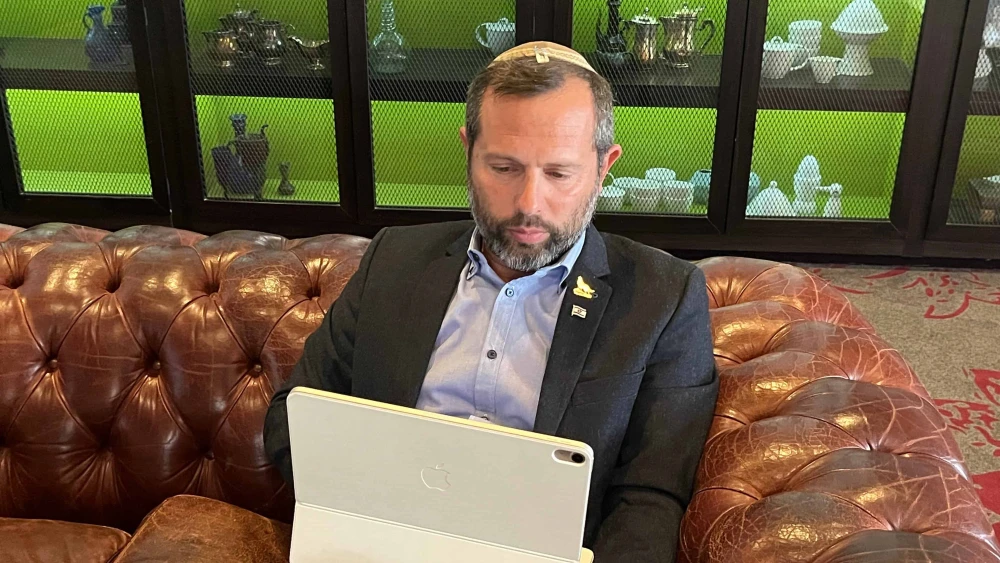
Yisrael Ganz, governor of the Binyamin Regional Council and chairman of the Yesha Council, keeps a packed schedule. In an exclusive interview with JNS this week, he said he is working tirelessly to advance development in Judea and Samaria, driven by a belief that the current political moment may not last.
“We are in a very tight window right now,” Ganz said.
He noted that Israel is entering election season and that the United States faces upcoming midterm elections. “We are fortunate to have a right-wing government,” he said. “We also have President Trump in full control, but it won’t last forever.”
Ganz described this period as crucial for approving additional communities in Judea and Samaria, improving infrastructure and expanding roads, amid uncertainty about future political realities in both countries.
For now, he expressed confidence that the trajectory of Judea and Samaria is positive.
Ganz welcomed the Israeli Cabinet’s decision this week to lift confidentiality restrictions on land registry records in Judea and Samaria, effectively canceling longstanding limitations on land sales to non-Arabs.
Until now, Ganz explained, under Ottoman law as administered through Jordanian legal frameworks, only Jordanian citizens could purchase land in Judea and Samaria, as Israeli law has not been fully applied there.
“The Cabinet decision means anyone can now buy land in Judea and Samaria, as in other parts of the world,” he said.
“Practically speaking, I met many Arabs who wanted to sell land but could not do so to non-Arabs. Investors from abroad were also unable to purchase land. Now that has changed. We want to develop commercial and industrial zones, health systems and more. It’s a huge opportunity for investors. Now is the time,” he added.
Ganz characterized the move as another step toward applying Israeli law to Judea and Samaria, even as U.S. President Donald Trump has publicly expressed opposition to formal sovereignty measures.
He acknowledged that Israel’s immediate focus remains the Iranian threat and its proxies, including Hamas, which he said continues operating from underground tunnels in Gaza. “Nevertheless,” he said, “we are on our way toward sovereignty.”
Ganz said additional Cabinet decisions focus on combating what he termed environmental terrorism, including illegal garbage burning by Palestinian Authority residents. Citing a Ministry of Health report, he said the practice contributes to more than 1,000 Israeli deaths annually.
A third component of the Cabinet decision addresses safeguarding Jewish archaeological sites throughout Judea and Samaria, including in Area A, which is under full Palestinian Authority control. Ganz said such sites have long faced desecration and theft.
He expressed hope that in its remaining months the government will approve further legislation to advance infrastructure investments in water and electricity, as well as additional community approvals beyond the 69 already authorized under an initiative led by Finance Minister Bezalel Smotrich, who also serves as a minister within the Defense Ministry.
Ganz also called for increased pressure on the Palestinian Authority over untreated sewage, which he said is contaminating Israel’s mountain aquifer.
Among recent developments he cited was last month’s Jewish morning prayer at Joseph’s Tomb in Shechem (Nablus), the first such daytime prayer there in 25 years.
Ganz thanked Defense Minister Israel Katz for approving the event, saying Israelis should not have to visit the holy site “like thieves in the night.”
“Even under the Oslo Accords, access for worshipers was supposed to be ensured,” he said. “We only arrived at night because of attacks. We must fight terrorism, not hide from it.”

Trip to the United States
Last month, Ganz traveled to the United States to meet elected officials and expand Israel’s circle of supporters. He said discussions centered on the Iranian threat and the importance of sovereignty in Judea and Samaria.
He described as a highlight a speech he delivered at a pro-Israel summit at Trump’s Mar-a-Lago resort in Florida.
“After two years of war, the hostages—both alive and deceased—have come home. This is thanks to the bravery of our soldiers, but we could not have done it without the United States,” Ganz said. “I took the opportunity to thank President Trump for what I believe is a miracle.”
Though Trump did not attend the speech, Ganz said he is confident his message was conveyed.
“It was heartwarming to see people who understand the rights of the Jewish people to the Land of Israel and recognize that we share a common enemy in Iran,” he said. “Only when Israel and the United States are united can we crush the head of the terrorist snake—Iran.”
As part of the summit, Ganz presented attendees with a replica of an ancient Scroll of Esther from Iran, symbolizing the historical connection between the Jewish people and the Iranian threat.
Ganz concluded by addressing what he described as Israeli failures leading up to the Oct. 7, 2023, massacre and warning that the Palestinian Authority remains a serious threat.
He argued that the P.A. maintains not merely a police force but a heavily armed force of some 45,000 personnel, which he views as a major security risk.
“The P.A. believes in terrorism, supports it and promotes it,” Ganz said. “We must confront it head-on.”
He called for dismantling any P.A. forces resembling a military structure, including confiscating weapons, and limiting the authority to a local police force that cannot pose a threat to Israel.