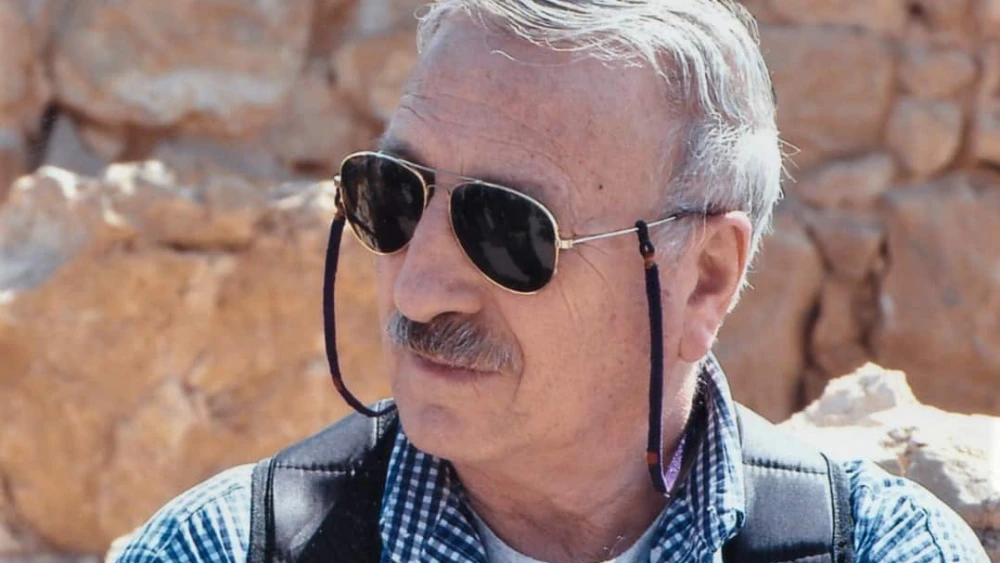
Amnon Ben-Tor, professor emeritus of archaeology at the Hebrew University of Jerusalem and winner of the 2019 Israel Prize, died on Aug. 22. He was 88.
Ben-Tor was an “archaeology giant” and “modern-day king of Hazor,” according to the Armstrong Institute of Biblical Archaeology. The “giant in his field” leaves “a significant legacy—and now void—in the world of biblical archaeology,” it stated.
The archaeologist was part of many excavations around Israel but was best known for his work at Tel Hazor, according to the institute. Ben-Tor was an area supervisor of the site in the 1950s and ’60s, and directed site excavations from the 1990s until 2022, per the institute. He also wrote many articles and several books, some on the Hazor site.
He believed in the biblical idea of unified monarchies, as in the kingdom of David, wrote Jim Davila, author of the blog PaleoJudaica. He was known for bringing biblical texts to bear on archaeological finds, even as many colleagues viewed the Bible skeptically, often in political or propagandist terms.
The Jerusalem-born archaeologist and son of German-Jewish immigrants grew up with Hebrew and German, but “was immersed in one culture—Hebrew,” according to a tribute article published in 2011 in Eretz-Israel: Archaeological, Historical and Geographical Studies.
Ben-Tor served in the Israel Defense Forces before studying at Hebrew University, where he earned undergraduate and graduate degrees, as well as a Ph.D.
In the foreword to one of his books, Ben-Tor wrote: “The best years of my life were without doubt from 1963 to 1965, when I was a member of the archaeological expedition to Masada directed by Yigael Yadin. These were the early years of the State of Israel, a time of innocence, before the Six-Day War created radical changes in so many areas.”
“It was a time when the words ‘Masada shall not fall again’ spoke to us directly,” he added. “Conditions were difficult for everybody, volunteers and staff alike: exhausting physical work, living in tents, cold showers and army rations. And yet, despite the conditions, or perhaps to some extent because of them, we were in seventh heaven.”