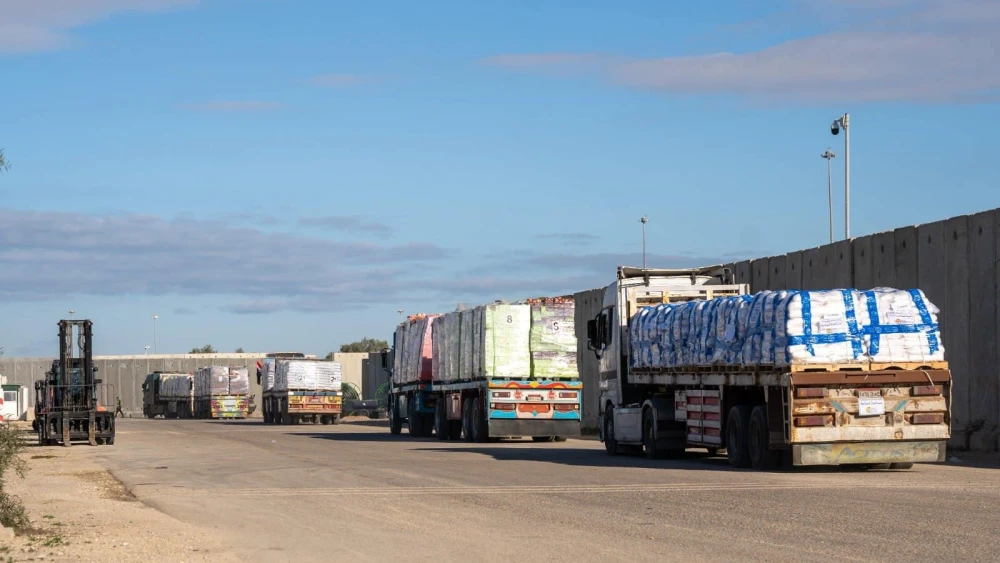
Israel is preparing to implement a new humanitarian aid distribution system in southern Gaza designed to prevent Hamas from seizing the supplies, according to a report on Tuesday.
The plan, revealed by military correspondent Doron Kadosh on Army Radio’s “Boker Tov Israel” program, will focus on the Rafah area between the Morag and Philadelphi corridors—territory currently under Israeli military control. Civilians will only be permitted access to aid after undergoing strict screening procedures.
Three designated distribution centers will be established in Rafah, which will serve as the central hub for aid to the entire Gaza Strip. Each Gazan family will be represented by a single, registered individual authorized to collect a weekly food allotment, calibrated to meet survival needs—approximately 70 kilograms per household—without creating surpluses that could be exploited by terrorist groups.
Distribution will be managed via a formal registration process overseen by vetted NGOs and American private contractors. A senior Israeli security official emphasized that the new system aims to eliminate Hamas’s ability to intercept or steal bulk shipments.
“Hamas will find it much harder to seize aid from Gazan families,” the official said. “It’s one thing to hijack a supply truck. It’s another to rob food directly from the hands of hungry civilians.”
The new mechanism comes amid heightened pressure from the United States and international community over humanitarian conditions in Gaza. On Monday, U.S. President Donald Trump acknowledged that “people are starving” in the Strip and pledged U.S. assistance, while sharply criticizing Hamas for seizing aid deliveries and “making it impossible” to help civilians in need.
Israeli officials believe the plan strikes the right balance—addressing civilian needs while denying Hamas the ability to weaponize humanitarian relief, according to the report.
Israeli Foreign Minister Gideon Sa’ar said Tuesday that he had briefed European Union High Representative for Foreign Affairs and Security Policy Kaja Kallas on the situation in Gaza, including the delivery of humanitarian aid to the coastal enclave.
“Hamas used the humanitarian aid that entered Gaza to feed its war machine,” Sa’ar wrote on X, warning that the war against the terrorist group would “continue forever” if such conditions persist.
“Therefore, Israel must change the way it facilitates the entrance of goods,” he added. “The international community—and any country interested in ensuring that aid reaches civilians rather than Hamas—must support Israel’s efforts, not obstruct them.”