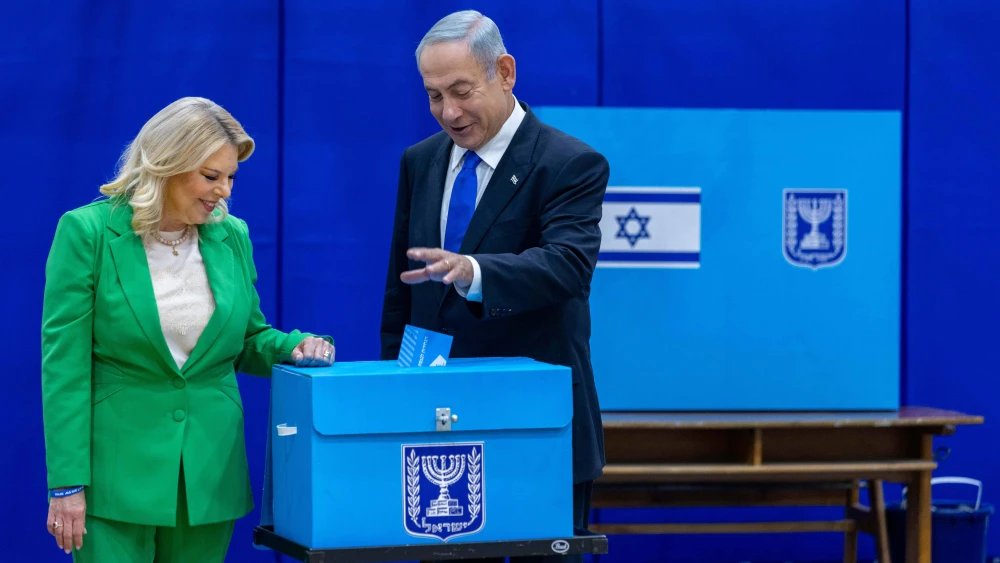
While 60% of Israelis are dissatisfied with the government’s handling of the conflicts on the country’s southern and northern borders, the majority believes that early elections would hurt the war effort, according to a poll conducted for JNS.
The Direct Polls Institute, which correctly predicted the results of Israel’s most recent election in November 2022, surveyed a representative sample of 685 Israeli adults on June 27, 2024. (The margin of error is plus or minus 4.3 percentage points at a confidence level of 95%, according to Direct Polls.)
Fifty-four percent of the respondents said a national vote before the end of the wars with Hamas and Hezbollah would “hurt” (9%) or be “very harmful” (45%) to Israel’s deterrence in the face of ongoing threats.
However, only just under two-fifths of those surveyed assessed the performance of Prime Minister Benjamin Netanyahu’s ruling coalition during the war as “good” (23%) or “very good” (15%), Direct Polls found.
Voters of Netanyahu’s coalition of right-wing parties were among those most likely to support its accomplishments and oppose early elections.
Asked when the next vote should be held, a quarter of the premier’s supporters said elections should be scheduled after the war ends.
Among the broader public, the opinion was split, with 42% saying the Jewish state should go to the ballot box “immediately” and 38% stating that elections should be held near their scheduled date, in October 2026.
A Direct Polls survey released by Channel 14 last month showed that Netanyahu’s Likud Party gained a slight tailwind following National Unity Party leader Benny Gantz’s decision to quit the wartime coalition.
Likud and its constellation parties would win 58 Knesset seats against a center-left coalition (52) and Arab parties (10), according to the poll.