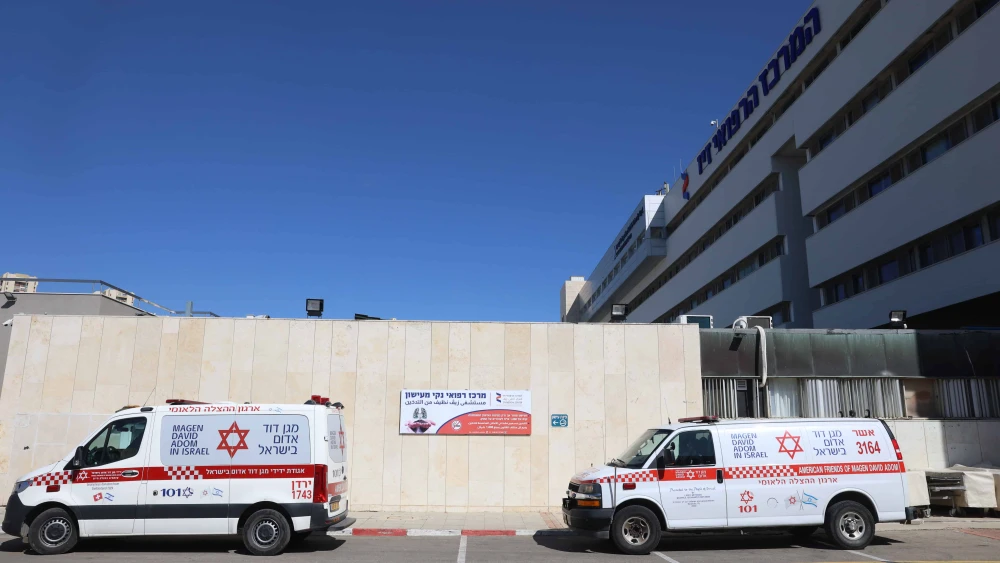
More than 2,000 people have been evacuated to hospitals since the start of “Operation Roaring Lion,” Israel’s Health Ministry said on Monday, as the country’s health system remains on high alert while gradually restoring non-urgent services.
Since Feb. 28, 2,142 people had been evacuated to hospitals as of 7 a.m. on Monday. Of these, 142 remain hospitalized, including nine in serious condition, 44 in satisfactory condition, 84 with light injuries, one with anxiety and five under medical evaluation.
In the past 24 hours, 181 people were admitted: one with severe injuries, eight with moderate injuries, 162 with light injuries, four with anxiety and five under evaluation.
The ministry urged the public, especially older adults, to move early and carefully to protected spaces when receiving early warning notifications of incoming Iranian missiles, noting that many injuries occur en route to shelters.
It called on residents to help elderly neighbors locate and practice routes to nearby protected areas, and help reach them before sirens sound.
The ministry also pointed to resilience centers, health-fund hotlines and the National Therapeutic Resilience Center (*5486) as key frameworks for psychological support nationwide.
In a separate statement, the ministry said the health system remains on high alert while gradually resuming ambulatory and elective services under IDF Home Front Command directives.
Hospitals may restart non-urgent outpatient and elective procedures if they can stay ready for mass-casualty events, keep occupancy within limits and ensure rapid access to protected spaces. Invasive procedures and surgeries requiring sedation or general anesthesia will be done only in protected areas and patients are to be warned that treatments may be stopped if security conditions change.
Weekend guidance reaffirmed four operating principles: readiness for mass-casualty incidents, continuity of civilian care, protection of vulnerable populations and easing pressure on hospitals.
Community services, including Mother and Child Health clinics, health bureaus and health-fund clinics, will continue where protection standards are met, with an emphasis on essential care and diverting non-urgent cases from hospitals.
Rehabilitation and geriatric facilities were told to maintain the most protected routine possible, continue early discharges when feasible and ensure mobility devices and basic prostheses for patients during the emergency.