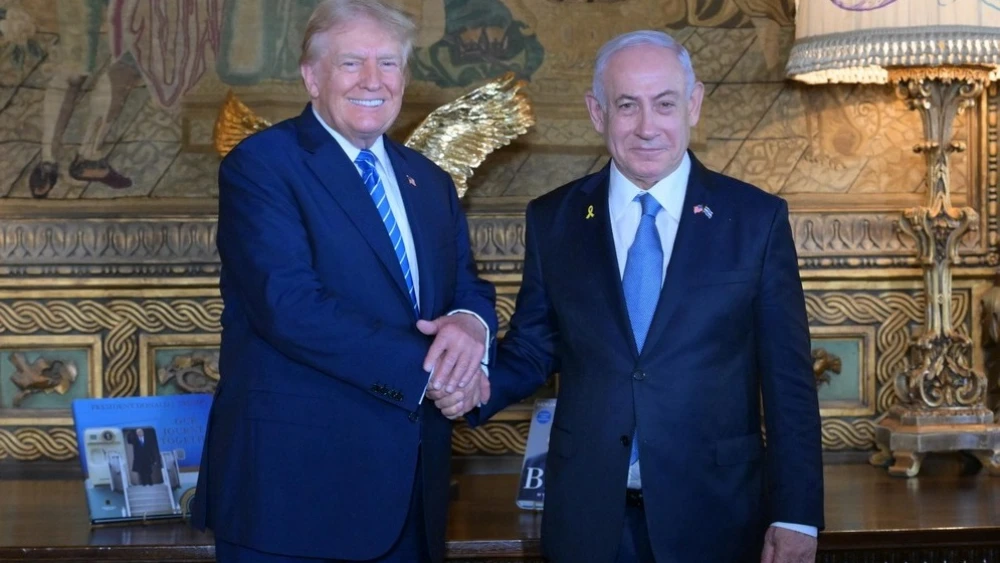
Israeli Prime Minister Benjamin Netanyahu spoke overnight Saturday with U.S. President-elect Donald Trump, according to Hebrew-language media.
The two leaders reportedly discussed a potential hostages-for-ceasefire deal with the Hamas terror group, the fall of the Assad regime to Islamist fighters in Syria and the Iranian nuclear threat.
Last week, Trump made it clear that while he hopes for an end to the war in the Gaza Strip, Jerusalem must secure a decisive victory. “I want [Netanyahu] to end it, but you have to have a victory,” Trump stated.
Adam Boehler, Trump’s special envoy for hostage affairs, is visiting Israel this week amid ongoing negotiations to secure the release of the remaining captives in Gaza.
He will meet with Israeli Defense Minister Israel Katz and Foreign Minister Gideon Sa’ar on Monday, Ynet reported on Saturday night.
His visit comes as a senior Israeli official told the Hebrew news site that “significant progress” has been made in hostage negotiation efforts, suggesting that Hamas could be willing to drop some of its war-long demands to reach an agreement. The official indicated that a deal could be reached within weeks.
Netanyahu was one of the first world leaders to speak with Trump after the latter’s Nov. 5 election victory in the United States.
The phone conversation, which lasted some 20 minutes, was described as “warm and cordial.” The two men were said to have “agreed to work together for Israel’s security and discussed the Iranian threat.”
Trump’s transition team is weighing two main options to prevent Iran from obtaining nuclear weapons, including preventative airstrikes, The Wall Street Journal reported on Saturday, citing four people familiar with the plans.
The military option was under “more serious review” in the wake of the collapse of Assad’s regime and Israel’s decapitation of Hezbollah’s leadership in Lebanon, according to the report.