When P.S. 321, a popular elementary school in Brooklyn’s Park Slope neighborhood quit holding its graduation ceremonies in the spacious sanctuary of Congregation Beth Elohim, with which the public school had a 50-year relationship, it did so quietly. There was no fanfare, and it didn’t give the local Reform synagogue notice before moving its graduation in June to the auditorium of another area school.
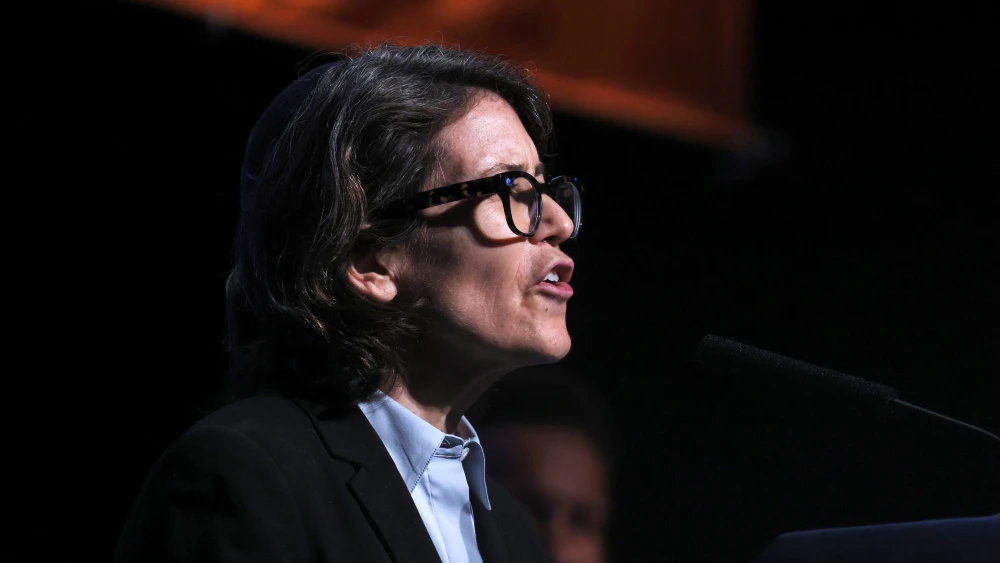
Rabbi Rachel Timoner, senior rabbi of the congregation, heard rumors from some congregants, whose children attend P.S. 321 that it was “because of Israel,” she told JNS. When she contacted the principal of PS 321 William Penn Elementary School, Elizabeth Phillips, she was told that the decision had already been made, the rabbi said.
After five decades of hosting thousands of P.S. 321 children in after school programs and nearly 20 years of holding graduations at the synagogue, assumptions being made about the synagogue since it is a Jewish institution hurt, Timoner told JNS.
She identifies as Zionist and has protested the Israeli government’s prosecution of the war against the Hamas terror organization in Gaza. In fact, Timoner was arrested while protesting the war outside the Consulate General of Israel New-York in 2024.
In a Yom Kippur sermon last month, Timoner told congregants that “the official reason was that a public school shouldn’t hold graduation in a religious building.”
“That’s legitimate,” she said in the sermon. “But upon inquiry, the principal told me that the desire to change venues stemmed from discomfort about Israel and therefore about us.”
“This decision was made without anyone at the school reaching out to us as neighbors to talk about their concerns or to see whether their assumptions about us were right, or even tell us that they were severing this tie,” she told worshipers, who filled the entire 1,300-seat sanctuary for the Kol Nidrei service.
“That made many of us feel lonely and misunderstood,” she said, to what she told JNS was a “gasp” from congregants at the more than 150-year-old congregation.
The school’s decision to end the relationship felt like a double gut punch, since it came around the same time that the Park Slope Food Coop voted to ban Israeli products, Timoner told JNS.
“That moment felt so lonely,” she said in her Kol Nidrei sermon. “Many of us felt misunderstood and alienated.”
Both the co-op and primary school are beloved neighborhood institutions in the stately brownstone-lined neighborhood, which feels more like a village than part of America’s largest city.
P.S. 321 is located on the neighborhood’s main street, Seventh Avenue, and the synagogue is just a block away, on Eighth Avenue. The food co-op is a handful of blocks away from the other two.
The school, where many of the synagogue members have sent their children over the years, deciding to shun the Jewish congregation sparked a wave of upset at Beth Elohim, Hebrew for “house of God.”
Timoner again contacted Phillips, the public school principal, and the two met on Wednesday.
Timoner told JNS exclusively that she and Phillips will soon issue a joint statement addressing the issue to their communities.
“Because we have this history of a really warm relationship between our institutions, we can do something to address the hurt and harm, an opportunity for everyone to have their voices heard,” Timoner told JNS after the meeting.
“I am hopeful that we will continue the conversation and break down assumptions,” said.
When JNS sought an interview, the principal emailed that “Rabbi Timoner and I had a very good meeting, and I look forward to continuing to work together respectfully.”
“We value our relationship with Congregation Beth Elohim,” she told JNS.
Timoner is deeply committed to the idea that dialogue can lead to mutual understanding and that will improve the Jewish community’s safety at a moment when it feels precarious to many New York Jews.
“We need to quietly and gently approach and say, ‘Let me tell you why this hurts. Please don’t make assumptions about us,’” she told JNS. “We have an opportunity to learn from each other. In the long term that will make us safer.”
Phillips told JNS that she does not know how many of her school’s 1,330 students are Jewish.
Two of Ramon Maislen’s sons graduated from P.S. 321, and his youngest is currently a third grader at the public school.
A longtime member of the Park Slope Food Coop, he faced intensely antisemitic hatred leading up to the vote to ban Israeli products, which took place on May 29. The campaign to ban Israeli products went on for years and had previously been voted down.
Maislen strongly disagrees with Timoner’s approach.
“The rest of us will be shot first, and she can watch,” Maislen told JNS after the rabbi met with the principal. “We need to call a spade a spade, and Timoner needs to call out antisemitism, even if it’s on the so-called left.”
Maislen is a dual American and Israeli citizen.
On Oct. 7, 2024, he filed a complaint against the co-op with the New York City Commission on Human Rights alleging that the member-owned food market discriminated against him based on his national origin when it did not sanction the members who intimidated and attacked him.
He shared a copy of the complaint with JNS and is awaiting a decision from the city commission, he said.
He was in the Signal chat of the Coop Members for Palestine group advocating for the boycott. “They literally posted ‘long live Sinwar,’” of the since assassinated Hamas terror leader Yahya Sinwar, “and multiple people hearted it,” he told JNS.
“These are people who really hate us,” Maislen told JNS.
On Sept. 28, five other former food co-op members, with the support of the National Jewish Advocacy Center, filed a lawsuit against the market in New York Supreme Court.
The lawsuit alleged that the ban violated the co-op’s procedural rules and violated state law prohibiting discrimination.
The plaintiffs experienced much the same treatment as Maislen did during the multi-year boycott campaign by “PSFC Members for Palestine,” according to the suit.
“The campaign was accompanied by repeated hostility toward Jewish, Israeli and pro-Israel members, including derogatory statements, interference with members’ rightful participation in co-op meetings and disparate enforcement of PSFC’s disciplinary rules,” the suit stated.
Proponents of the boycott “also repeatedly singled out ‘Zionists,’ Jewish members and persons with ties to Israel for criticism and exclusion,” it alleged.
Timoner wants Jews to take a calmer, more conciliatory approach to the Jew-hatred bombarding the community.
In a Rosh Hashanah sermon at the synagogue, the rabbi urged Jews to learn how to calm their amygdala, the group of brain neurons responsible for the “fight-or-flight” response to threats.
“A lot of the way the Jewish community is approaching moments like this is backfiring and harming us,” she told JNS.
She cited the recent controversy over rapper Macklemore’s support of Palestinians, and criticism of Israel, at a performance that he gave opening for Ed Sheeran. Robert Kraft, the billionaire Jewish businessman, philanthropist and owner of Gillette Stadium in Massachusetts, where the concert was slated to take place, told Sheeran to ditch the rapper if he wanted to perform at the stadium.
Canceling the rapper gave Macklemore “a much bigger platform for his message and created a huge backlash against the stadium and Jewish people more broadly,” Timoner said.
The rapper quickly announced a “free Palestine” European tour with stops in Dublin, Paris and London. He said on social media that it “sold out immediately.”
“A lot of times, what’s happening is that many in the Jewish community, with very good reason that we are quite afraid right now, the escalating antisemitism in all directions is truly frightening us,” she told JNS. “We are responding often in combative ways that alienate others.”
“The goal for our safety should be to teach others effectively and to speak to make more friends than enemies while making our feelings known,” she said.
Timoner allowed that “it’s very hard to do when you are very afraid.”
In her Kol Nidrei sermon, she urged congregants to remain involved in civic life rather than withdraw when faced with Jew-hatred.
She now regrets resigning her co-op membership as soon as the boycott was approved. “Not because I’ve changed my mind about the BDS campaign,” she said in the sermon. “I have not.”
“But because no one gets to make me feel like I don’t belong,” she said. “No one gets to make you feel like you don’t belong. We belong.”
“We belong to our neighborhood grocery store. We belong to our neighborhood public school,” she told High Holiday congregants. “We belong to Brooklyn. We belong to New York City. We belong to America. We belong to the human family.”