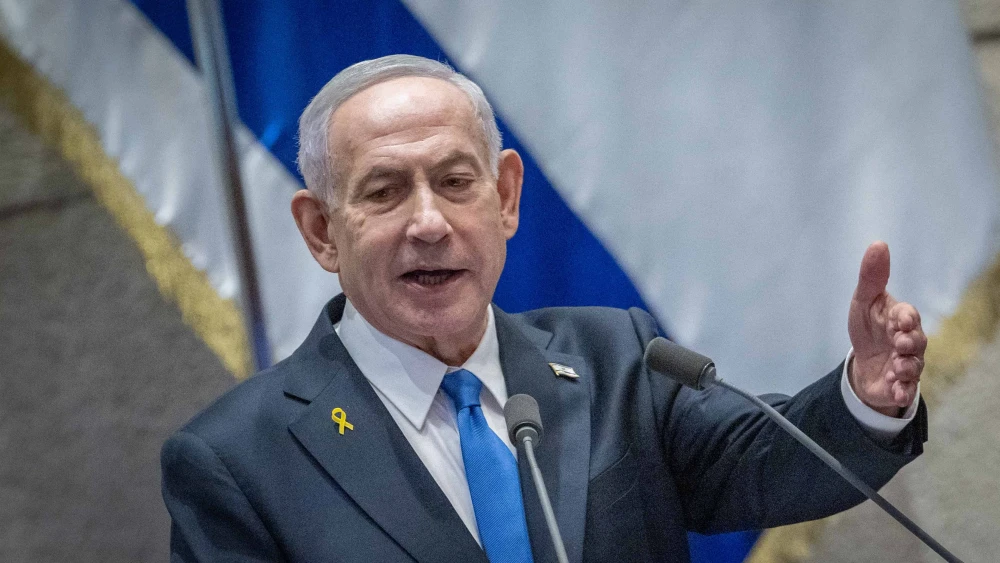
Israeli Prime Minister Benjamin Netanyahu told the Knesset on Monday that the Jewish state had emerged “stronger than ever” from two years of war, saying his “determined and courageous decisions” helped cement Jerusalem’s status as a regional power and deal a decisive blow to Iran.
“Peace is made with the strong, and today everyone knows that the State of Israel is a very strong country—stronger than ever,” Netanyahu told lawmakers at the opening session of the Knesset’s winter session.
A U.S.-brokered ceasefire last week halted 24 months of fighting with Hamas terrorists in the Gaza Strip while bringing home 20 living Israeli hostages and the remains of another 13 murdered captives.
The second phase of the Trump administration’s peace plan for Gaza calls for the demilitarization of Hamas and other terror groups while fully eliminating their ability to threaten Israel.
The Jewish state’s alliance with the United States “has never been closer,” said Netanyahu on Monday, hailing President Donald Trump as “the greatest friend we have ever had in the White House.”
The Israel Defense Forces would not rest until the full dismantlement of Hamas in the Gaza Strip and the return of the remaining 15 bodies of hostages being held by the terror group, he continued.
“Families of the deceased hostages, we are committed to bringing them all back to Israel, to the very last one,” he said.
The premier vowed to maintain a military presence across the Strip until Hamas is disarmed and the territory demilitarized, warning that any new terrorist attacks would be met with overwhelming force.
Israeli jets had struck dozens of targets across Gaza after Hamas violated the ceasefire deal on Sunday, dropping 153 tons of bombs, he said.
The War of Redemption, fought on seven fronts since the Hamas-led terror attacks that killed 1,200 on Oct. 7, 2023, restored deterrence by dealing major blows to Hamas, the Lebanese Hezbollah and other Iranian proxies across the region, said Netanyahu.
“Had I listened to many people who are in this hall and also outside it, you who called upon me to yield and stop the war,” he charged, “Hamas would still be standing. Hezbollah would be threatening our cities. The [Hezbollah] Radwan Force would be a few meters away from invading the Galilee. The murderous Assad regime would still be standing.
“Above all, Iran would have continued to manufacture tens of thousands of missiles at an accelerated rate, and within a few months it would have developed atom bombs to destroy us. The entire country was in danger of destruction; millions of citizens of Israel stood before danger of extinction.”
On domestic issues, he said that his government would bring forward legislation to enlist 10,000 ultra-Orthodox yeshivah students into the military within two years, calling the move “a genuine revolution.”
Netanyahu in his speech called on Israelis to strive for unity despite political divisions. “The differences can and should be discussed,” he said, “but this should be done in a substantive manner, and certainly not with violence or with death threats against elected officials, or against a prime minister and his family members.”
“Citizens of Israel,” he concluded, “these are historic times. We are Jews, we are Israelis, we are strong—and with God’s help, we are winning.”
Lawmakers returned from their three-month recess on Monday, kicking off the parliamentary winter session as Netanyahu’s coalition still lacked a formal majority.
The winter session, which runs through spring, is expected to be stormy, with drafting or exempting Haredi men from mandatory Israel Defense Forces service potentially the most disruptive issue for the coalition.
Netanyahu’s ultra-Orthodox coalition partners Shas and United Torah Judaism formally exited the government in July over the issue, leaving the prime minister’s coalition without a clear majority in parliament.
However, the ultra-Orthodox parties have helped Netanyahu pass some legislation over the past months to avoid triggering a national election.
A draft bill regulating exemptions of Haredi yeshivah students from IDF service, is expected to be presented soon by Knesset lawmaker Boaz Bismuth, chairman of the Foreign Affairs and Defense Committee.