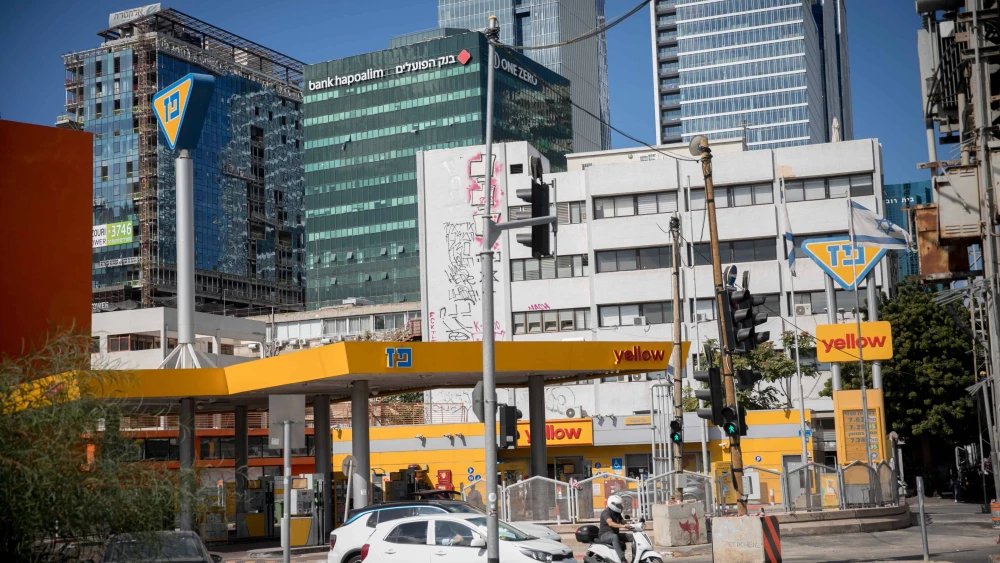
Norway’s Government Pension Fund Global, the world’s largest sovereign wealth fund with more than $1.7 trillion in assets, announced on Sunday it has sold all its shares in Israel’s Paz Retail and Energy Ltd.
The fund, which invests surplus capital from Norway’s petroleum sector, quit the stock because Paz operates infrastructure for the supply of fuel to Israeli communities in Judea and Samaria.
“By operating infrastructure for the supply of fuel to the Israeli settlements on the West Bank, Paz is contributing to their perpetuation. The settlements have been established in violation of international law, and their perpetuation constitutes an ongoing violation thereof,” according to a May 11 statement on Norway’s Council on Ethics website.
The Council on Ethics, set up by Norway’s Ministry of Finance, gives recommendations to the Norges Bank Executive Board, which manages Government Pension Fund Global. The board bases its decisions on which companies to exclude from investment based on those recommendations.
This is the second Israeli company barred from the fund. In December 2024, the board excluded Israeli telecommunications group Bezeq, based on a recommendation by the Council of Ethics for the same reason—that it “supplies telecommunications services to businesses and private individuals in Israel and the Israeli settlements in the West Bank.”
Government Pension Fund Global prides itself on operating according to environmental, social and governance (ESG) investing principles.
“Our goal is to integrate environmental, social and governance (ESG) considerations into investment decisions and assess companies’ ability to create long-term value,” according to the fund.
Supporters of ESG say it ensures companies factor in sustainability and societal impacts.
ESG’s critics say it is “woke capitalism” and weaponizes funds to impose progressive political goals, such as pushing companies to embrace policies related to fears of climate change.
In the case of Israel, a connection has been drawn between ESG and BDS (Boycott, Divestment, Sanctions). The Foundation for Defense of Democracies warned in April 2024:
“Since the BDS campaign cloaks its assault on Israel in ‘human rights’ terms, ESG ratings can quickly be hijacked for BDS objectives, ultimately inflicting economic damage on firms simply for operating in certain disputed territories, not because of actual misconduct.”
Norway has long supported the BDS movement, with cities, unions and universities banning products or cutting ties with Israel.
As recently as May 9, the Norwegian Confederation of Trade Unions, the country’s largest labor federation, voted for a comprehensive boycott of Israel, including a ban on trade and investment with Israeli companies.
The decision earned praise from Palestinian groups, including Hamas, which said it “highly values the decision.”
In May of last year, Norway, together with Ireland and Spain, recognized a Palestinian state.
A report on the history of Norway’s anti-Israel and antisemitic policies between 2004 and 2013 by Manfred Gerstenfeld and Orna Orvell found that “Norway was often a pioneer of anti-Israelism in the Western world.”