Newsletter
Newsletter Support JNS

Palestinian rivals agree to elections, but questions remain

In preparation for an Arab summit in Algiers next month, the heads of 14 factions, including Palestinian Authority President Mahmoud Abbas’s Fatah organization and the Islamist party Hamas, met for two days.

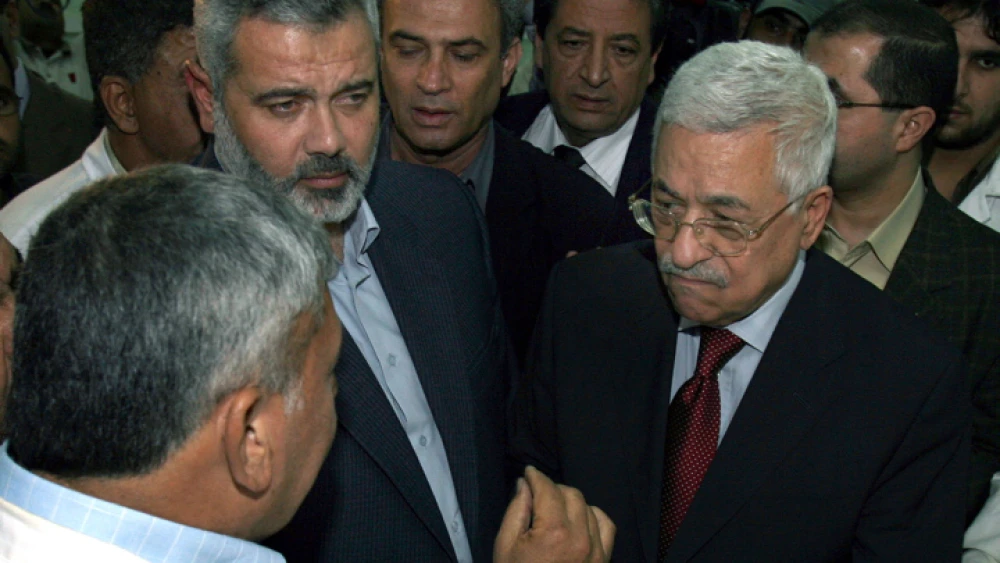
Hamas Prime Minister Ismail Haniyeh (left) and Palestinian Authority leader Mahmoud Abbas visit Odwan Hospital in the northern Gaza Strip, Nov. 8, 2006. Photo by Ahmad Khateib/Flash90.

Rival Palestinian factions convening for negotiations mediated by the Algerian government decided on Thursday to end 15 years of strife through elections that would be held within a year, Palestinian and Algerian officials told Reuters.

Back home in the West Bank, though, there remained skepticism that the Palestinian factions would bring any tangible reforms after prior electoral promises failed to materialize, according to the report.

In preparation for an Arab summit in Algiers next month, the heads of 14 factions, including President Mahmoud Abbas’s Fatah organization and the Islamist party Hamas, met for two days.

According to officials, the sides agreed in Algiers to “speed up the holding of presidential and legislative elections in all of the Palestinian territories including Jerusalem” within one year. The agreement was publicly announced later on Thursday.

The deal also acknowledged Abbas’s Palestine Liberation Organization as the sole representative of the Palestinian people, calling for elections to its national council within a year.
Rabbi Sruli Fried, director of Chai Lifeline New Jersey, stated that the Pennsylvania senator showed “genuine interest in our work.”
Regime spokesman says Washington cannot use threats, urges end to war, calls Hormuz secure and blames U.S. and Israel
Unseasonable cold front brings first May snowfall in 15 years to Mount Hermon’s upper level, as Israelis share striking footage on social media.
The National Education Association “sends the message to the local and state affiliates that antisemitism is acceptable,” Marci Lerner Miller, of the Brandeis Center, told JNS.
“When we talk about irrigation or plants, we see that this common language can overcome many political difficulties,” Tomer Malchi told JNS.
Three Israeli companies—Tnuva, Tara and Strauss—control 85% of the market and charge prices more than 50% higher than those abroad.