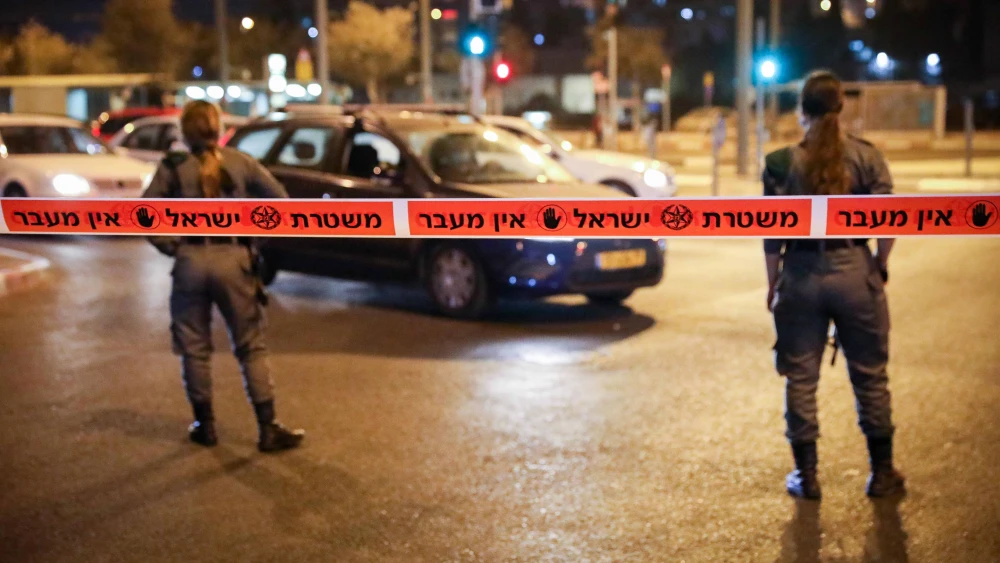
The Israel Police said on Wednesday it opened a criminal investigation following reports that Arab rioters from eastern Jerusalem torched the car of Sheikh Wadee’ al-Jaabari, days after he launched a proposal for Hebron to join the Abraham Accords and recognize the Jewish state.
“Last night, a report was received regarding a fire that broke out in the Issawiya neighborhood of Jerusalem. Upon receiving the report, police forces from the Shalem station arrived at the scene along with fire and rescue teams who worked to extinguish the blaze,” the police told JNS.
Amid suspicions that the blaze in the Arab neighborhood was sparked by “the deliberate arson of a vehicle,” a criminal probe was opened, one that is still in its early stages, according to the police statement.
The Jerusalem-based Al Qastal Arabic outlet had reported earlier in the day that al-Jaabari’s vehicle had been torched by “young Palestinians” due to the sheikh’s “communication with the occupation [i.e. Israel].”
The report claimed that the arson was carried out amid angry chants against the proposal to turn the Judea city of Hebron into an “emirate.”
On Saturday, five prominent sheikhs in Hebron, led by al-Jaabari, declared their wish to join the Abraham Accords, recognize Israel as a Jewish nation state and break away from the Palestinian Authority.
مركبة "وديع الجعبري" بعد حرقها في بلدة العيساوية بالقدس المحتلة فجر اليوم إثر تواصله مع الاحتلال pic.twitter.com/nPhocIu6vw
— القسطل الإخباري (@AlQastalps) July 9, 2025
In a letter to Israeli Economy Minister Nir Barkat published by The Wall Street Journal, the sheikhs proposed a timetable to negotiate “a fair and decent arrangement that would replace the Oslo Accords, which only brought damage, death, economic disaster and destruction.”
Al-Jaabari requested that Barkat relay the offer to the office of Israeli Prime Minister Benjamin Netanyahu for the premier’s consideration.
However, Samer Sinijlawi, a Palestinian commentator and chairman of the Jerusalem Development Fund, said the proposal was not practical or serious, nor does it represent the will of the al-Jaabari clan in Hebron.
Sinijlawi shared a recording with JNS of a press conference on Sunday, which he said features members of the clan distancing themselves from the plan, and claiming that Wadee’ al-Jaabari is not their sheikh.
“The plan published by The Wall Street Journal is not seen as practical, nor accepted by the Palestinians wall to wall,” Sinijlawi said.