Newsletter
Newsletter Support JNS

Report: US to freeze $130 million of Egyptian military aid over human-rights abuses

The report comes a day after Israeli Prime Minister Naftali Bennett met with Egyptian President Abdel Fattah el-Sisi in Sharm el-Sheikh.

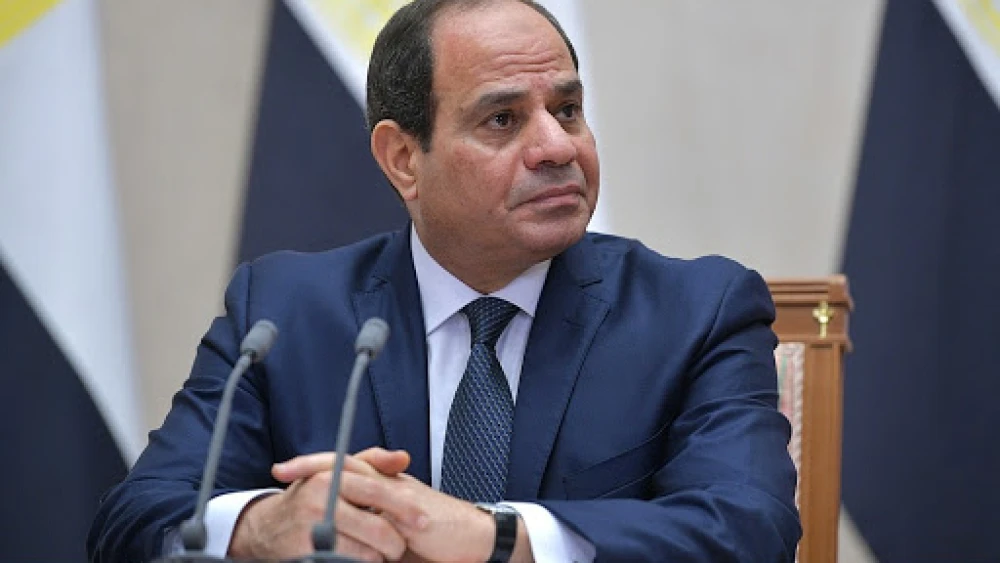
Egyptian President Abdel Fattah el-Sisi
Egyptian President Abdel Fattah el-Sisi. Source: Kremlin.ru.

The United States is withholding $130 million worth of military aid to Egypt in order to pressure it to improve human rights, said two sources, including a U.S. official, according to Reuters.

The Biden administration decision would stop the transfer of the aid until Egypt improves its human-rights record, said an official quoted in the Reuters report. Sources said an official announcement would occur later this week.

The report comes a day after Israeli Prime Minister Naftali Bennett met with Egyptian President Abdel Fattah El-Sisi in Sharm el-Sheikh.

Bennett thanked el-Sisi for a warm reception at the coastal Egyptian city on the Sinai Peninsula, where the two agreed to continue broadening cooperation and dialogue on a range of issues.

El-Sisi came to power after toppling the Muslim Brotherhood government in 2013. The previous U.S. administration’s policy maintained the aid flow to Egypt.

In a draft report delivered to the U.S. president, the commission also called for improved religious accommodations for U.S. service members.
Salah Salem Sarsour, accused of concealing Israeli military court convictions on immigration forms, argued his detention was part of a Trump admin effort to target the pro-Palestinian movement.
CENTCOM stated that the strikes targeted missile, drone and radar facilities after the Islamic Republic attacked a cargo ship in the Strait of Hormuz, calling the assault a violation of the ceasefire.
Now that the primaries are over, “we hope that everyone will come together and be united,” Christine Quinn, chair of the executive committee of the New York State Democratic Party, told JNS.
An Iranian official warned on Friday that the safety of ships passing through the Strait of Hormuz without Iran’s permission “cannot be guaranteed.”
“We have put the train back on the tracks and going in the right direction,” said Yechiel Leiter, Israeli ambassador in Washington. “Final destination? Peace between our two countries.”
Benny Gantz, JNS editor-in-chief Jonathan S. Tobin, Gilad Erdan, Mosab Hassan Yousef, Nissim Black and leading voices in security, diplomacy, media, law and Jewish communal affairs headline the summit’s third day in Jerusalem.