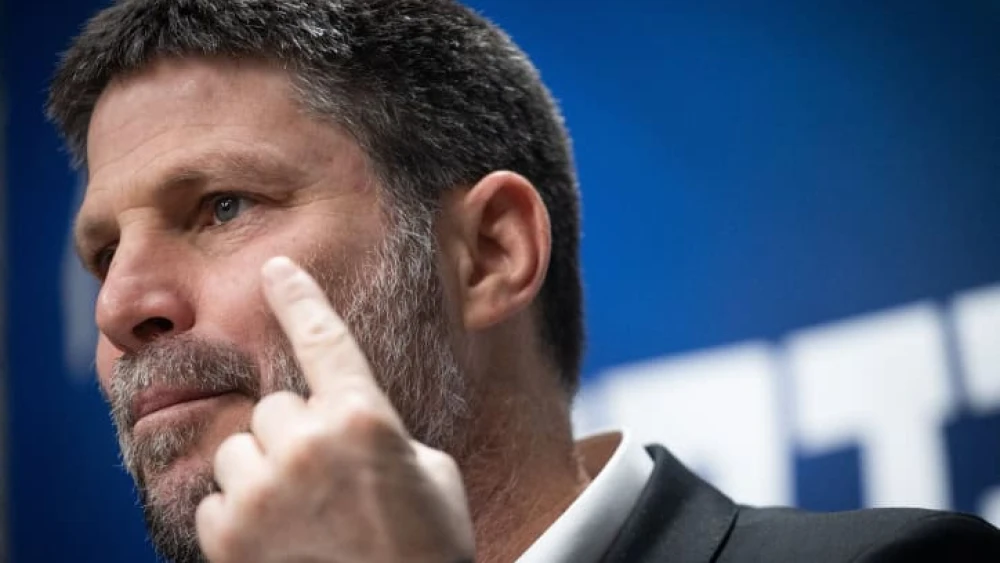
Israeli Finance Minister Bezalel Smotrich blasted an article that appeared in The New York Times on Thursday accusing the State of Israel of secretly abetting so-called “settler violence.”
The Times exposé presented as one piece of evidence a classified document from March, in which Maj. Gen. Yehuda Fox, head of the Central Command of the Israel Defense Forces whose area of responsibility includes Judea and Samaria, accused Smotrich of undermining law enforcement in the region.
Fox wrote that efforts to regulate Jewish community construction have shrunk “to the point where it has disappeared.”
Smotrich tweeted in response, “The investigation by The New York Times with the same ‘secret document’ is a blood libel by a newspaper that regularly incites against the state and this time in cooperation with senior IDF officials openly and covertly.
“We will do everything to prevent [the establishment of] a Palestinian state that would endanger our existence here,” Smotrich wrote.
The finance minister said he was proud to fight the “war for the open areas” in Judea and Samaria, referring to the illegal Arab settlement of Area C, which falls under full Israeli jurisdiction according to the Oslo Accords, a fact treated as immaterial by the Palestinian Authority.
התחקיר של הניו יורק טיימס עם אותו "מסמך סודי" הוא עלילת דם של עיתון שמסית באופן קבוע נגד המדינה והפעם בשיתוף פעולה עם בכירים בצה"ל באופן גלוי וסמוי.
— בצלאל סמוטריץ' (@bezalelsm) May 16, 2024
אנחנו נעשה הכל כדי למנוע מדינה פלסטינית שתסכן את קיומנו כאן.
המלחמה על השטחים הפתוחים תקבע את זה, לכן אני גאה להילחם ולמנוע את… pic.twitter.com/7ED6kfntvc
The topic of “settler violence” has recently made headlines in Western media outlets despite statistical evidence showing a drop in Jewish-on-Arab crime in Judea and Samaria, which in any case numbers in only the dozens of incidents annually, raising the question among some observers as to why it has been raised to an issue of international importance.
The Biden administration has blacklisted a total of seven Jewish residents in the region under an executive order allowing him to sanction individuals who are seen as “undermining stability” and “prospects of peace.”
However, the U.S. embassy in Jerusalem would not confirm the sources or methodology used to determine who falls under the order.
In February, Israeli Prime Minister Benjamin Netanyahu expressed his displeasure over the first sanctions to U.S. President Joe Biden.