


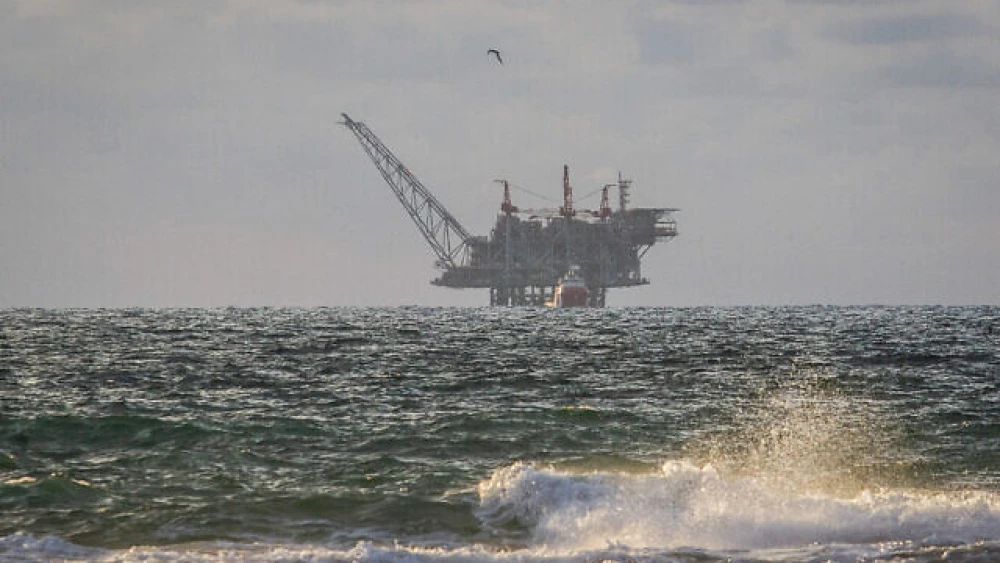
The Leviathan gas field, located in Israel’s exclusive economic zone (EEZ) in the eastern Mediterranean, will soon increase production, an energy consortium announced on Sunday.
The $568 million project will see a third pipeline laid from Leviathan to an existing production platform about six miles off the coast near Moshav Dor and Zichron Ya’akov, with the gas flow starting in the second half of 2025.
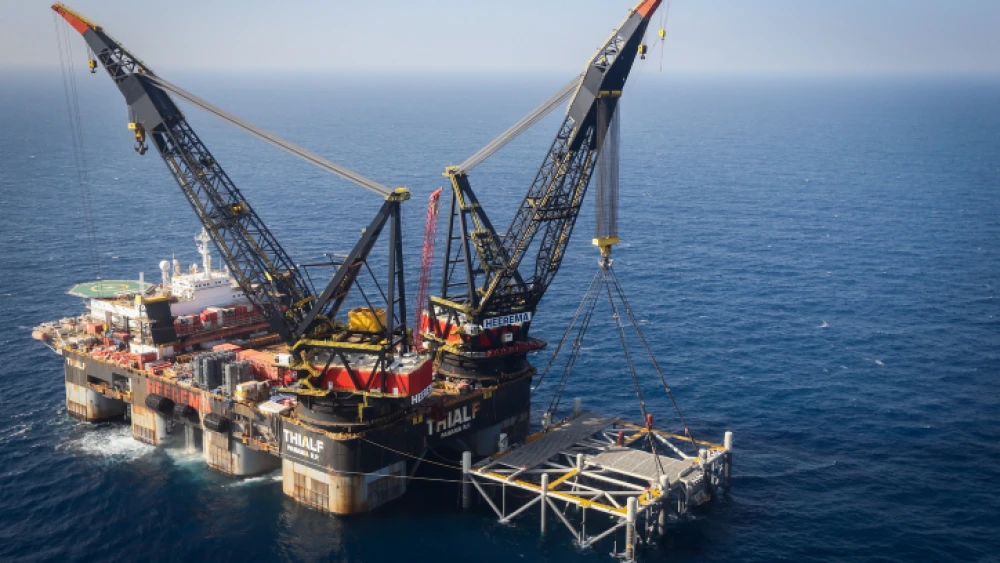
According to the partners behind the project—NewMed Energy, Chevron Mediterranean Limited and Ratio Energies—the new pipeline will boost production capacity from about 12 billion cubic meters annually to nearly 14 billion cubic meters per year.
Leviathan is the largest gas field in Israel’s exclusive economic zone, located about 75 miles west of Haifa. It was discovered in 2010 with estimates of 605 billion cubic meters of exploitable gas reserves.
“The third pipeline project is an initial, significant and important step in expanding Leviathan,” said Yossi Abu, CEO of NewMed Energy.
The expansion “will allow us to supply more natural gas to the local, regional and, very soon, also the global market,” Abu continued.
Leviathan currently supplies gas to Israel, Jordan and Egypt.
The Israeli Cabinet in May approved a 900 million shekel ($246 million) project to expand natural gas exports to Egypt.
A 65-km. (40-mile) pipeline will be constructed along a route between Ramat Hovav, south of Beersheva, and Nitzana, near the Sinai border, via Ashalim, allowing for an additional 6 billion cubic meters of natural gas to be exported to Egypt each year.
Also in May, Israel’s Energy Ministry certified the discovery of a new maritime natural gas deposit, the country’s fourth-largest to date.
British-Greek energy company Energean can now begin drawing up plans to develop the field, named Katlan, which is entirely inside Israeli territorial waters.


