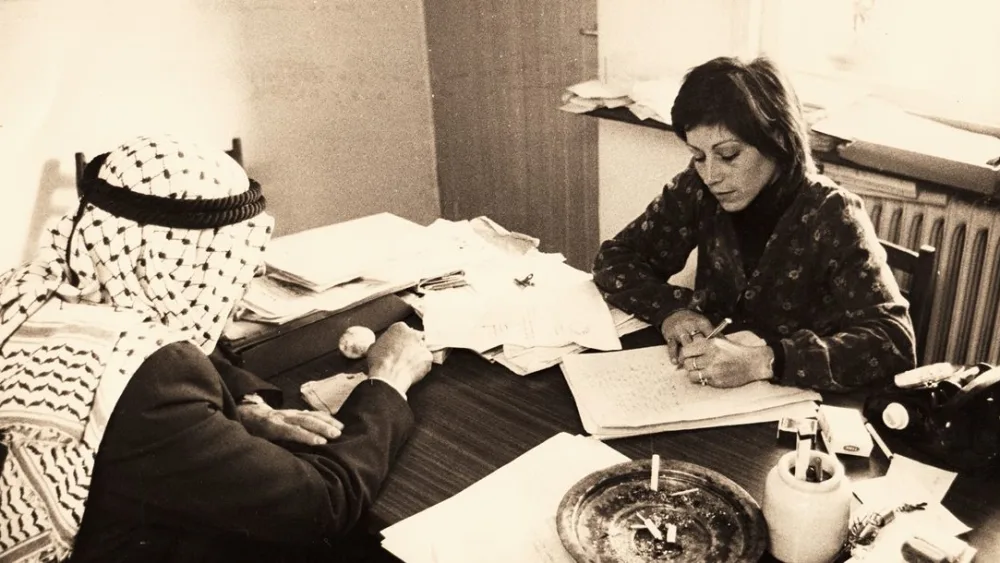
Israel’s national lottery, Mifal Hapayis, announced that it is canceling a NIS 150,000 ($42,000) prize awarded to a documentary film about the life of controversial Israeli attorney Lea Tsemel.
The move comes after thousands of Israelis canceled their subscription to the national lottery this week in protest over the prize, which was awarded to the film, titled “Advocate,” at last month’s DocAviv film festival in Tel Aviv.
The film positively portrays Tsemel, who gained notoriety in Israel for defending terrorists with blood on their hands, including dozens of Hamas terrorists. She also defended Abdel Aziz Salha, who was pictured in an infamous photograph waving his blood-soaked hands in the air after the lynching of two Israel Defense forces soldiers in Ramallah in 2000.
According to i24 News, Tsemel also represents Arafat Irfaiya, who earlier this year murdered and raped 19-year-old Ori Ansbacher.
Leading the protest against the prize was the Choosing Life Forum of Bereaved families, which, accompanied by the Zionist organization Im Tirtzu, called on Mifal Hapayis to cancel it.
Earlier this week, a number of bereaved families from the Choosing Life Forum protested outside the offices of Mifal Hapayis, spilling red paint on the floor and calling the prize “a spit in the faces of bereaved families and of the blood of our children that has been spilled.”
The families also handed out fliers to passersby and held signs with Tsemel’s quote about the 2000 Ramallah lynching: “What lynch? As if you could really think it was that.”
Their protest, which was widely covered by the Israeli media and on social media, sparked a wave of subscription cancellations that has reportedly amounted to a loss of about 1 million shekels for Mifal Hapayis.
Israel’s Culture and Sports Minister Miri Regev also came out against the prize, stating that the film, which portrays Tsemel in a positive light, is “outrageous and condemnable.”
In response, Mifal Hapayis initially stated that its prizes for cultural events are decided upon by “professional and independent committees,” but ultimately announced that it would cancel the award.